The country year · Autumn
The season begins before the view turns gold.
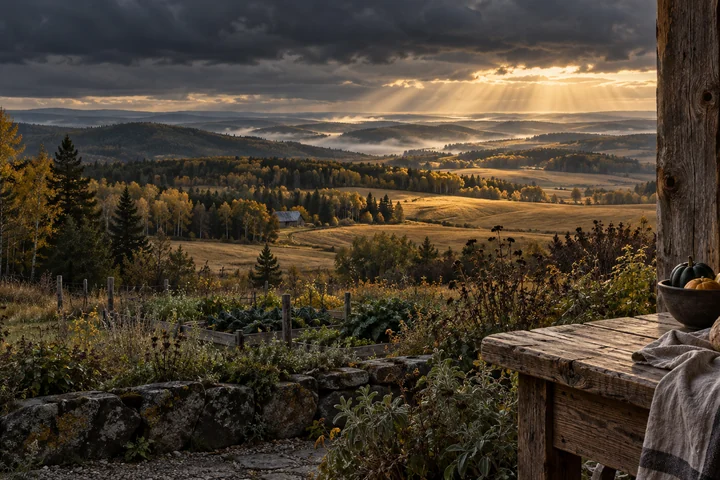
Look at the smaller signs around the house: a different tone in grasses, leaves gathering beside a wall or the way a path appears after rain. A close garden view can make these changes visible during an ordinary day. You notice them on the way to the door, while preparing a meal or from the chair where you read.
This is one reason to value the immediate setting alongside a distant panorama. The land close to home gives the season a scale you can encounter often. A tree, a low wall and a patch of planting create relationships that continue to change after the first impressive view has become familiar. Autumn brings those layers into conversation with one another.
The country year · Autumn
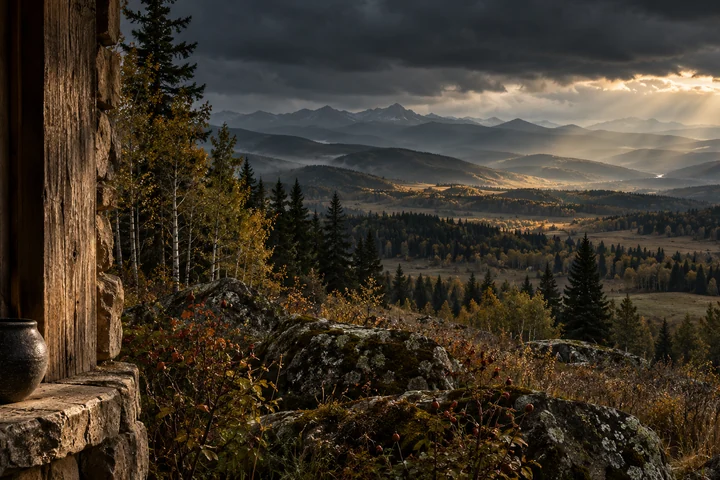
Among the aspen, the view has depth.
An aspen setting offers more than a field of colour. Pale trunks establish a rhythm, branches frame openings and the ground beneath them carries another set of textures. From a seat or a window, those close elements give scale to the meadow or ridge beyond. The scene can feel intimate even where the wider landscape is expansive.
Notice how the view changes as you move. A short distance may bring a dark spruce into the foreground or reveal a longer opening between trunks. When considering a home, look from the actual rooms and permitted outdoor places you would use. The most engaging composition may be quieter than the principal photograph, with a near tree and a far horizon sharing the same frame.
The country year · Autumn
There is beauty after the leaves have fallen.
Bare stems can reveal a garden’s structure with remarkable clarity. A curve in a path, the edge of a wall or a small building previously screened by foliage becomes more apparent. The colours may be subdued, but the relationships between elements can feel stronger. A familiar view offers another way to understand the place.
Think about whether the setting remains interesting in that quieter interval. Does the outlook have a useful foreground? Is the house’s roofline pleasing against the trees? Where does the eye travel once the strongest colour is gone? These observations belong in a personal home brief, alongside the practical records that describe the property. You are choosing a life through time as well as an arrival view.
The country year · Autumn
Dark green gives the gold somewhere to belong.
A group of spruce can provide a strong visual anchor beside changing deciduous trees and open grass. The contrast gives autumn colour depth, with the darker mass holding the composition together. At close range, needles, bark and the shadow beneath branches bring their own detail into the picture.
Observe this relationship in actual regional landscapes and public places before translating it into a garden idea. A visual preference does not determine what can grow or be planted on a particular site. The garden guide begins with the experience of a place and the importance of site knowledge. A considered composition can connect the house to its setting through both seasonal change and more enduring form.
The country year · Autumn
The sky can change the whole arrangement.
Under a low, dark cloud, a pale trunk or a light patch of meadow becomes more distinct. A break in the weather may draw attention towards a far ridge that was almost absent a few moments before. The view has movement even when you remain in the same chair, with light giving different elements their turn.
Enjoy that variation without expecting every day to deliver the same dramatic effect. A quiet overcast view can be equally rewarding when it contains good close detail. The windows and light guide explores the relationship between a seat, a frame and the layers beyond it. Autumn is a useful time to experience how much character the immediate landscape contributes to a room.
The country year · Autumn
Make the outing small enough to notice.
Choose a public route that suits the actual group and conditions, then leave room to look closely. A short walk can hold enough interest: colour caught between dark trees, leaves on a path or a view that opens briefly before the woodland closes around you again. There is no need to travel far simply to give the season an occasion.
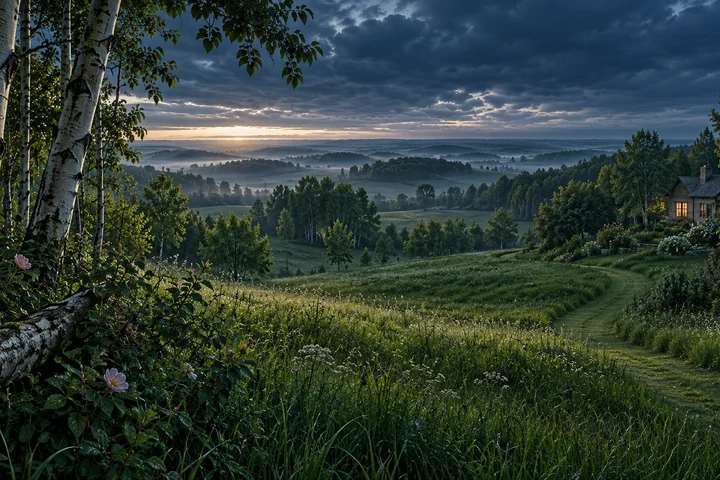
Use current operator information for access, route conditions and activity rules. The footpath in this page’s artwork is wholly imagined within a private setting. Real public outings need their own planning. Our woodland guide and central parkland guide introduce distinct Alberta places where the surrounding landscape and nearby cultural life can be explored together.
The country year · Autumn
Waterton offers a different autumn scale.
Parks Canada’s autumn guide to Waterton Lakes National Park draws attention to changing aspen and larch landscapes, alongside a range of seasonal experiences. This is mountain-park country, with a different scale and visitor context from a private acreage or a short local garden walk.
Choose any outing there using the park’s current reports, access arrangements and visitor guidance. A seasonal idea is a starting point, not confirmation that a route, service or activity suits a particular day. In your own home search, the useful lesson is to notice the kind of autumn landscape that engages you: a broad distant scene, a close stand of trees or the relationship between the two.
The country year · Autumn
Look at the human traces in the wider view.
A roofline, an old fence or the edge of a settlement can give a landscape another layer of interest. In autumn, the quieter ground and changing trees may make these forms more noticeable. They invite questions about how people have lived in the place, though appearance alone cannot establish a building’s age, history or significance.
Follow those questions through documented public places and collections. The ranch-country guide and railway-town guide explore distinct histories and destinations. Let the local record deepen the experience of the landscape. A country life feels more rooted when the view is connected to people, work and cultural stories beyond the boundary of one property.
The country year · Autumn
Give one autumn afternoon to a story.
A performance or gallery visit can become the centre of a day when the landscape is changing around it. At Rosebud Theatre, professional live theatre is part of the Alberta hamlet’s cultural life. Use the current operator programme and visit information to choose an actual occasion, with its own booking and access arrangements.
Allow the outing enough space in the day to remain enjoyable. The conversation afterwards may continue at the table or on the return home. You have encountered the season through a human gathering as well as a view. Our art guide offers other cultural starting points, with different regional settings and subjects to discover. Choose one that gives you a reason to return.
The country year · Autumn
A shared table can hold the day’s discoveries.
The meal after an outing has a natural subject. Someone remembers a room, another a detail from the walk, and the conversation develops while supper is prepared. Keep the food suited to the occasion and the time you want to spend cooking. A familiar dish can leave more attention for the people and experiences around it.
Bring local ingredients into the meal where their actual availability suits your plan. Shops, markets and producers have different arrangements through the season; the food guide provides researched examples and primary planning links. Let the table remain useful and inviting, with room for serving dishes and another chair. The pleasure is in a meal people can settle into.
The country year · Autumn
The autumn garden asks for a closer view.
Grasses, seedheads, bark and fallen leaves can give a garden a rich texture even as its most vivid growth passes. Look from the places where you spend time, especially near a door or window. A small area with a clear composition may contribute more to the day than a distant expanse you rarely encounter closely.
Consider the view at different levels: the ground near a path, planting beside a seat and branches above it. A garden can connect these scales without filling every space. The gardens guide explores paths, enclosure and the relationship with the wider country. Any planting or work should respond to the actual site and appropriate advice; the imagined scene is an atmosphere to explore, not a planting specification.
The country year · Autumn
Keep a place for an interval outside.
A terrace or garden seat can remain part of the household’s routine whenever the actual weather makes it inviting. You might carry out a cup, talk for a while or sit long enough to look back at the house. The occasion can be short and still feel distinct from the rooms indoors.
Choose the position through experience of the site. A close wall, a roof edge or the shape of planting may make the place feel more enclosed, while the landscape beyond it remains open. Our outdoor rooms guide follows these relationships in detail. The best arrangement is the one you enjoy using often enough to recognise how it changes as the season progresses.
The country year · Autumn
Watch the garden become part of the interior.
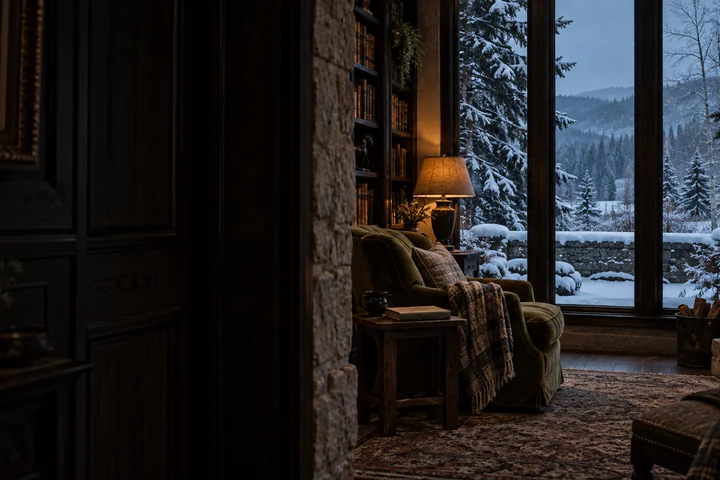
When the view outside is full of changing texture, a quiet room can give it a strong role. Timber, plaster and a few useful objects allow attention to move towards the window. The frame itself becomes part of the composition, with the close garden giving depth to the more distant land.
Sit in the room rather than judging the view only from the doorway. What do you see at eye level? Does the chair have a place for a book or cup? Is the area inviting at the time of day you would use it? These small questions connect the beauty of an outlook with a credible everyday life. A good view earns another kind of value when it is enjoyed from a comfortable place.
The country year · Autumn
Bring the evening into a useful pool of light.
A lamp over a table or beside a reading chair can make a larger room feel intimate without closing it off. People can gather around a shared activity while the rest of the space stays quiet. As the garden’s outline becomes less distinct, the room offers another layer of atmosphere, shaped by the household’s use.
Keep the arrangement clear enough that it works for an ordinary evening. A table should hold the things people bring to it, and a favourite chair should be easy to reach. The interiors guide considers these relationships alongside materials, collections and storage. Autumn gives you time to notice whether the room welcomes the life you hoped to live there.
The country year · Autumn
Let a small act of making belong to the season.
An afternoon at home can hold a quiet project: sketching a view, arranging photographs or working with a material you enjoy. Give the activity a useful place, with enough room that it can be resumed another day. The interest lies in doing it, rather than producing something to complete the room’s appearance.
Local creative places can introduce another way of looking or making, through their actual exhibitions and programmes. Follow the art guide and the Arts and Crafts guide according to your interests. The country setting becomes part of creative life when it offers subjects to return to and room to spend time with them. A small collection of work or observations can become a personal record of the year.
The country year · Autumn
Make a gathering that suits the season you have.
An autumn visit might begin outside and finish around the kitchen table, or stay indoors from the start. Keep the plan responsive to the actual day and the people involved. A few inviting choices let guests find their place: somewhere to talk, a quiet seat and a view that remains part of the room.
For overnight company, think about the next morning as well as supper. A lamp, space for a bag and an easy way to find a cup are practical kindnesses. The hospitality guide explores this everyday welcome. The season supplies a setting, while the host’s attention makes it possible for guests to enjoy that setting in their own way.
The country year · Autumn
Dusk gives the house a human scale.
A warm window seen from the garden can make a broad landscape feel intimate. The house becomes a small point of activity within the larger setting, with trees and sky still around it. On the return from a short outing, that relationship may be more memorable than the most dramatic view of the day.
From inside, let the evening be shaped by what you can actually see and enjoy. A darkening branch, a patch of sky or the room’s reflected light can each change the atmosphere. The after-dark guide explores another part of the country year, including public dark-sky destinations. No particular night view is promised at every home; the pleasure begins with knowing the place you have.
The country year · Autumn
Go back after the scene has changed.
Return to a familiar public place or a permitted view at home when the season has moved on. You may see farther between the trees or notice a form that the earlier colour concealed. The experience becomes less about finding a single ideal moment and more about understanding the sequence of the landscape.
Keep a few photographs or notes if you enjoy recording those changes. They can reveal what you value most: the close tree, an opening towards the ridge or the relationship between the garden and the house. A country home brief grows more personal through such observations. You can explain what engages you beyond a broad wish for privacy or a beautiful view.
The country year · Autumn
Let autumn become part of a familiar life.
The season’s strongest memories may be small: a particular walk, a long meal or an afternoon when the garden held your attention from indoors. Repeating those occasions gives the place continuity while the landscape changes. You begin to know what draws you outside and which rooms welcome the return.
Explore the country year for the wider rhythm and slow weekends for a few unhurried days within it. Autumn can be spectacular, but it is also a season to inhabit. Its lasting appeal comes from the relationship between the land you notice, the people you share it with and the home that gives those experiences somewhere to belong.