Ranch country · Living heritage
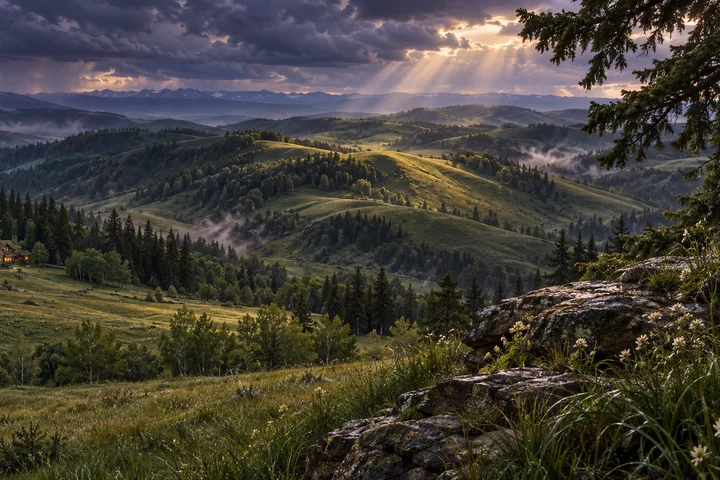
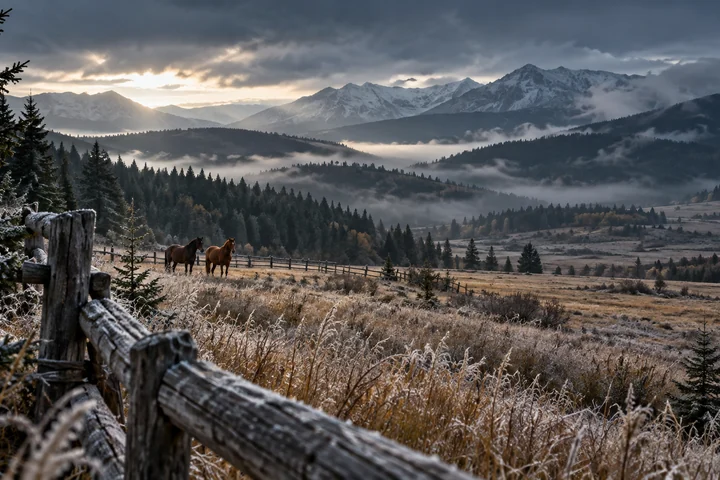
The open view has an intimate side.
A great ranch-country view is rarely made by distance alone. The land close to you gives the horizon its scale: a stand of grass, a rough stone, the dark outline of a tree. Without those details, an immense landscape can feel surprisingly remote. With them, it becomes a place you can imagine spending time.
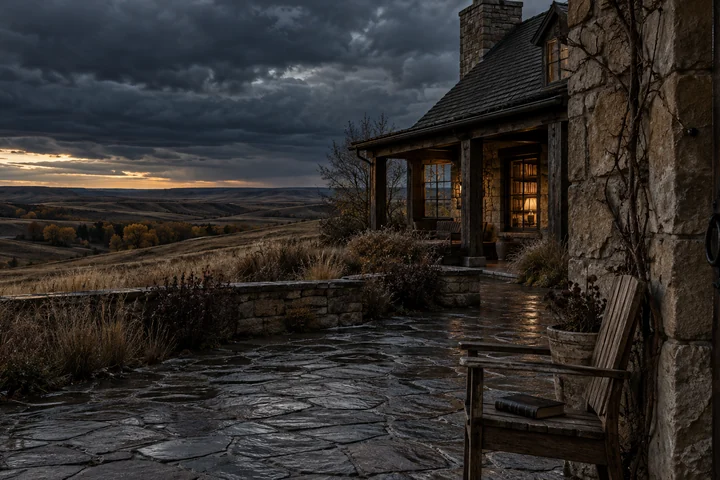
Look at where the land offers shelter. A grove in a shallow valley, a building placed below a ridge or a yard gathered around an entrance can change the experience of being outdoors. The memorable place may be the one where you can sit comfortably and watch a larger country unfold.
For a home, that relationship is worth exploring in ordinary terms. Where would you drink a morning coffee? Which view would remain interesting during a working afternoon? Is there a place to welcome friends outside without making every gathering dependent on perfect weather?
A visit to a historic ranch introduces another question: how did the people living and working there organise those relationships? The answer can make an attractive arrangement more understandable, even when a modern household would live very differently.
Ranch country · Living heritage
Bar U brings a whole operation into view.
Parks Canada’s cultural introduction identifies Bar U as one of southern Alberta’s enduring large corporate ranches, founded in 1882 as the Northwest Cattle Company. Its preserved headquarters brings buildings, work, people and the surrounding country into one historic encounter.
When the site is operating, begin with the arrangement of the place. A headquarters is more than a collection of individually appealing structures. Notice how a yard connects buildings, where tasks were carried out and how movement between places would have shaped the working day.
The setting helps make the scale of ranching visible. A room or workshop may feel intimate, while the land beyond it suggests a much larger undertaking. Holding those scales together is part of the interest: daily work supported an operation whose reach extended well beyond the headquarters.
Use the interpretation to understand what you are looking at before assigning a romantic story to it. A building’s plain appearance may conceal an important role. The most useful question is often what happened there, who did the work and how it connected with the rest of the ranch.
Ranch country · Living heritage
The ranch changed as the work changed.
The Bar U history follows several eras. Fred Stimson developed the early headquarters; George Lane’s operation became known for cattle and Percheron breeding; Patrick Burns’s later period brought changes in equipment, expenditure and the uses of buildings. The site reflects adaptation over time.
That history makes it rewarding to look for differences rather than a single consistent style. Ask which structures belonged to particular phases and what prompted additions or altered uses. A working place accumulates decisions, and those decisions can be read through its physical form.
The same approach helps when looking at an older country property. A pleasing appearance does not establish that every part was built at once or used as it is today. Documentary history, surviving fabric and informed interpretation each supply different kinds of evidence.
For a new home, the useful lesson is the value of clear purpose. A building can belong to its surroundings because its position, scale and materials suit the life it supports. Historic atmosphere is most convincing when you first understand the actual place that produced it.
Ranch country · Living heritage
The cookhouse reveals the social life of work.
Parks Canada’s activities guide describes the historic cookhouse as a centre of daily life, where cowboys ate, rested and received visitors. Nearby food-growing and storage spaces extend that story beyond the table. Check the operating programme before expecting a particular demonstration.
A kitchen can make a large institution feel human. Think about the repeated work of preparing food, serving people and clearing the room for the next meal. The place’s importance lies in that rhythm as much as in the objects displayed inside it.
For a household, the encounter may sharpen a familiar preference: a kitchen where someone cooking can remain part of the gathering, a table comfortable enough for a long conversation or a place for muddy outdoor layers before everyone sits down.
Those pleasures do not depend on recreating a historic interior. Begin with how people arrive, eat and spend time together. A country kitchen feels generous when its arrangement supports that life easily, whether the room is compact and plain or part of a much larger house.
Ranch country · Living heritage
The workshops make skill visible.
Bar U’s interpretation includes blacksmithing, harness repair and other essential ranching work. These places bring attention to tools, materials and the skills needed to keep an operation moving. Follow the current programme to learn which interpreters and demonstrations are available during a visit.
In a workshop, small details become important. A joint, a repaired edge or the fit between two parts can explain more than a broad impression of rustic character. Look for the relationship between the thing being made and the task it needed to perform.
That attention can influence what you choose for a home. A well-made chair, a leather item intended for use or a carefully repaired piece may become more satisfying once you understand its construction. Ask makers about their work and preserve any care information that comes with it.
A country interior can carry those interests quietly. Give useful objects room to be used and maintained. Their connection with a life of work and care becomes apparent through daily handling; it does not need to be announced by filling a room with unrelated western props.
Ranch country · Living heritage
Percherons belong to a larger working story.
The site’s cultural account connects George Lane’s Bar U with Percheron breeding, while its activities information describes horse-drawn transport within the visitor experience. The animals are part of a history of breeding, labour and changing technology. Confirm current operating arrangements rather than assuming a ride is always available.
A hosted explanation can make that history more interesting than a brief encounter with an impressive animal. Ask how draft work fitted into the ranch, what equipment accompanied it and how later changes altered the use of the buildings around you.
Watch a demonstration from the position directed by the staff and allow the people doing the work to set the pace. The experience can reward quiet observation: the relationship between animal, handler and equipment may become clearer when you have time to notice it.
For readers drawn to equestrian life, this is one way to develop an interest through public interpretation. It can help clarify what attracts you—history, husbandry, craft or participation—before deciding how that interest might fit into your own country routines.
Ranch country · Living heritage
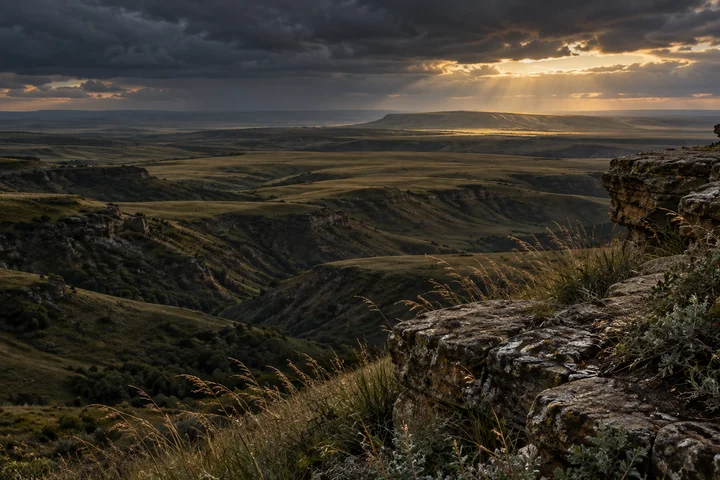
The land beyond the buildings completes the visit.
The Bar U trail guide introduces routes including a ridge viewpoint and paths associated with Pekisko Creek. These offer a way to connect the historic core with its wider setting during the operating season. Use the current route information and conditions to choose a walk.
Move between the close view and the larger country. After spending time in a workshop or cookhouse, the surrounding land can appear differently: the buildings become part of a broader arrangement rather than the entire subject of the visit.
A pause at an available viewpoint can be as absorbing as covering more ground. Watch where the light falls, how a grove marks the land and which parts of the headquarters remain visible. Such details establish the particular character of the place.
Do not treat a published trail description as evidence of off-season access. The current hours page, checked October 11, reports the site closed for the season. Wait for the operator’s next confirmed visitor arrangements before planning to enter the historic core or follow its routes.
Ranch country · Living heritage
John Ware’s life widens the familiar picture.
Parks Canada’s account of John Ware describes a Black cowboy and rancher who succeeded despite racism and having been enslaved. He arrived in the District of Alberta in 1882 with a cattle drive, worked for large outfits and later built a ranching life with his wife Mildred and their children. He was designated a national historic person in 2022.
The family is central to that account. Reading beyond the celebrated image of the exceptionally skilled cowboy brings a household, changing circumstances and difficult experiences into view. It also asks who has been included in familiar accounts of Alberta’s beginnings.
Keep the difference between documented history and legend in mind. An often-repeated anecdote may have a different status from a contemporary record or a carefully researched family history. The designation account provides a starting point and acknowledges uncertainty about aspects of Ware’s early life.
A region becomes more compelling when its history can hold that complexity. For someone making a home in ranch country, learning about lives such as Ware’s adds substance to an attachment that may have begun with a landscape, a horse or a familiar western image.
Ranch country · Living heritage
Cheryl Foggo’s film offers another way to look.
The National Film Board presents John Ware Reclaimed, written and directed by Cheryl Foggo. The documentary examines the mythology around Ware and his legacy in relation to anti-Black racism. Use the NFB’s current viewing and licence options for the setting in which you intend to watch it.
A film can bring a different pace and set of questions to the subject. Give it an uninterrupted evening and time afterwards. Let the filmmaker’s investigation lead the encounter rather than expecting it simply to illustrate a history you already know.
For friends gathering at a country home, a documentary can become a substantial shared experience. Choose the work in advance, make the room comfortable and allow different responses afterwards. An organised public screening requires the appropriate rights; a home-viewing option does not establish those permissions.
Continue through the resources and credits that interest you. A film may lead to a book, an archive or another artist’s work. That continuing thread gives ranch-country culture a life beyond a single excursion and keeps contemporary creative voices in the conversation.
Ranch country · Living heritage
Ranching is one part of the country’s history.
A history beginning with a ranch’s establishment begins partway through the history of the land. The John Ware designation account identifies traditional Indigenous territories in discussing the arrival of the cattle operation. The country already held relationships, names and knowledge that cannot be understood through ranching alone.
Give those histories their own encounters. Our Blackfoot cultural-destinations guide follows host-led institutions, language resources and contemporary creative work. The Métis country guide explores a distinct people, river-country history and cultural hospitality.
Read the institutions’ own introductions and choose visits through their programmes. A cultural centre, a historic ranch and a contemporary film may each illuminate a different aspect of Alberta. They need time and context rather than being combined into one uncomplicated story.
This broader attention can deepen the pleasure of living in the region. A familiar horizon remains beautiful while acquiring more meaning. The questions continue, and the country becomes a place of ongoing learning as well as a setting for daily life.
Ranch country · Living heritage
Glenbow brings working grassland into the present.
Glenbow Ranch Park Foundation presents a landscape where conservation, education and active cattle ranching coexist. Public trails offer ways to experience the country near Cochrane, with their availability affected by season and operations. The foundation advises visitors to confirm visitor-centre opening hours.
That combination makes the park a useful place to think about a working landscape. Grassland can be visually quiet while supporting several purposes. Notice the routes provided for visitors and the ways interpretation explains what is happening beyond them.
Choose a walk for the experience you want: a close look at vegetation, a broad valley view or an encounter with a particular historical subject. There is no need to make the longest possible route the measure of a good visit.
Follow current Alberta Parks notices for named trail restrictions. A cattle-related closure may affect a particular route while leaving other permitted options. Keep a flexible plan and let the park’s current operation determine where you go.
Ranch country · Living heritage
A hosted quarry visit reveals another layer.
The foundation advertises a guided quarry tour on October 16, 2026, with a shuttle followed by a moderate walk over rough terrain to an area not ordinarily open to the public. It describes a four-hour programme and does not recommend it for children. Confirm availability and suitability directly.
The quarry adds a different kind of work to an understanding of the park. A landscape can contain ranching, transport, settlement and material extraction within the same wider setting. A knowledgeable guide can connect traces that would otherwise be difficult to interpret.
Ask about the programme’s actual walking conditions and what you should bring. A shuttle to a trailhead does not turn the remaining route into an easy or universally accessible outing. The right choice is the experience that fits the people taking part.
The tour description also establishes an important distinction: its destination is reached through the hosted programme. A cultural or industrial history can encourage curiosity without supplying permission to leave public routes. Keep that boundary clear when returning to the park independently.
Ranch country · Living heritage
A ranch house can remain a place of hospitality.
The Bow Valley Ranche Restaurant’s house history traces the residence to William Roper Hull’s 1896 ranch house and describes later ownership by Patrick Burns, community restoration and its opening as a restaurant in 1999. In Fish Creek Provincial Park, the house continues to welcome people through a different use.
Dining in an older house gives architecture a practical presence. Rooms, windows and an approach are experienced while arriving, sitting and sharing a meal. The building is more than a background for a photograph; it shapes the way the occasion unfolds.
Read the house history before going, then notice the features you can experience within the restaurant’s arrangements. An informed visit need not become a formal architectural tour. Sometimes the most telling detail is the relationship between a room and the landscape outside it.
The setting offers ideas for hospitality at home: an entrance that makes guests feel expected, a table positioned for conversation and a room whose character holds after daylight fades. Those qualities can be pursued through your own house and habits, without trying to reproduce the historic residence.
Ranch country · Living heritage
The country table can have a winter life.
The restaurant’s current programme offers brunch, lunch and dinner reservations, with seasonal afternoon tea advertised as returning October 31, 2026. Menus and individual event arrangements change. Confirm the service and date you want rather than relying on an old special-menu page.
An autumn or winter meal can bring the pleasures of an older country house into a season when some outdoor historic sites are closed. Arrive with time to settle, choose a table suited to the occasion and let the meal be the main event.
At home, the same attention can make a modest gathering feel substantial. Think about warmth on arrival, a place for coats, lighting that supports the table and food that allows the host to remain part of the evening. The welcome begins before the first course.
A garden or veranda may be the summer attraction; in colder months, the interior carries the occasion. Notice which rooms you actually enjoy using after dark. Those observations can be more useful when planning a country home than an idealised picture of entertaining only on a perfect July evening.
Ranch country · Living heritage
Sam Centre brings western culture into a contemporary setting.
Calgary Stampede’s Sam Centre offers a year-round cultural encounter through galleries, archival material and facilitated experiences. Its Vern Scown Gallery introduces the people and histories of the Stampede through interactive exhibits and multimedia.
The centre provides a different frame from a preserved ranch. It explores a gathering and the many people who have shaped it, using a contemporary museum setting. Give the historical material and the personal accounts time rather than approaching the visit solely through the spectacle associated with July.
The Stampede Sensations experience uses a 270-degree multimedia presentation. Its scale and sound offer another mode of storytelling alongside objects and written interpretation. Consider the needs of everyone in the group when choosing how to experience the centre.
The visitor information currently gives Tuesday-to-Sunday opening, with Mondays closed, and distinguishes ticketed galleries from Maisie Eatery. Check that information and any individual access needs before travelling. A cultural visit and a meal can form a day of their own.
Ranch country · Living heritage
Follow the people making the programme now.
The Ross Glen Gallery currently presents Centre Stage: The Story of Calgary Stampede Royalty. Through artifacts, photographs and personal belongings, it examines the people carrying those roles and the teams behind them. The account connects public representation with changing generations and community work.
A changing exhibition gives a familiar institution a reason for another visit. Choose one person, object or theme to follow closely. The experience becomes more substantial when there is room to discover an interest rather than an obligation to take in everything.
The centre’s programme also advertises Stories We Have Earned: The Stoney Nakoda Film Project, with filmmaker Cody Lefthand, on October 15, 2026. Use the current event information to confirm arrangements. This is a dated programme, not evidence that the screening occurs throughout the season.
Let distinct speakers and creative works retain their own context. A broad interest in western culture can lead into several histories, but no single exhibition or event represents them all. The next visit can follow the particular voice or question that holds your attention.
Ranch country · Living heritage
Make room for a country life with continuing interests.
Ranch-country living can hold both a quiet view and an active cultural life. A day learning about an older operation, a film at home, a meal in a restored house and a contemporary exhibition are different pleasures. Together they make the region more than a setting to admire.
Our foothill guide, Porcupine Hills story and Bow Valley guide explore the surrounding country through other public places and daily routines. Use them to consider which relationships with the region you would enjoy sustaining.
For a home, look for room to pursue those interests as well as to entertain. A comfortable reading place, a table for a project or an entry that supports regular outdoor life can become as important as a dramatic main room.
The most absorbing country home is lived in repeatedly, through changing weather and ordinary weeks. Its surroundings continue to offer something to learn, and its rooms give those experiences a place to settle. That is a lasting kind of luxury: time, attention and a country that rewards both.