Art & craft · Alberta country life
Begin with looking, before deciding what belongs at home.
A gallery visit can be valuable without a purchase in mind. Give yourself time to notice which works hold your attention after the first impression has passed. You might be drawn to an unusual material, an unresolved detail or a subject you had not expected to care about. Those responses are more useful than arriving with a precise colour swatch and searching only for something that matches it.
Try returning to one work after seeing the rest of an exhibition. Read its label, then look again. Ask what changed between those encounters. A small drawing may become more absorbing than the largest painting in the room; a quiet object may reveal a complicated process. This way of visiting gives your tastes room to develop and makes a future choice for your home more personal.
Art & craft · Alberta country life
Diamond Valley makes fine art and craft part of a town visit.
Bluerock Gallery brings regional fine art and craft together in the Black Diamond part of Diamond Valley. Its range includes pottery, jewellery, books and works by a large community of artists and makers. The gallery’s contact page gives the current Diamond Valley address and visiting information.
The combination is useful for a country home because it allows you to look across scales. You can consider a substantial work for a wall and a small object for the table during the same visit. A handmade piece need not be monumental to change how a room feels. The curve of a bowl or the surface of a vessel can be something you enjoy every morning, close at hand.
Allow a gallery stop to become part of knowing the town, rather than treating it as a showroom detached from its surroundings. Return when you have time to ask about the maker and the material. Our foothill living guide places Diamond Valley within a wider landscape of communities, heritage and country outings.
Art & craft · Alberta country life
Ask about the decisions behind an object.
The most useful question is often a simple one: how was this made? It can lead to a conversation about a firing, a weave, a join or a surface that took longer to achieve than you imagined. Once you understand a little of that work, an object becomes more than a pleasing shape. You begin to see the choices and judgement it carries.
Ask which details are intentional, how the maker expects the piece to be used, and what care it needs. A vessel intended for display and a bowl intended for food have different roles. Let the artist or gallery explain the particular work instead of assuming that every ceramic or textile can be treated alike. The information should accompany the object into your home, along with the maker’s name.
Art & craft · Alberta country life
A former station offers a place to meet contemporary work.
Okotoks Art Gallery occupies the town’s 1929 CPR station. It has two gallery spaces, free admission and a Canadian artisan gift shop. The Town describes first-floor access through a ramp, with accessible parking and a washroom; ask about any particular programme or access need before your visit.
The autumn 2026 programme lists Esther Neufeld’s The Elementals and Ashley Thimot’s Won’t You Be My Neighbour? from September 19 to November 6. One visit can therefore place contrasting artistic concerns alongside one another. Consult the current gallery programme when planning a later outing; these dates describe this season, rather than a permanent display.
A public gallery is a good place to look beyond the work you would immediately choose for your own walls. You can enjoy an exhibition, find it challenging, or leave with a question. All three are worthwhile. That freedom helps keep a home collection from becoming the only measure of your interest in art.
Art & craft · Alberta country life
The ordinary places around a home can become subjects.
Art does not have to concentrate on the most dramatic landmark nearby. A familiar street, a garden boundary, an agricultural building or the pattern of light in a room can hold a great deal of feeling. Looking at how artists approach ordinary surroundings may change what you notice on your own way home. The overlooked part of a journey can become its most memorable detail.
Keep a small record of those observations if you enjoy doing so: a few words about a changing colour, a sketch of a branch, or a photograph of a cloud shadow. This is not a requirement to turn every walk into a project. It is simply a way of allowing your own attention to join the creative life you encounter in galleries.
Art & craft · Alberta country life
Pincher Creek joins a historic house with an active arts community.
The Town of Pincher Creek’s account of Lebel Mansion describes a 1910 residence that later served as a hospital and now houses the Allied Arts Council. The building brings a public art gallery, pottery studios, a gift shop and community programmes into a distinctive town landmark.
The council’s 2026 gallery programme lists Debbie.lee Miszaniec’s Running on Empty for September 10 to October 24, followed by a members exhibition in November and December. The site still labels some opening information as summer hours, so confirm autumn visiting arrangements directly instead of building a journey around an assumed timetable.
This is a different encounter from visiting a house preserved wholly as a domestic museum. Art is part of the building’s continuing public use. You can be interested in its architecture and in work made now, without requiring the two to tell the same story. Pair that idea with the historic homes guide when thinking about how older rooms can remain culturally alive.
Art & craft · Alberta country life
A mountain museum offers a broader view of art and place.
In Banff, The Whyte connects art, heritage and collections through an institution founded by Peter Whyte and Catharine Robb Whyte. Its published regular museum hours are daily from 10 to 5, with listed holiday closures. Archives and special collections use a separate appointment process; a museum ticket does not mean an unarranged research visit.
The museum’s exhibition announcement gives May 1 to November 8, 2026 for Thick as Thieves and When Our Eyes Touch. Thick as Thieves is organised and circulated by the MacKenzie Art Gallery and curated by Crystal Mowry. The programme offers a reason to look beyond an expectation that a mountain museum will show only scenery.
Banff is an additional mountain outing, not a neighbouring stop for every Alberta acreage. Plan it on its own terms. An exhibition can enrich your relationship with mountain country even if the work is concerned with people, power, memory or connection rather than a recognisable summit.
Art & craft · Alberta country life
A collection can complicate your first impression of a place.
A beautiful landscape can make history seem simple when it is not. Museums and galleries give you opportunities to encounter different experiences of the same country and to ask whose perspective you have been taking for granted. Labels, curatorial writing and programmes are part of that encounter. They can help you understand a work without claiming there is only one response to it.
Leave room for more than the familiar western image of Alberta. Contemporary artists, Indigenous artists and makers working across many materials contribute to its cultural life. Follow their own words and the interpretation offered by the presenting institution. The Blackfoot cultural guide and Métis river-country guide provide further places to begin with distinct hosts and histories.
Art & craft · Alberta country life
Contemporary craft brings the maker’s work close to daily life.
Shop Alberta Craft presents work in clay, glass, fibre, wood, metal and other media, with retail locations in Edmonton and at Calgary’s cSPACE Marda Loop. The range includes functional objects, furniture, jewellery and works for display. A city visit can therefore become part of a country home’s creative life without pretending the shops themselves are rural destinations.
Look at the relationship between an object’s purpose and its expression. A useful piece can be beautifully resolved, while a work with no practical task can offer a strong presence in a room. You do not need to place every object on the same scale of usefulness. What matters is understanding the piece you choose and giving it an appropriate place in the household.
Before making a special trip, use the shop’s current location hours and confirm any item you hope to see. An online catalogue is an introduction, not a promise that a particular work will still be available when you arrive.
Art & craft · Alberta country life
Materials can open a conversation about the land.
The Alberta Craft Council’s ENVIRON exhibition runs at its Edmonton Feature Gallery from June 13 to October 17, 2026. The programme brings clay, fibre, metal and found materials into a discussion of making, environments and the histories carried by materials. Check the next programme for visits after that date.
That is a useful question to bring back to a country interior: what does this material mean here? Timber, stone, wool and clay may feel familiar, but familiarity does not explain who made an object or where its materials came from. A thoughtful conversation with a maker can deepen your understanding without requiring every room to follow a single rustic style.
Art & craft · Alberta country life
Rural cultural life also arrives through travelling exhibitions.
The Alberta Foundation for the Arts Travelling Exhibition Program, known as TREX, brings exhibitions to schools, libraries, health-care centres and smaller rural institutions and galleries. Four regional organisations coordinate the programme, making both the provincial collection and contemporary Alberta work available across the province.
This matters when you are getting to know a community. A modest venue may be presenting a carefully developed exhibition that deserves as much attention as a more prominent destination. Check the host’s programme and public visiting arrangements: an exhibition at a school or health-care setting is not automatically open to casual visitors on the same terms as a public gallery.
Ask your local library or cultural centre what is coming next. The answer can make an ordinary errand into an encounter with new work and give you another reason to stay connected with the town beyond your property.
Art & craft · Alberta country life
Give one work enough space to become familiar.
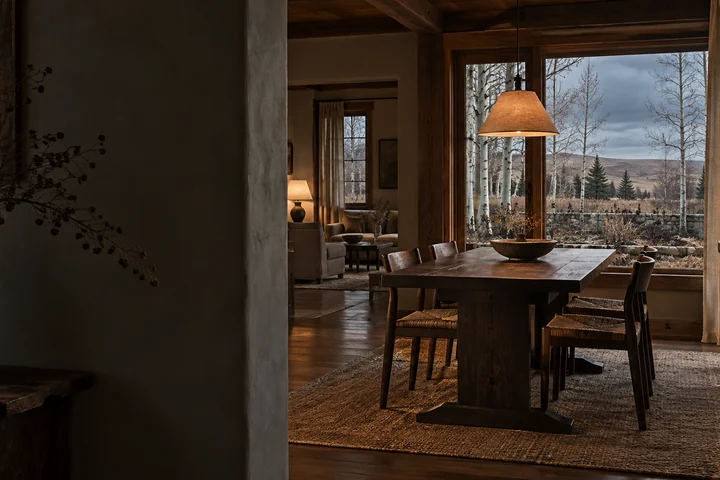
You do not have to fill every wall when moving into a country home. Living with a small number of considered works can reveal more about the rooms and your own preferences. Notice where you naturally pause, where you sit for a long conversation and which part of the house feels most personal. Those are useful starting points for placement.
A work seen across a room has a different presence from one encountered at close range. A drawing beside a reading chair may invite repeated attention; a larger piece at the end of a hall may become part of the approach to a shared room. Try to imagine the actual daily encounter rather than judging the arrangement only from the entrance.
Art & craft · Alberta country life
Let art and the view have distinct roles.
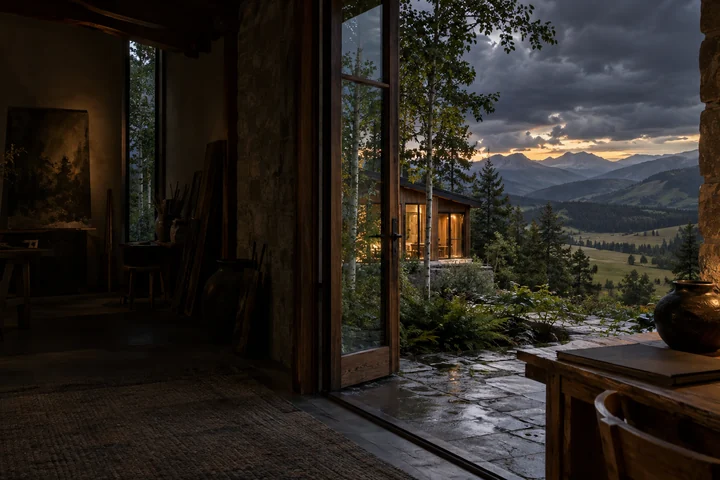
A generous window and a work of art do not need to compete for the same moment. One wall might allow you to settle into looking at a painting, while a nearby seat turns toward the land. A quieter part of a room may be the more rewarding place for a detailed work because it gives you time and visual space to notice it.
Consider the room throughout the day before deciding on a position. Strong sun, reflections and changing brightness can affect both viewing and the care a particular work needs. Ask the artist, framer or a qualified conservator about suitable display conditions for that object. A generic lighting rule cannot replace advice about its materials and condition.
Art & craft · Alberta country life
A commission begins with a conversation about the work.
If you are interested in commissioning a piece, start with the artist’s existing practice. What draws you to it? Which materials or ideas matter to the artist? A productive conversation gives both people a clear understanding of the project, while allowing the artist to make work that remains their own. A commission is not simply a way to order another version of a work you have seen.
Discuss dimensions, intended setting, timing, approvals, delivery and care directly with the artist or representing gallery. Keep the agreed details together. Ask what images or preparatory stages will be shared and how changes are handled. These are questions for the particular project, not promises that every artist offers the same process or accepts commissions.
Art & craft · Alberta country life
Keep the maker’s name with the object.
A home accumulates stories as well as things. The bowl bought after a long conversation, a print chosen with a partner or a textile connected to a memorable visit can carry meaning that is not obvious from its appearance. Keep the artist’s name, title, materials, date and any care information with the purchase record. Future members of the household should not have to guess.
You can also keep a short personal note about why you chose it. That account belongs beside, rather than in place of, the artist’s own explanation. The distinction respects both stories: what the maker intended and what the work has come to mean within your life.
Art & craft · Alberta country life
Make room for learning without needing a finished studio.
An interest in art can become an interest in making, but a dedicated outbuilding is not the first requirement. Begin with a suitable class, a notebook or a manageable practice at home. Public programmes and community arts organisations can introduce you to materials and to people who have spent years developing their skills.
Use the host’s current course information to understand experience levels, registration and equipment. A ceramics studio or specialised workshop is a working place with its own arrangements; the presence of a studio in a public building does not mean unrestricted drop-in use. Let an achievable first experience tell you whether you want to make more space for the activity.
Art & craft · Alberta country life
A repeated visit can become part of belonging.
The most satisfying cultural routine may be modest: returning to a gallery when an exhibition changes, visiting a maker’s approved open studio, or noticing what the local library is showing. Over time, names become familiar and your questions become more informed. You begin to recognise the work that keeps drawing you back and the places that make you feel part of a community.
This is one way a country home becomes connected to more than its land. The rooms hold objects you understand, and the surrounding region holds people and institutions you continue to support. Explore Alberta’s living heritage alongside that creative life, or follow country food and producers for another daily connection between a home and its wider community.