Gardens & landscape · Country life
Let the close garden frame the far country.
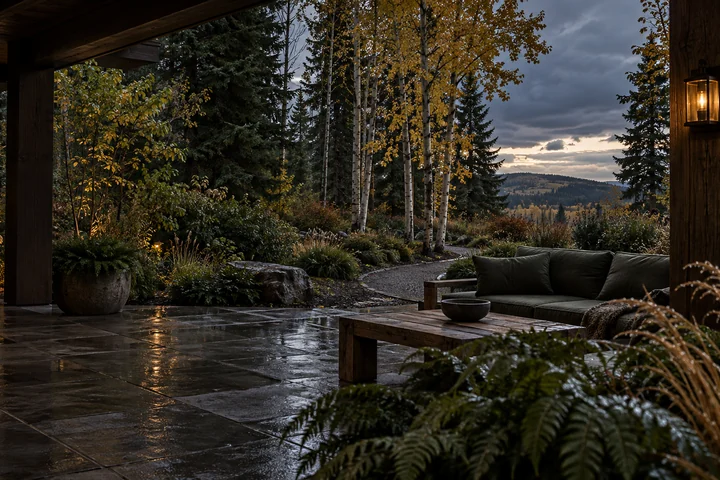
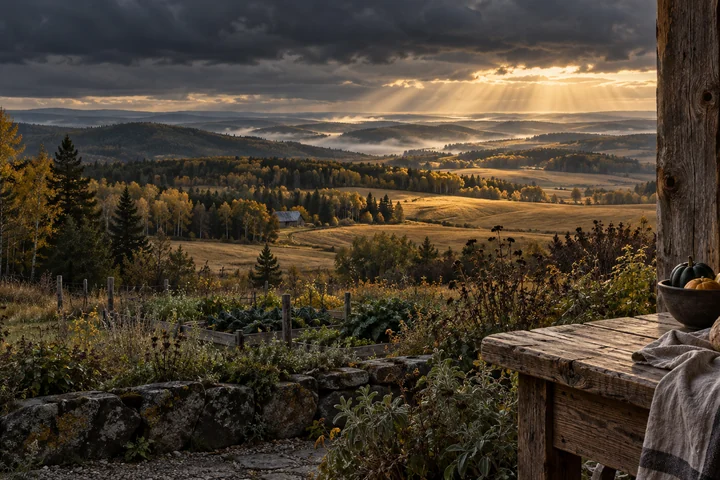
A garden does not have to compete with a long horizon. Close foliage, a low wall or a tree trunk can help the eye understand the distance beyond. The foreground gives the view a beginning. From a seat near the house, a small change in position may reveal a meadow opening, conceal a neighbouring building or bring an aspen branch into the edge of the scene.
Spend time looking before deciding what to add. Notice the view from the kitchen, the entrance and the place where you most often sit outdoors. Those are different daily experiences, even when they face the same direction. A modest garden arranged around them can feel more connected to life in the house than a large planted area admired mainly from a distance.
Gardens & landscape · Country life
Reader Rock Garden rewards close looking.
Reader Rock Garden occupies a Calgary hillside shaped by William Roland Reader, the city’s parks superintendent from 1913 to 1942. The City records restoration and reopening in 2006, followed by national historic designation in 2018. Its paths, rockwork and planting make it an especially useful place to experience a garden as a sequence of smaller spaces.
On a visit, notice how the next part of the garden becomes visible gradually. A turn, a change in level or a mass of foliage can alter the mood without needing a dramatic distance. That is an observation to bring home, not a reason to copy an entire historic layout. The most interesting lesson may be the way a particular seat belongs to the planting around it.
Gardens & landscape · Country life
Visit a hillside on its own terms.
The City’s visitor information lists Reader Rock Garden as open from sunrise to sunset, with uneven, sloping paths. It prohibits dogs and the collection of plants, flowers, fruit or seed, and limits walking groups to fifteen people. The City identifies wheelchair access east of the house, but that does not make every path equally suitable. Discuss particular access needs before organising a visit.
A garden can be appreciated without touching or taking its living collection. Photographs, notes and a sketch of how a path turns can preserve what interested you. The self-guided walk offers another way to understand the place. Allow your own pace, leave room for others and treat the house café’s arrangements separately from park opening.
Gardens & landscape · Country life
Beaulieu places a garden within a house’s story.
Beaulieu Gardens at Lougheed House brings formal beds, heritage plants and public green space together in Calgary’s Beltline. The operator describes a continuing history of gatherings around the house. Its rose garden is now named the Brawn Family Rose Garden. These are specific features of a public heritage landscape, rather than a generic formula for an Alberta country property.
Notice the relationship between the building and the open space around it. Planting can give a house a setting while also creating places to linger independently of the interior. At home, that may translate into a bench near a doorway or a planted edge that softens a terrace. The scale and formality can be entirely different while the relationship between indoors and outdoors remains thoughtful.
Gardens & landscape · Country life
Olds College combines garden pleasure with learning.
Olds College’s Botanic Gardens and Constructed Wetlands serves teaching and research as well as public visits. Collections, different planting areas and wetland landscapes sit within a working educational campus. It is a useful place to slow down and compare what you see, rather than treating every bed as decoration around a venue.
Give one part of a visit a question. How does the edge of a path meet the planting? Which leaves make a strong shape even without flowers? Where does a view widen? You do not need to identify every plant to learn from those relationships. A living collection is most rewarding when you leave with a more attentive eye, not simply a longer shopping list.
Gardens & landscape · Country life
A summer visit and a winter visit are different.
Olds College currently lists free public access from dawn to dusk during the May–October gardening season. In winter, the central portion remains accessible while the eastern portion closes. A full summer circuit should not be promised for a winter outing. Consult the college’s current map and visitor information for the visit you are planning.
That seasonal distinction is part of the interest of gardens. The same place may be approached differently when paths, planting and services change. At home, consider which small part of the garden you will use most often in each season. The path to a familiar seat or the view from one window can matter more than maintaining access to every corner at all times.
Gardens & landscape · Country life
Aga Khan Garden offers a distinct landscape tradition.
The Aga Khan Garden, Alberta, at the University of Alberta Botanic Garden near Devon, is a contemporary interpretation of Islamic landscape architecture in a northern setting. Designed by Nelson Byrd Woltz, it was inaugurated in 2018. Geometry, stone terraces, woodland paths and the relationship of light and water are central to its documented design.
The cultural tradition belongs to the place and deserves more than a decorative label. Visit with time to notice how enclosed and open areas relate, and use the university’s interpretation to understand the design. For a private country garden, the broader question might be how a threshold changes your experience of a view. That is a personal design reflection, not a claim that different garden traditions are the same.
Gardens & landscape · Country life
Kurimoto is a garden to experience by moving.
The Kurimoto Japanese Garden is a strolling garden opened in 1990. It is named for Dr. Yuichi Kurimoto, the first Japanese national to graduate from the university’s Faculty of Arts, in 1930. The university describes a Japanese design using plants suited to the northern climate, with viewing shelters and a teahouse among its features.
A visit invites attention to the sequence of views rather than a single panorama. Pause, look back and notice what a few steps have changed. At home, you can enjoy that same habit of attentive movement without borrowing cultural ornaments or claiming an unrelated garden identity. A short path around familiar planting can reveal several distinct experiences when it is walked slowly.
Gardens & landscape · Country life
Plan around the university garden’s current season.
The University of Alberta’s visitor page lists Friday–Saturday opening, 10 a.m.–2 p.m., October 16–November 14, 2026, with last entry an hour before closing. It lists a November 15–January 17 winter closure and special programming from January 18. Check current arrangements before travel.
At this October 11, 2026 check, it also reports Aga Khan water-feature maintenance, late-fall shutdowns, possible draining at Kurimoto and Patio Cafe closure for the rest of 2026. Flowing water and café service should not be promised. A garden can still reward a visit when its seasonal changes are understood.
Gardens & landscape · Country life
Keep a notebook for what you actually notice.
A useful garden notebook can be very simple. Record the date, the weather, the place you stood and what caught your attention. A photograph of the whole view and another of a close detail helps explain why the moment worked. If a plant label is available, record it accurately and keep it attached to that observation rather than relying on a name remembered later.
Over time, the notebook becomes a record of preferences. You may discover that you enjoy foliage and shadow more than bright flower displays, or that your favourite spaces have a sense of enclosure. These are useful conversations to have with a garden designer or local nursery. They are more specific than asking for a garden that looks like a single borrowed photograph.
Gardens & landscape · Country life
Choose an amount of garden you want to live with.
A country property can make an expansive garden feel possible, but the most satisfying scale is one you want to use and tend. Start with the places you pass every day: beside the door, near the kitchen or around a favourite seat. A small area given regular attention can have more character than a larger scheme that becomes a burden through the busiest part of the year.
Talk honestly about time, interest and help. Some people enjoy the changing work of gardening; others primarily want a comfortable outdoor place. Both can be part of a beautiful home. Let the design respond to that preference. The larger landscape beyond the garden can remain visually important without every view requiring a planted border or another piece of garden furniture.
Gardens & landscape · Country life
Find the places where you want to stay.
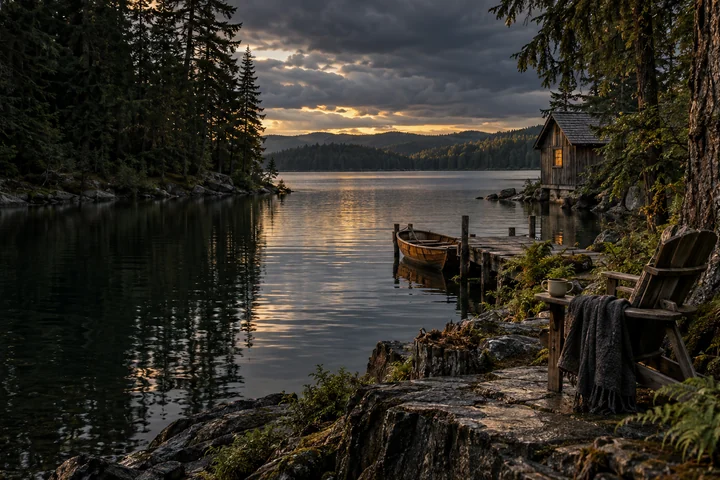
Before choosing a bench, spend time in the proposed location with an ordinary chair. Notice the light, the view, nearby movement and how the spot feels at different times of day. The best place on a plan may not be where you most enjoy sitting. A view can be excellent while the seat itself feels exposed or disconnected from the house.
There may be several useful places rather than one perfect outdoor room: morning coffee near a door, an afternoon seat beside foliage and a larger area for shared meals. Keep their purposes clear. For new walls, substantial structures or changes to the site, seek advice appropriate to the property. The everyday goal is simple: a garden with places you return to because they are comfortable.
Gardens & landscape · Country life
Let plant choices begin with the actual site.
A plant admired in a public collection is a starting point for research, not proof that it will thrive at your home. The growing conditions, exposure, soil and care can be different even within the same region. Record the exact plant and ask a knowledgeable local grower or qualified professional about suitability. A beautiful result comes from those specific conversations, rather than assuming that a provincial name describes one set of conditions.
The same care applies to claims about native planting. Use reliable identification and guidance for the local setting instead of selecting by appearance alone. The garden can still be deeply personal. Shape, texture, movement and colour offer many ways to express a preference while the practical selection is grounded in the place where the plants will actually grow.
Gardens & landscape · Country life
A useful corner can be part of the beauty.
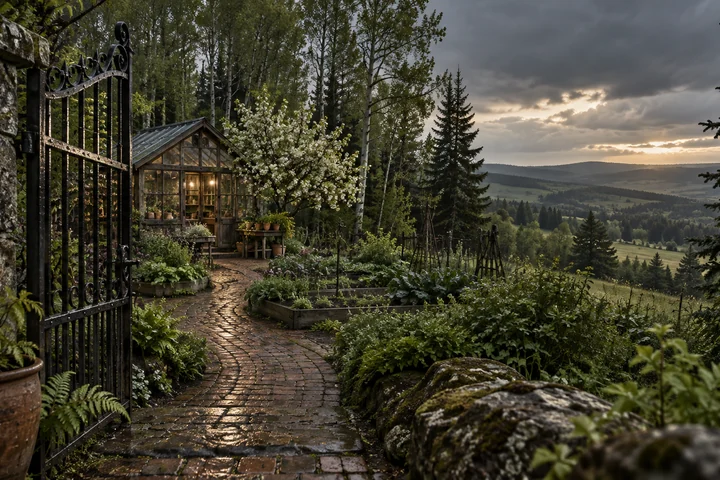
A place for tools, pots and a little daily work helps a garden feel inhabited. It need not dominate the view. A shelf inside a garden room, a well-used potting surface or a discreet storage area can support the ordinary tasks that keep the space enjoyable. Think about the route between that working place and the planting you tend most often.
Old materials can carry character here, but usefulness matters. A basket you can comfortably lift or a table at a workable height earns its place through repeated use. The image of country life becomes more convincing when it includes the means to live it. There is no need to hide every trace of work or turn the garden into a scene that can only be looked at.
Gardens & landscape · Country life
Connect the garden with the rooms inside.
A few flowers brought indoors, leaves noticed through a kitchen window or a small pot beside the door can make the garden part of daily domestic life. Use material from your own garden where appropriate; public collections have their own restrictions. A modest arrangement can preserve the character of the place better than a large display that could have come from anywhere.
If you enjoy growing food, let that interest develop at a scale that suits you and seek reliable guidance for the crops and conditions involved. The food and producers guide explores another way to connect the kitchen with Alberta growing. Home gardening and knowing local producers can complement each other without turning every household meal into a self-sufficiency project.
Gardens & landscape · Country life
Let materials and foliage do some of the work.
A garden’s character can come from stone, timber, trunks and leaves as much as from flowers. Notice what remains visible between the flowering moments. A low wall may catch changing light, an old timber frame may give depth to a window view, and a mass of foliage may make a small clearing feel sheltered. These relationships can hold a garden together through much of the year.
At home, collect observations before collecting materials. Which surfaces do you enjoy touching or seeing after rain? Which colours belong comfortably beside the house? If a property has historic fabric or a designated landscape, explore its documented history and appropriate conservation guidance before making changes. The heritage care guide introduces that more specific conversation.
Gardens & landscape · Country life
Allow a garden to have a winter character.
A garden does not stop being part of a home when the flowers are gone. The view may depend more on branches, landform, a wall or the contrast between a sheltered place and open country. Look from the rooms where winter days are actually spent. A small foreground detail can give depth to the window view even when the wider scene is muted.
Keep this observation separate from a claim that every plant should be left or cut in a particular way. Appropriate care depends on the species and site. What you can do at any stage is notice the garden’s structure and how it is experienced from indoors. That winter view may become one of the most personal parts of living with the landscape.
Gardens & landscape · Country life
Let different Alberta landscapes remain different.
An open-prairie garden, an aspen-country garden and a foothill garden need not pursue the same atmosphere. Our southern prairie, central parkland and foothills guides explore different landscape experiences. The garden can make those differences more immediate, through what is framed, where shelter is found and how much of the horizon remains open.
Begin with the place rather than a style label. A garden that feels calm beside one house may feel enclosed beside another. The surrounding land, the existing building and the way the household uses its rooms all matter. A distinctive country home is often the result of responding carefully to those particulars, one decision at a time.
Gardens & landscape · Country life
Enjoy a place that is never quite finished.
Part of a garden’s appeal is that it asks you to return. A path looks different after rain, a familiar branch changes the frame of a view and an ordinary seat becomes the best place to spend an hour. Notes from previous seasons help you notice those changes. The garden gathers a history of attention alongside its physical growth.
The larger country remains beyond it, changing at its own scale. Together they offer something unusually rich: close detail you can know intimately and a view that continues beyond your daily work. A garden does not need to occupy the whole property to deepen that relationship. It needs a place in the life of the home and enough room for your interest to grow.