The character of a wooded place
The small view can be the one you remember.
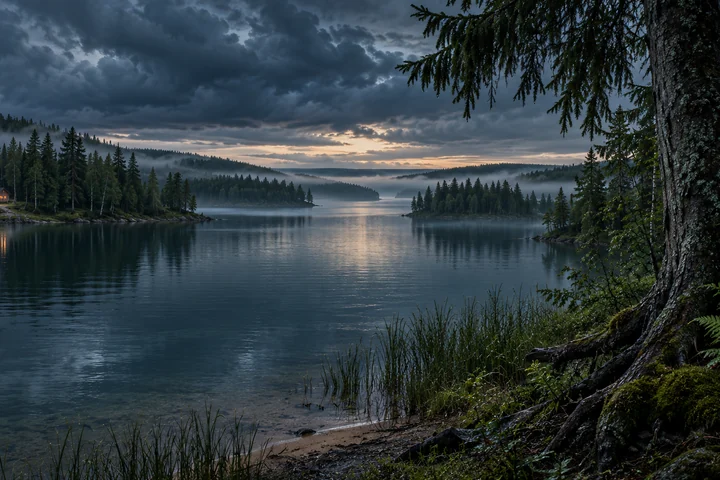
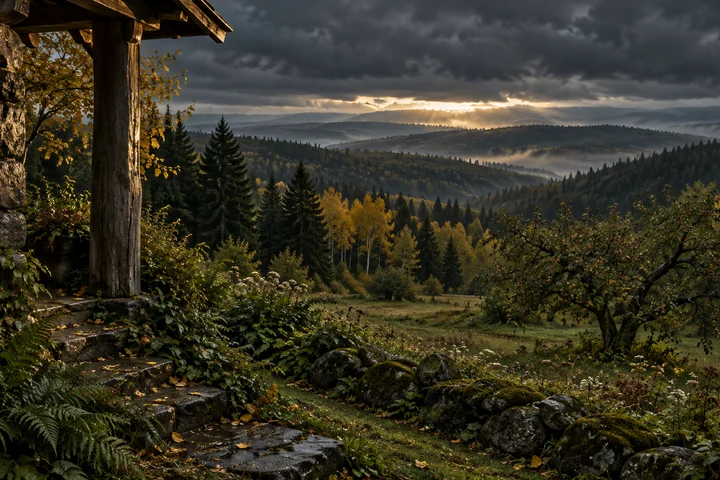
A woodland view is made from relationships close enough to study. The spacing between trunks matters. So does the edge where grass gives way to shrubs, or the place where a branch briefly catches the last light. You can spend an absorbing hour in a setting that would appear unremarkable as a small photograph on a map.
On a walk, notice how the view changes with your position. A few steps can bring a distant opening into sight or conceal it again. That shifting arrangement gives woodland its depth: the place holds something back, inviting another look without requiring you to travel very far.
This is useful attention to bring to a home search. An extensive stand of trees, a small grove beside a house and a long wooded approach offer different experiences. Describe the moments you enjoy rather than reducing all three to the same preference for a treed acreage.
Some people want enclosure around a private room and openness around the main living space. Others enjoy a house that looks into branches almost everywhere. The right balance becomes clearer when you imagine an ordinary breakfast, a working afternoon and the view after the leaves have fallen.
Woodland homes · Aspen country
Bunchberry Meadows rewards looking at the changes.
Edmonton & Area Land Trust’s Bunchberry Meadows guide describes aspen parkland interspersed with white spruce, tamarack, jack pine and wetlands. The land is held in partnership with the Nature Conservancy of Canada, following the stewardship of several families. Public foot access allows a close encounter with that variety.
Go with enough time to notice transitions. Compare the outline of one group of trees with the next, then look at the ground beneath them. A change in colour, texture or enclosure can make a short stretch of trail feel like an arrival in another room.
The entrance also includes native-plant plots maintained with the Edmonton Native Plant Society. They offer another scale of looking: a modest planted area beside a much larger natural landscape. Their interest lies in the particular plants and conditions, rather than in the idea of a garden as a miniature version of an entire forest.
Use the operator’s current trail map and notices to choose a visit. Dogs are not permitted under the information checked October 11, 2026. The property is a conservation place with its own purposes; enjoying its paths is also an opportunity to see how public access and continuing care fit together.
Woodland homes · Aspen country
At Wagner, the ground is part of the story.
Wagner Natural Area Society introduces a small boreal wetland landscape near Edmonton, including calcareous fens and marl ponds. Its Marl Pond Trail brings forest and wet ground into the same encounter. The society’s work combines preservation with education, research and citizen science.
Look beyond the first attractive grouping of trunks. Notice where the vegetation changes, how the path carries you through the setting and which details become visible when you pause. A woodland is much more interesting when the ground is allowed to be part of the view.
An interpretive walk can give names to things you had passed without recognising. It can also reveal the limits of a quick impression. A scene that seems quiet or empty may contain relationships that take repeated observation to understand.
Carry that curiosity home without trying to recreate the natural area. A residential garden has different uses and responsibilities. The lasting lesson may be to look closely before making plans, and to seek appropriate local expertise when a decision concerns the actual land or vegetation.
Woodland homes · Aspen country
A botanical image can begin a longer interest.
The Wagner society features an orchid poster by artist Rayma K. Peterson and connects it with her book, Habitat Paintings – Journeys in Art. It is a useful example of art bringing attention to a particular place and its plant life. Follow the society’s introduction to the artist and publication rather than treating the image as an anonymous woodland decoration.
A botanical work invites a different pace from a panoramic landscape. You may begin with a flower’s shape or an arrangement of leaves, then return to the image after a walk and recognise something that had previously been only colour.
At home, a small work can make a quiet room more personal. Give it enough space and light to be seen comfortably; its relationship with a chair or a desk may matter more than whether it matches the largest painting in the house.
A growing interest can also lead back into community life. As checked October 11, the Wagner society announces an October 24, 2026 open house in Spruce Grove with a talk by Dr. Mark Boyce and an RSVP request. That is a dated opportunity in the society’s programme, separate from a walk at the natural area.
Woodland homes · Aspen country
A wooded coulee changes the scale of Glenbow Ranch.
The Glenbow Ranch Park Foundation’s Tiger Lily Loop guide describes a path descending into a sheltered wooded coulee near the main arrival area. It offers a close, enclosed counterpart to the park’s wider ranch-country views. The foundation identifies the route as pedestrian only.
Notice what happens when the horizon disappears behind trees. Attention moves to the path, the slope beside it and the next opening. Emerging toward a view can then feel more dramatic than remaining in open country throughout a walk.
The route’s name is also an invitation to look carefully. The foundation distinguishes the western wood lilies found here from tiger lilies. A familiar label can draw you to a place while the actual visit gives you a more precise understanding of it.
Plan from the current Alberta Parks information. At the October 11, 2026 check, Scott Trail has a cattle-related closure until further notice; that is a separate named route, not a reason to assume every trail has the same status. The foundation publishes sunrise-to-sunset park access. Keep this a southern Alberta outing rather than appending it to an Edmonton-area garden day.
Woodland homes · Aspen country
A garden collection helps you look with purpose.
The University of Alberta Botanic Garden’s collections bring together ornamental plants, hardy fruits, a changing vegetable garden and other groups. The university presents them as a way to interpret habitats and relationships between people and plants, as well as places of beauty.
Choose one interest for a first visit. You might look at how a group of shrubs makes an edge, how foliage carries a planting after flowers have passed, or how a path allows a bed to be seen from more than one side. A focused visit often produces a more useful memory than trying to photograph everything.
Write down the names of plants that hold your attention, along with where and when you saw them. A photograph records appearance; a note can preserve the question that made you stop. Those questions provide a better starting point for a conversation with a local gardener than a shopping list assembled from pictures alone.
The visitor page, checked October 11, gives the 2026 regular fall season as ending that day and notes partial closures for maintenance or private events. It also reports maintenance affecting the Aga Khan Garden’s water features. Use the current programme for a later visit rather than assuming the regular gardens remain open throughout autumn.
Woodland homes · Aspen country
Kurimoto makes a walk into a sequence of encounters.
The Kurimoto Japanese Garden opened in 1990. The university describes it as a strolling garden using plants suited to the northern climate, with viewing shelters, a teahouse and other structures. It honours Dr. Yuichi Kurimoto, who graduated from the University of Alberta’s Faculty of Arts in 1930.
During an available visit, pay attention to the order in which things appear. A path can bring you close to a planting, turn your attention toward a structure and then open another view. The experience is composed through movement rather than supplied by one impressive panorama.
Sit when a suitable public seat is available and look back along the route you have taken. A place seen while moving can feel different from the same place held in one view. That difference is one of the pleasures of a garden designed to be walked and inhabited.
For a country garden, the useful question is how your own paths and resting places could make daily movement more enjoyable. The answer should arise from your life and site. Understanding the garden’s cultural and design context is more rewarding than collecting a few ornaments to suggest its character.
Architecture and the land
Dyde House gives woodland living an Alberta history.
The university’s Dyde House account begins with Sandy and Bobby Dyde acquiring aspen parkland in 1959. Their gifts helped establish the botanic garden, while part of the land became the setting for their country residence. Arthur Erickson received the house commission early in his career.
The university identifies Dyde House as Erickson’s only house project in Alberta and describes its masonry, projecting beams and attention to landscape. Those particulars give the story substance: a country home can be understood through a specific client, architect, material and place.
Look at the university’s authorised photographs with a question in mind. How does a wall frame what lies beyond it? Where does a roof appear to shelter an outdoor edge? Which parts of a room seem to belong to the close landscape rather than to a distant view?
The history offers a starting point for architectural looking; the page does not establish routine public interior tours. Ask the garden about any current authorised opportunities. You can learn from the documented building while respecting the arrangements that govern access to it.
Woodland homes · Aspen country
The country house was also a place for culture.
The university’s Dyde history connects Sandy with the Edmonton Symphony Orchestra and Bobby with art collecting and the Edmonton Art Gallery. Its account recalls the house as a place where artists, musicians and other guests gathered. That cultural life belongs beside the architectural story.
It raises a generous question for a home today: what would you want people to do together here? A room can support listening to music, looking at a painting, reading aloud or talking around a table. Those uses can be considered before deciding how formal or impressive the room should appear.
Choose the arrangement that makes the activity easy. Chairs need a useful relationship to one another; a work of art needs room to be seen; someone arriving with a book needs somewhere to put it. These modest decisions can give a gathering more ease than an interior arranged mainly for an empty-room photograph.
The Dyde example is distinctive because particular people made particular cultural connections. A contemporary home will develop its own. The pleasure lies in allowing interests to become part of the place over time, with objects and memories that have a reason to be there.
Woodland homes · Aspen country
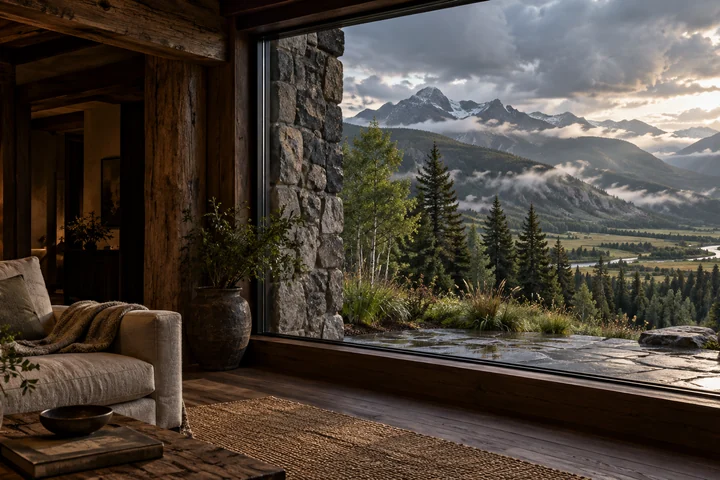
A window into branches can carry a whole room.
Imagine a small room looking toward a pale trunk and the shadows behind it. At breakfast, the light falls on one side; later, leaves move across the glass; after rain, the bark appears darker. The subject remains close while the experience keeps changing.
That is a different kind of richness from a very large outlook. It can suit a desk, a reading chair or the place where you make coffee. The room becomes a good place to spend time because the view rewards repeated attention.
Consider the window from the position in which it will actually be used. A view while standing at the door may differ from the one available when seated. The height of a sill, the placement of a chair and the objects immediately around them all affect the encounter.
During a home visit, spend a quiet moment in more than one room. Ask yourself where you would stay when there is no guest to impress and no photograph to take. The answer may be a modest corner that has been given a particularly good relationship with the trees.
Bring those preferences into a design conversation about the actual building. Close views, comfortable daylight and a sense of shelter are useful aims; the structure and site determine the appropriate way to achieve them.
Woodland homes · Aspen country
The approach can let the day fall away gradually.
A woodland arrival works through a series of small changes. You leave the wider road, pass a group of trees and begin to see the house in parts. The entrance becomes clear only as you come closer. That sequence can make a place feel settled in its landscape.
Clarity still matters. A guest should understand where to arrive and which door receives them. An attractive approach becomes less enjoyable if it turns the last few metres into a guessing game, particularly in poor weather or after dusk.
Think about the pause at the end of the journey. A sheltered place to stand, a comfortable door handle and enough room to set down a bag all contribute to the feeling of welcome. They allow the landscape to remain absorbing without making an arrival awkward.
At a house among trees, the threshold may be the most important outdoor room. It is where muddy footwear, an armful of groceries and a conversation with someone leaving all have to fit into ordinary life.
When considering an existing property, walk the approach as well as viewing it from a vehicle. The practical access questions belong with the appropriate professionals; the experience you can assess yourself is how naturally the place receives you.
Woodland homes · Aspen country
A small cultivated edge can sit comfortably beside trees.
The garden beside a woodland house does not have to compete with the whole surrounding landscape. A modest area near the door can supply close detail and a place for everyday use, while the farther view remains largely shaped by trees and open ground.
Begin with the life you want there. A seat for one person asks for a different arrangement from a table used by a family. A small growing area needs a purpose and a routine you will enjoy. Deciding how the space will be used helps prevent a garden from becoming a collection of unrelated features.
Look at the boundary between cultivated and less formal ground. A path, a change in surface or a simple planting edge can make that transition legible. The most satisfying choice may be quiet enough that you notice the plants and the land before the construction.
Give the near garden a relationship with an indoor view. A branch, a group of stems or the outline of a seat can remain interesting from the house when you are spending less time outside.
Use local advice for plant selection and any work affecting the actual woodland. The design intention is straightforward: make a useful place close to home, with enough restraint for the larger setting to keep its presence.
Woodland homes · Aspen country
Woodland photography begins with choosing less.
A forest can supply more detail than a photograph can comfortably hold. Instead of trying to include every trunk, choose one relationship: pale bark against a dark grove, a branch crossing an opening or a narrow band of light on grass.
Move a little before taking the picture. The same subject can become clearer when a distracting branch no longer crosses it, or when the space behind it gives its outline more definition. Often the important decision is your position rather than a more elaborate camera setting.
Try making a short sequence from one permitted spot. Record a broad view, a closer grouping and one small detail. Later, compare which image best recalls the feeling of being there. It may be the least spectacular subject that holds the strongest memory.
A notebook can complement the photographs. Write down the light, the sound and the reason you stopped. These are parts of the visit that a single image may not preserve.
At home, edit the collection. A few prints that you want to see repeatedly will tell a more personal story than a large display assembled to prove how much ground you covered. Keep any public-site photography within the operator’s current arrangements.
Woodland homes · Aspen country
The same trees can give a house several different lives.
A summer woodland view often draws attention to the canopy and the spaces beneath it. Later in the year, trunks and branching patterns become more prominent. An opening that felt enclosed can reveal another part of the land.
Imagine those changes from the rooms you would use most. The view beside a desk may become more open, while a reading corner gains interest from the architecture of bare branches. A house can offer different pleasures through the year without requiring every season to be a version of summer.
Notice the ordinary transitions too: where outdoor clothing is left, how a visitor reaches a seat and which covered space remains useful when the weather changes. Comfort at those edges helps you stay connected with the landscape.
Keep your expectations specific. A photograph taken in one season does not describe the light or enclosure at every other time. If a wooded property holds your interest, returning under different conditions can reveal what you value about it.
Allow quieter days to count. The pleasure of living near trees is often the chance to look out repeatedly, rather than the obligation to turn every weekend into a substantial excursion.
Woodland homes · Aspen country
Let the woodland become part of an ordinary day.
An appealing country life needs places for the hours between outings. A table that can hold work and lunch, a chair near a close view and a room where the evening feels comfortable all contribute to a home’s lasting value.
Choose a small daily ritual that fits the setting. You might open the curtains before making coffee, spend a few minutes looking from the same window or take a permitted walk when conditions suit. Repetition is what lets small changes become visible.
Guests can share that experience without an elaborate programme. Give them a place to read and a clear idea of the day’s one main outing. A conversation about something seen at the garden may be enough to carry the visit into supper.
Inside, let materials and objects keep their own character. A timber table can be chosen for the way it is used; a ceramic bowl can recall its maker; a painting can hold attention independently of the view. The room need not turn every object into a woodland motif.
The result is a home connected with its setting through use. You should be able to enjoy it on a quiet weekday as readily as on the afternoon when everything outside happens to look extraordinary.
Woodland homes · Aspen country
Explore these places through separate, unhurried visits.
For an Edmonton-area stay, choose Bunchberry Meadows as the main outdoor visit and leave time afterward to reflect on what you noticed. On another day, Wagner can introduce a different woodland and wetland story, with a society programme added only when one is actually scheduled.
Plan the botanic garden around its current operating season or a confirmed event. Kurimoto, the plant collections and the documented Dyde House story offer several interests; they deserve time beyond a brief stop between distant destinations.
Keep Glenbow Ranch for a southern Alberta stay. The wooded coulee and wider ranch landscape can then be experienced as parts of the same place, without turning the day into a long drive between unrelated regions.
Compare these experiences with Beaver Hills parkland, central Alberta parkland and northeastern lake country. A preference for woodland may lead to quite different communities and patterns of daily travel.
When you are ready to investigate a residential acreage, bring Dusko a description of the life you want among trees. The practical ownership library can support the property questions; this guide helps you recognise the setting you would want to return to.