Architecture · Arts & Crafts influences
Begin with the ideas behind the appearance.
The V&A’s introduction places Arts and Crafts in late nineteenth-century Britain and describes a movement organised around ideals rather than a single prescribed style. Concern for how things were made, the role of makers and the standing of the decorative arts shaped its ambitions. That history is broader than a collection of gables, brackets and patterned fabrics.
For a country home today, it opens a useful question: which parts of the house deserve closer attention because you use them every day? The answer might be the entry, a dining table or a room for making things. Start with those experiences. An architectural influence becomes more meaningful when it helps you describe a life, rather than simply identify a look.
Architecture · Arts & Crafts influences
An Alberta home where art and daily life met.
The Leighton Art Centre museum describes the last residence of A. C. and Barbara Leighton as an Arts and Crafts inspired home designed by A. C. in the 1950s. The museum’s collection includes art, craft, furniture and objects owned or made by the couple. It is a specific Alberta example, shaped by two creative lives and a foothill setting.
A visit can prompt you to think about the relationship between a home and its occupants. What would reveal your interests in a room? Where would a collection grow, or a project be left ready to resume? Use the centre’s visitor information when planning an outing; the property is not publicly accessible when the centre is closed.
Architecture · Arts & Crafts influences
Make space for a creative life to continue.
The centre’s history of the Leightons records Barbara’s return to art study in the late 1960s and her 1969 diploma in fibre and metal crafts. That detail adds another dimension to the home’s creative history. Art and making were continuing activities, with new work and interests developing over time.
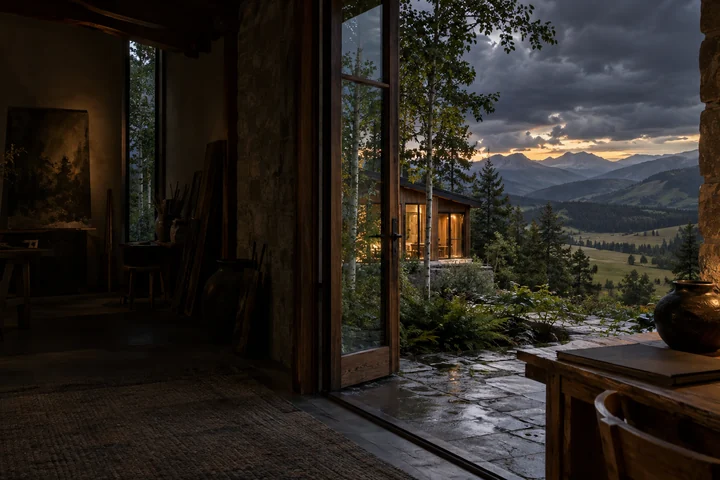
Imagine what that could mean in your own home. A small worktable, useful storage and a place with suitable light can make it easier to return to a project. The room need not be a grand studio. It may be a corner that belongs to drawing, sewing, arranging flowers or repairing a cherished object. Architecture can give an ordinary creative habit the space it needs to become part of life.
Architecture · Arts & Crafts influences
Let the room and its objects belong together.
In its account of Arts and Crafts design for the home, the V&A describes the ambition to bring architecture, furnishings and decorative objects into a coherent interior. That historical idea invites a fresh look at how a room is assembled. A table, chair and light can feel related without being identical or bought together.
Consider the proportions first. A substantial table may need quieter chairs; a richly textured wall may benefit from a simple cabinet nearby. Allow each element a role. The room can feel complete because the relationships make sense, with enough space around individual pieces to appreciate them. This approach leaves room for the household’s changing preferences rather than fixing every detail at once.
Architecture · Arts & Crafts influences
A porch you have a reason to use.
A deep porch can be one of the most engaging parts of an Arts and Crafts influenced country home. Timber posts give it rhythm, the roof makes a sheltered edge and the house has a place from which to greet the garden. Its value becomes clearest when you imagine being there: setting down a bag, talking with a guest or sitting after dinner.
Choose a seat for an actual view, even if that view is close planting and the approach. Think about the route past the furniture and the relationship with the door. A porch can carry considerable architectural character without elaborate decoration. Our arrival guide explores that welcoming edge in more detail, from the first glimpse of a home to the room just inside.
Architecture · Arts & Crafts influences
Notice the details you touch.
A handle, rail or cupboard front is experienced at a different distance from a roofline. These details are small enough to know intimately. Their shape, texture and placement can make an everyday action pleasing. Look at the way a rail ends, how a drawer sits within a cabinet and where timber changes direction around a corner.
When planning work, ask a designer or maker to show the important details at a scale you can understand. A sample or full-size drawing can clarify a choice that remains vague in a photograph. The aim is a useful, coherent result suited to the particular house. Technical construction decisions belong with the people responsible for the work; your observations help explain what you want to experience.
Architecture · Arts & Crafts influences
Choose a piece for the life around it.
A well-made table is also a place where people gather. Before choosing one, imagine breakfast, a long meal with friends and an afternoon project. Consider its size in the room and the chairs you would use with it. The object’s character includes its relationship with those ordinary scenes, rather than only the way it looks when the surface is empty.
The same is true of a reading chair or a cabinet. Where will it stand? What needs to be within reach? Will the view or a nearby lamp make the place inviting? A thoughtful room allows its furniture to have a purpose. Over time, the favourite piece may be the one that makes a familiar occupation comfortable and gives the household a natural place to settle.
Architecture · Arts & Crafts influences
Meet the craft being made in Alberta now.
The Alberta Craft Council supports contemporary and heritage craft and operates gallery and shop locations in Edmonton and Calgary. Its gallery information introduces work in media including ceramics, glass, wood and fibre. It offers a current starting point for seeing the range of objects being made in the province.
Approach that work with curiosity about individual artists and practices. Alberta’s craft culture contains many histories and perspectives; it should not all be described as an extension of a British movement. Ask about the maker, material and intended use of a piece that interests you. The connection with a home can be personal and contemporary, grounded in an encounter with the work itself.
Architecture · Arts & Crafts influences
Build a collection at the pace of your own interest.
A bowl, woven piece or small cabinet can bring a room into focus. You might first notice its shape, then learn about the person who made it. Living with the object adds another layer: how it catches light, where it sits comfortably and whether you reach for it often. Those experiences help you understand what you want to collect next.
There is no need to furnish the whole house around one theme. Begin with a few pieces that matter to you and give them enough space. Our guide to art and galleries follows a similar approach to living with artwork. A home can gain coherence through thoughtful placement while retaining the surprise and individuality of things discovered at different times.
Architecture · Arts & Crafts influences
Let pattern have a place in the room.
A patterned textile can give a room colour and movement, especially beside quieter timber, plaster or stone. Look at it from across the room as well as close up. The scale of the design and the area it occupies affect how strongly it speaks. One curtain, cushion or upholstered chair may give you all the pattern you want.
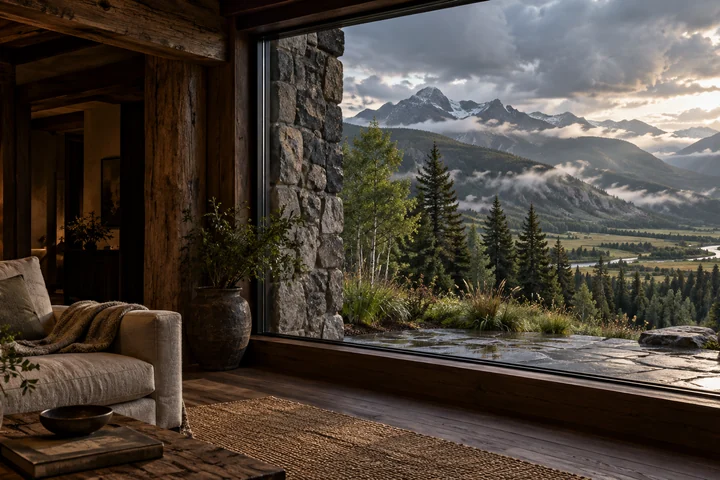
Consider the landscape outside alongside the interior. Bare aspen, summer leaves and a busy garden already create intricate views. A simpler fabric near the window can let those details remain legible; a patterned piece elsewhere may provide a different kind of interest. The pleasure is in the balance you enjoy, rather than in making every surface carry a historical reference.
Architecture · Arts & Crafts influences
Give everyday ceramics an everyday place.
A handmade cup is an object you can know through use. Its handle, rim and weight become familiar in a way that a distant decorative piece may never be. A bowl placed on the kitchen table can hold fruit one day and garden cuttings another. The room’s character grows from those small, repeated encounters.
When considering a piece, ask its maker or seller about the uses and care appropriate to that particular work. Display and daily use can both be rewarding, depending on the object. A useful shelf or cupboard within reach helps a collection take part in the household. It also gives the kitchen or dining room a visible connection with the things people enjoy handling.
Architecture · Arts & Crafts influences
Use light to enjoy the work.
Timber grain, woven fibre and a ceramic glaze respond differently to light. Look at an object beside a window, then under the room’s evening lamps. You may discover that a quieter corner suits it better than the most prominent shelf. A room with several kinds of light gives a collection different moments through the day.
Think about how you would sit near those objects. A lamp beside a chair can make a textile or cabinet part of the evening atmosphere, while the far view belongs to daytime. Our windows and light guide follows these changing relationships. The aim is a home that rewards attention at close range as well as offering a beautiful landscape beyond it.
Architecture · Arts & Crafts influences
The garden can share the house’s scale.
A garden beside a crafted country home can have an intimate character even when the land beyond is expansive. A narrow path, textured planting and a seat near the porch create details that are experienced slowly. The cultivated ground gives the house a close companion, with woodland or meadow providing a more distant setting.
Imagine the view from the main rooms as well as from the path. A familiar tree can appear through several windows; a simple garden edge can connect the porch to the larger landscape. Our country gardens guide explores that transition. The rewarding composition has layers you can enjoy from a chair, with reasons to step outside and look more closely.
Architecture · Arts & Crafts influences
A palette with room for individual objects.
Deep green, warm timber, muted stone and pale plaster can give a country room a settled atmosphere. A textile or painting can introduce a stronger note without competing with every other surface. Begin with the objects and materials you already enjoy, then look for relationships among them. Colour can be gathered from a life rather than imposed as a complete scheme.
Try the important choices together in the actual room. A small sample may not reveal how a colour will feel across a large surface. Move back, look towards the window and return after dark. The aim is a palette that holds the room comfortably and leaves enough calm for craft, furniture and the country outside to remain interesting.
Architecture · Arts & Crafts influences
Have a useful conversation with a maker.
If you are considering a commissioned piece, begin with its purpose and setting. Describe the room, the space available and how you hope to use the object. Share a few references and explain what attracts you to them: a simple outline, a particular texture or an especially comfortable proportion. Then allow the maker’s own practice and ideas to enter the conversation.
Ask about the process, timing and what information is needed before decisions are made. A commission is a chance to understand a piece as it develops, rather than simply select a finished object. For work integrated into the building, involve the relevant designer and trades so the proposal belongs to the whole room. The most satisfying result can feel both individual and naturally at home.
Architecture · Arts & Crafts influences
Keep the character you have learned to value.
In an older home, a cabinet, stair or window arrangement may already give the interior a distinctive voice. Live with those qualities in your imagination before deciding what to change. A feature that seemed modest on the first visit may turn out to be the part that makes a room comfortable, useful or particularly memorable.
Where heritage significance is documented, establish the records and involve appropriate conservation expertise. Our heritage care guide introduces that wider approach. The design opportunity is a new chapter that respects what matters in the building while making room for the household today. Observation and specific professional advice help distinguish valued character from work that needs attention.
Architecture · Arts & Crafts influences
Bring the influence into the present.
Arts and Crafts ideas can be interesting in a home that also contains contemporary art, modern lighting and a practical working kitchen. The relationship depends on proportion and care, rather than a requirement to live within a complete period setting. A clearly designed new room can give an older piece a generous place, and a modern object can sit beautifully beside substantial timber.
Explore contemporary country homes for another expression of warmth and material character. The common question is how the home supports the people in it. A coherent room has space for familiar objects, new interests and changing routines. Its history can remain visible while daily life continues to give it fresh meaning.
Architecture · Arts & Crafts influences
The home becomes richer through familiarity.
The pleasure of a carefully made home often grows quietly. You recognise the feel of a rail without looking at it, know which cup you prefer and choose the same chair when the evening turns cool. The garden and rooms become familiar companions. Their details matter because they are woven into repeated, ordinary moments.
That is a generous way to think about luxury in the country. The house can offer an extraordinary setting while remaining a place to use comfortably. Craft, materials and objects add depth at human scale. A home shaped with care gives the landscape a worthy companion and gives its occupants many small reasons to look forward to coming back.