Architecture · Outdoor rooms
Begin with something you would do often.
Picture a small occasion before a large gathering. You carry a cup outside, sit for twenty minutes and return to the kitchen. The place needs a comfortable seat, somewhere for the cup and a view you enjoy from that position. If this everyday scene feels convincing, the outdoor room already has a purpose.
A terrace designed only around a rare party may be less inviting during an ordinary week. Think about breakfast, reading, talking with a friend and sitting after a walk. Choose the activity that matters most, then let the arrangement grow around it. The pleasure of the space becomes easier to assess when you can describe how it enters a familiar day.
Architecture · Outdoor rooms
Let the house give the space its first shape.
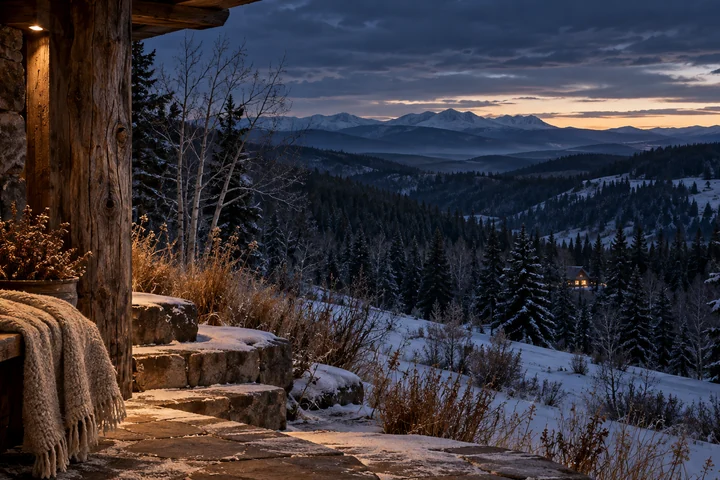
The edge of a building can make a powerful outdoor setting. An eave creates a ceiling, a wall supplies a backdrop and an opening leads back to the rooms inside. Timber posts give rhythm to the view. These elements can make even a modest terrace feel like a place with its own character.
Look at the relationship between the sheltered area and the open garden. A seat tucked close to the wall offers one experience; the edge of the terrace offers another. The composition can have room for both without becoming crowded. Materials shared with the house help the outdoor room feel naturally connected, while planting softens the transition into the wider landscape.
Architecture · Outdoor rooms
A garden can make a room without a roof.
Planting, a low wall or a change in the garden’s shape can define a place to sit away from the house. The enclosure may be partial, with one side opening towards meadow or trees. You feel gathered into the garden while remaining aware of the country beyond it. The space can be quiet enough for one person and generous enough for a conversation.
Imagine the view from within that enclosure. A familiar tree or planted border may be the main attraction, with the distant horizon appearing only through an opening. A smaller setting can reward close attention. Its value does not depend on reproducing the scale of the property around it; it gives the household another way to experience that property.
Architecture · Outdoor rooms
See how a lawn can hold a domestic occasion.
The City’s Reader Rock Garden walking tour describes the historic main lawn as a place for games, lunches and family events. That domestic use gives another dimension to the Calgary garden’s paths, planting and rockwork. It is a public cultural landscape today, with a history that includes the life of the Reader household.
The idea to carry home is straightforward: a garden is also somewhere things happen. A small lawn or level sitting area can have a clear role alongside more intricate planting. Observe the relationship between the spaces when visiting, using the City’s current park information to plan. The public garden’s path conditions and visitor arrangements remain specific to that site.
Architecture · Outdoor rooms
Give the table room for the whole meal.
An outdoor table is used before and after anyone sits down. Someone brings plates from the kitchen, another moves a chair, and a guest stands to look at the garden. Imagine those movements with the furniture in place. A beautiful table becomes more enjoyable when the area around it supports the occasion.
Think about the route back indoors and where serving dishes might wait. The space need not contain a second complete kitchen to make a meal outside feel generous. A useful relationship with the house may matter more to your routine. Our country food guide follows the ingredients, markets and producers that can give a shared table its local character.
Architecture · Outdoor rooms
Make a place for people to face one another.
A landscape-facing seat invites looking; a small group of seats invites conversation. An outdoor room can acknowledge both. Arrange the main seating around the way you like to spend time, with the view remaining part of the setting. A sofa and one chair can create a more engaging place to talk than a row of seats all facing the horizon.
Consider the table at the same time. It should feel related to the seats and the things people carry outside. Keep the route through the space understandable, especially where the door or garden path meets it. A well-proportioned arrangement gives the household a reason to settle there without requiring the scene to look perfectly composed whenever someone stands up.
Architecture · Outdoor rooms
Allow one place to belong to quiet.
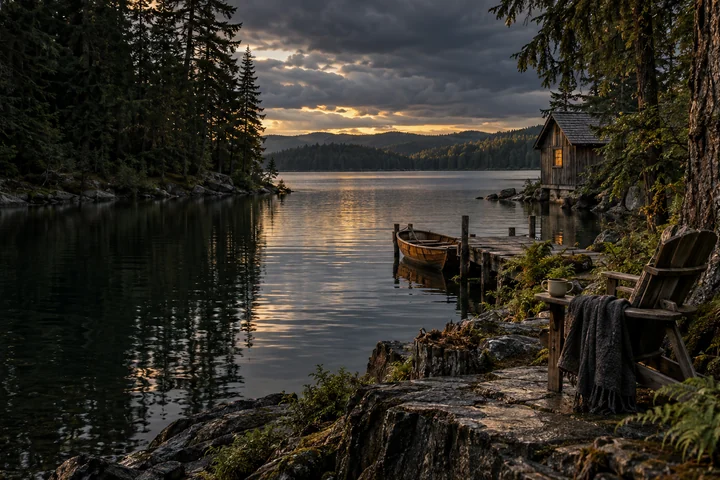
A garden seat a little apart from the main terrace can change the rhythm of a day. It may be reached by a short path, with the house visible through planting. The distance need not be great. A turn in the garden and a different outlook can make the place feel distinct from the area used for meals and guests.
Imagine what would draw you there: a favourite tree, the close texture of planting or a view back towards the house. A simple seat can be enough when the setting has a clear identity. The household gains another destination, with a different atmosphere from the main outdoor room. Country luxury has room for those smaller pleasures as well as generous gathering spaces.
Architecture · Outdoor rooms
Experience the actual place before choosing the arrangement.
The same property can offer very different outdoor experiences around the house. A corner may feel tucked into trees, while another opens towards a broad sky. Spend time where the terrace is proposed or already stands. Notice where you instinctively pause and which view you keep returning to.
If the space is being designed, share those observations along with the times of day and seasons you hope to use it. Shelter, sun, wind and the relationship with the building need to be considered for that actual site. A photograph can explain an atmosphere you like, but it cannot establish how an outdoor place will feel in all the conditions that matter to your household.
Architecture · Outdoor rooms
Let materials be enjoyed at close range.
In an outdoor room, you see the grain of a post, the edge of a table and the pattern of stone beneath the furniture. Those close details can give depth to the whole scene. A restrained palette allows them to remain legible, especially when the garden already offers a rich mixture of leaves, stems and seasonal colour.
Look at materials together beside the house rather than treating each as an isolated selection. Consider the qualities you want to see from the main rooms as well as while sitting outside. The timber and stone guide explores those relationships further. Product suitability, installation and maintenance belong in the property-specific design discussion with the people responsible for the work.
Architecture · Outdoor rooms
Choose furniture for the experience of sitting there.
The most attractive outdoor chair is one you want to use. Consider its scale alongside the table and the amount of space around it. A substantial piece may suit a broad terrace, while a smaller garden seat can feel complete with much less. The arrangement should remain comfortable in relation to the house, rather than borrowing the scale of a resort setting.
Ask suppliers about the particular furniture’s intended conditions and care, including cushions and storage. Those practical details affect how easily the room joins daily life. Think also about what the space looks like when some pieces are put away. A well-shaped terrace can retain its character through quieter seasons, with the building, planting and view still giving it a strong identity.
Architecture · Outdoor rooms
Give the outdoor room a close companion.
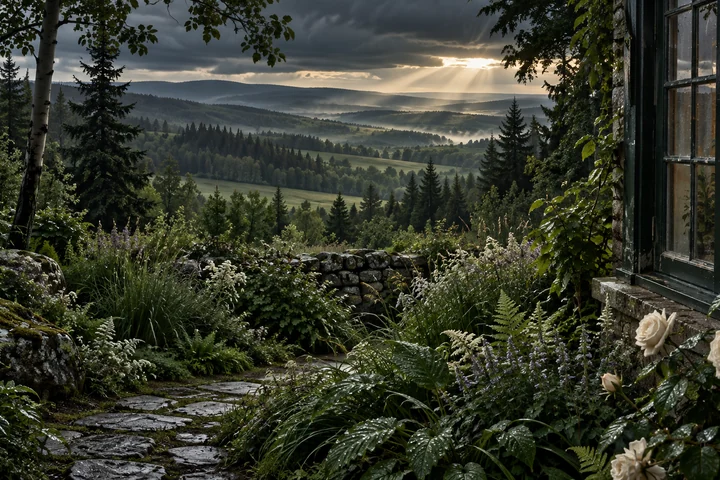
Planting beside the seat can make a terrace feel embedded in the garden. Leaves, grasses and branches add a near layer before the view reaches the middle ground. That detail is especially rewarding when the far country is softened by weather. There is still something to notice immediately around the place where you sit.
The close layer can be simple and suited to the actual setting. It might be one established tree, a planted edge or a small area of garden that the household enjoys tending. Consider it from the indoor rooms too. The outdoor room becomes part of several views through the house, connecting daily life with the same familiar patch of country.
Architecture · Outdoor rooms
Leave a little distance beyond the furniture.
The view from an outdoor room often becomes richer when the eye can travel past something close. A post, garden edge or stand of trees establishes scale before the land opens further away. A rolling hill or broad sky can then feel expansive without dominating every part of the space.
This depth does not require water or mountains. Woodland country and central parkland offer other ways to imagine a layered setting. In a particular property, look at what is actually present and how the room might relate to it. The most compelling composition can be a careful view through familiar trees, with just enough of the horizon visible beyond them.
Architecture · Outdoor rooms
Make the return indoors part of the pleasure.
An outdoor room is experienced from both sides of the door. You see the terrace from the kitchen, step out with a meal and return as the evening cools. A considered relationship between those places can make the home feel generous. The space outside has a role in the room inside, even when no one is sitting there.
Imagine the furniture in both settings at once. The outdoor table need not block the view from an indoor chair; a garden seat might become a point of interest through a smaller window. Our windows and light guide explores that exchange. The aim is a sequence of enjoyable places, with clear reasons to move between them.
Architecture · Outdoor rooms
Let guests settle without directing every moment.
A welcoming terrace makes its use understandable. People can see where to sit, put down a glass and find the route back to the house. A guest who wants to keep talking can remain near the table, while someone drawn to the garden has another place to pause. The host has room to move as part of the gathering.
Consider how the space feels with a few people rather than its maximum imagined crowd. Many country visits unfold in small groups and unplanned conversations. Our hospitality guide follows that experience into guest rooms and shared mornings. The outdoor room can be one of the places that makes a visitor feel at ease, without every occasion requiring elaborate preparation.
Architecture · Outdoor rooms
Allow evening to bring the scene closer.
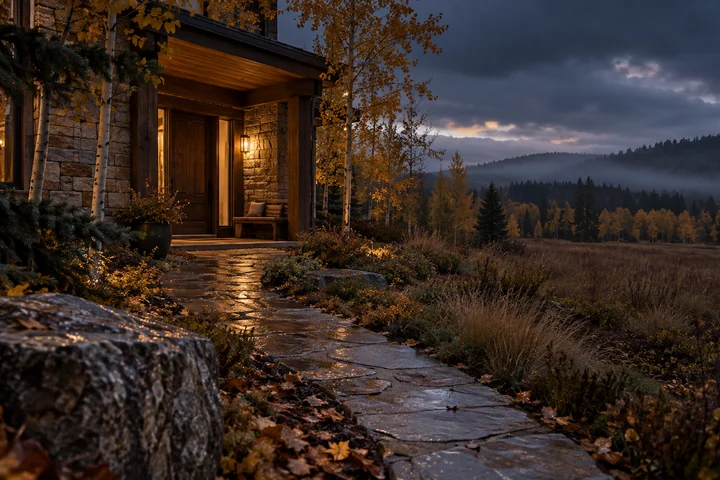
At dusk, the outdoor room changes emphasis. The garden becomes a quieter backdrop and the material around the seat draws more attention. A restrained light near the house or the glow of a room inside can give the terrace an intimate character. The scene has another kind of depth, with close detail and a darker landscape beyond.
Describe the atmosphere you want to the relevant designer, including the relationship with neighbouring uses and the night setting. Lighting should be developed for the property and its intended use. The after-dark guide explores the wider country evening. A terrace can feel welcoming while leaving room for the darkness that makes that experience distinctive.
Architecture · Outdoor rooms
Give the terrace a place in the whole year.
An outdoor room does not need to be occupied every day to remain part of the home. In autumn it may hold a last long lunch; later, its furniture is reduced and the structure becomes more apparent from indoors. Bare branches, a quiet garden and the roof edge create another composition. The place retains meaning through the household’s memory of using it.
Think about the view when the cushions are stored and the table is empty. Good proportions and a considered relationship with planting continue to matter. An outdoor room can belong to the seasons as they are, with the household choosing how and when to enjoy it. The appeal lies in several satisfying experiences rather than one permanent summer photograph.
Architecture · Outdoor rooms
Write the brief as a few small scenes.
Describe breakfast for two, supper with friends and an hour alone in the garden. Note where each scene begins, what is carried outside and what makes the place inviting. Add the actual site observations you have gathered. These details make it easier for a designer to understand the relationship between the house, furniture and land.
Site levels, drainage, access, structural work and other technical decisions require the appropriate property-specific expertise. Keep the experience you want visible through that process. The terrace is ultimately a place to live: a setting for familiar meals, a view shared with someone you like and an ordinary afternoon made more rewarding by being close to the garden.
Architecture · Outdoor rooms
The favourite place may be the simplest one.
Over time, one seat may become the place everyone recognises as yours. You know how the garden looks from there, where to put a cup and which part of the view changes first with the weather. The outdoor room gains character through those repeated moments. Its luxury is experienced through familiarity as well as first impressions.
A country home can offer extraordinary land while keeping that human scale close. A carefully placed table, sheltered edge and familiar path can make the landscape part of a week rather than only a backdrop. Continue with interiors to explore how the rooms inside support the same life, with places to gather, retreat and return to the view.