Central Alberta parkland
Enjoy the movement between grove and meadow.
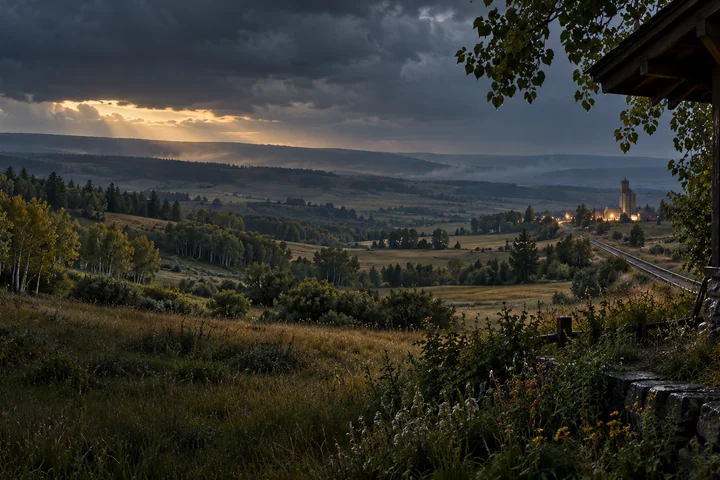
An aspen grove can make the wider landscape feel more expansive. The pale trunks give the eye a nearby rhythm, while openings reveal grass and another wooded rise. From a fixed place, the view may include several distinct distances rather than a single uninterrupted horizon.
Walk a permitted public route slowly enough to notice that change. Under leaves, light becomes scattered and colour gathers around individual plants. At an opening, sky and weather return to the foreground of your attention. Neither experience is complete without the other.
For a country home, consider whether you prefer looking into trees, across a meadow or through a combination of both. A close outlook can make a study absorbing; a broader one may suit the main living room. Giving each room the same panoramic ambition can overlook some of the setting's best qualities.
The parkland's appeal often lies in this variety. You can seek shelter without giving up openness, and create a maintained garden without asking it to become the whole landscape.
Central Alberta parkland
Walk Lacombe before making a schedule.
Lacombe's historic buildings offer a good reason to begin on foot. The Flatiron Building's museum history records its construction in 1903 and its early banking use. Its unusual form and brick-and-sandstone exterior give a specific architectural focus to a town walk.
Look at how the building addresses its corner and how neighbouring façades meet the street. The spaces between doors, the height of upper windows and the depth of a cornice affect the experience as much as a single landmark. A town's character emerges from these relationships.
Allow time to pause rather than treating the walk as a checklist. A building might prompt a question about its former use; a window display might introduce a maker or an upcoming event. These small discoveries can make a return visit feel inviting.
If Lacombe is part of a possible country life, try the town at an ordinary pace. Notice where you would meet a friend, browse, attend a programme or sit over a meal. Familiar use gives a place a different value from a successful sightseeing afternoon.
Central Alberta parkland
Step into the Flatiron's next chapter.
The Flatiron Building now serves the Lacombe Museum, with exhibition and research activity adding another chapter to its banking history. That continuing use is a compelling part of its appeal. A historic exterior becomes more meaningful when there is present-day life inside.
Choose an exhibition or an enquiry that gives the visit a focus. Local museums can help connect individual objects with a town's families, work and institutions. What initially looks like a modest display may open a question that you want to follow in more detail.
An older building also invites you to consider adaptation. Look at the experience of entering, moving between spaces and understanding the room's current purpose. The useful question is how a place continues to serve people while its earlier character remains legible.
For a country home, that is a valuable idea whether the building is old or new. Rooms can accept new activities over time. A former dining room may become a library or a workspace without requiring its history to be erased or invented.
Central Alberta parkland
Give the smaller museums their own attention.
The museum's visitor information lists the Blacksmith Shop Museum and Michener House Museum & Gardens as distinct sites. They offer different scales of history from the Flatiron: skilled work on one hand, a domestic place and garden on the other.
At a craft-focused museum, look for the relationship between tool, material and use. A hinge or a handled implement can become more interesting when you understand how it was made and what work it served. Domestic interpretation asks another set of questions about routines, comfort and the organisation of a household.
Access differs among the sites. As checked October 11, 2026, the museum posts separate autumn arrangements, including a closed Michener House and limited Blacksmith Shop opening. The same page also retains general seasonal information, so use the current museum notice or ask directly when planning a particular visit.
Keep the sites separate in your expectations. A day when the Flatiron is open is not proof that every museum building can be entered. A later return can be worthwhile precisely because it offers a different part of the story.
Central Alberta parkland
At Ellis, follow the connection between land and wildlife.
Ellis Nature Centre, formerly Ellis Bird Farm, combines conservation, education and agricultural work in Lacombe County. Its visitor setting includes gardens, wetlands, trails and the original farmhouse. The centre's research on cavity-nesting birds gives a close, particular focus to a much broader interest in the land.
Begin with what is actually in front of you: a bird using a space, a planted edge, a wetland margin or a change between cultivated and less formal ground. Interpretation can help connect those observations with the decisions involved in caring for a working landscape.
A visit is useful for people who love gardens but want to think beyond appearance. Ask how a place provides habitat, how it is maintained and how learning continues through observation. A beautiful garden can be a living setting rather than a completed arrangement.
Take the ideas home as questions, not as a ready-made plan. The species, exposure and maintenance of an individual acreage need their own assessment. Start by learning what is already there before deciding what to introduce.
Central Alberta parkland
Make attention a pleasure of daily life.
Birdwatching can begin without an ambitious equipment list. Spend time in a suitable public place, stand quietly and learn to distinguish a few movements or calls. A repeated observation often becomes more memorable than a long list of sightings collected in haste.
Ellis's education and research offer a way to deepen that interest through a host-led programme when available. Follow its current listings for the particular experience; a named festival or summer activity should not be assumed to run on every visit.
At home, a comfortable window seat or a sheltered outdoor chair can make watching part of an ordinary morning. Keep binoculars and a notebook within reach if you enjoy them. The point is to make room for attention rather than turn it into another task.
If you want to add habitat features, seek advice suited to the site and the birds concerned. A nest box is a management choice with placement and maintenance responsibilities, not simply a decorative object for a tree.
Central Alberta parkland
A garden visit and a meal have separate seasons.
The Ellis Teahouse information identifies the Moonshine Cafe as part of the visitor experience, but its operating season is separate from general access to the centre. As checked October 11, 2026, the café is closed for the remainder of the year and lists a planned reopening on May 22, 2027.
That distinction matters when picturing a leisurely garden day. In a future operating season, a café visit might provide a pleasant pause between time outdoors and a programme. At other times, arrange the meal elsewhere instead of arriving with an expectation that cannot be met.
The broader pleasure is worth keeping: a table with a view of planting, conversation that continues after a walk, and enough time to notice the surroundings. You can enjoy that pattern at home as well as on an outing.
Create a modest place for it. A small table used regularly can be more satisfying than a large outdoor dining area reserved for rare occasions. Comfort, useful shade or shelter and a connection with the garden will matter repeatedly.
Central Alberta parkland
Let the Kerry Wood Nature Centre introduce the valley.
The Kerry Wood Nature Centre is adjacent to Gaetz Lakes Sanctuary in Red Deer. Its interpretation and programmes provide a useful starting point for exploring the city's natural setting, rather than regarding a city visit as a break from nature.
Choose a suitable public walk and look for the changes between wooded areas, wetland views and more open ground. A route close to a city can still reward quiet observation. Use the sanctuary's current rules to choose how you visit; protected habitat and general recreation areas do not necessarily allow the same activities.
The centre can also give a family day a clear shape. Begin with an exhibit or booked programme, then leave time outside that matches everyone's energy. Children and adults may notice different things, and a small shared discovery can become the part of the day that is remembered.
For someone based in the surrounding country, public interpretation can deepen an interest that continues at home. You may return to familiar trees or a garden with better questions about the life around them.
Central Alberta parkland
Understand the river crossing as a meeting place.
Historic Fort Normandeau's account of the Crossing describes the importance of the Red Deer River crossing before the railway connected Calgary and Edmonton in 1893, and a stopping house built there in 1884. The story of movement through the region reaches much farther back than those buildings.
The Waskasoo operator identifies the ancestral connections of Cree people, the Blackfoot Confederacy and central Alberta's Métis people to this country. Read the site's interpretation with those relationships in mind, rather than treating the crossing solely as a chapter in railway-era settlement.
A good visit lets the setting and explanation inform one another. Consider why people gathered, travelled and paused here, then give the particular interpretation time to supply detail. A riverside view and a historic structure are starting points for learning, not a complete account by themselves.
Visitor access is strongly seasonal. The operator's hours page distinguishes fall arrangements from winter closure after Thanksgiving. Plan for the current season and do not assume the buildings or grounds remain available year-round.
Central Alberta parkland
Keep returning to the MAG.
The Red Deer Museum + Art Gallery combines Remarkable Red Deer, its permanent regional-history exhibition, with changing art and history displays. That combination gives it more than one role in a country life: a place to understand the area and a place to encounter work that changes how you think.
Choose an exhibition for a particular visit and allow it to hold your attention. Look before reading, then return to the work with the information provided. You may find that a material, a scale or a subject becomes compelling only after a few quiet minutes.
Permanent exhibitions also reward return visits. Familiar objects can take on different significance as you learn more about the region, and the museum notes that parts of its permanent display change. Knowing a place does not require having exhausted it.
Connect the visit with a meal or another modest activity, leaving the exhibition as the day's centre. A country home can feel more connected to its region through a habit of attending than through an ambitious cultural itinerary completed once.
Central Alberta parkland
Follow the region's contemporary makers.
The MAG's Trudy Golley & Company: Moving Forward exhibition, listed for August 15 to November 14, 2026, brings Golley's new work together with work by five former students. The museum relates it to her long ceramics teaching practice at Red Deer Polytechnic and to the value of shared studios, tools and knowledge.
For a visitor interested in living with art, that is a useful perspective. A ceramic object can carry experimentation, teaching and relationships as well as a pleasing form. Look at how different artists handle surface, weight and space rather than expecting every piece to resemble a household vessel.
The particular exhibition is time-limited; use the MAG's current programme when planning a later visit. The wider interest can continue through artists, galleries, classes and makers whose practices you choose to follow.
At home, give an artwork enough space to be seen. A small shelf or a quiet wall may serve it better than a crowded arrangement. Ask about display and care, keep the artist's name with the work and collect at a pace that allows each purchase to become familiar.
Central Alberta parkland
Put a performance on the calendar.
The Lacombe Performing Arts Centre provides space for performance, classes and creative activity. Its current calendar includes different kinds of gathering, from music to literary events and art markets. Choose the actual programme that interests you rather than assuming every visit will offer the same experience.
A performance can give an ordinary week a welcome centre. Arrange the evening with enough time to arrive comfortably, and let dinner and travel support the event. If a class interests you, think about whether regular attendance would fit your life.
These repeated commitments can matter when choosing where to live. A beautiful acreage is more satisfying when the activities you care about are realistically part of your routine. Try the journeys you would actually make, at the times you would make them.
The home can support those interests too. A place for an instrument, a desk for writing or storage for art materials gives a pursuit a visible role in daily life. It need not occupy a grand specialised room to be taken seriously.
Central Alberta parkland
See farming history at a human scale.
Sunnybrook Farm Museum in Red Deer interprets agricultural history through historic buildings, equipment and demonstrations at selected events. Its log house, blacksmith shop and dairy barn offer ways to connect large ideas about farming with particular spaces and tasks.
Look for how work was organised: where something was stored, how a tool was used and how a building supported a routine. That attention can make an ordinary object more interesting than a dramatic machine seen without explanation.
The museum publishes separate access for its office, grounds and buildings. As checked October 11, 2026, the September-to-April building period is by appointment, while site access follows a different weekday pattern. Confirm the visit you want rather than treating an open office as proof of open exhibition buildings.
Keep this interpretation in its stated scope. A museum about agricultural settlement is one part of the region's history, alongside the much longer Indigenous relationships described by other hosts. Learning from several places produces a more complete understanding.
Central Alberta parkland
Let the market shape a seasonal supper.
The Original Market at Red Deer operates at Red Deer Polytechnic's east parking lots. Its published 2026 Saturday season runs from May 16 to October 10, so that season has ended as of this guide's October 11 research check. A future visit should use the operator's new dated information.
In season, a market can give a country meal its starting point. Look at what is available, ask how a producer or maker would use it and buy with your actual plans in mind. A small, considered purchase is often easier to enjoy than an ambitious collection acquired without time to prepare it.
Let the table remain flexible. Fresh vegetables, bread, a main dish and something baked can become a generous meal when people have time to sit together. A handmade serving piece or an inherited bowl can add personal character without turning dinner into a display.
Outside the market season, keep the pleasure of cooking and gathering while changing the source of provisions. A country routine becomes more durable when it adapts to the year.
Central Alberta parkland
Enjoy the town table as well.
Cilantro & Chive has distinct Lacombe and Red Deer locations and publishes separate food and drinks links for them. It offers one direct-operator starting point for a relaxed meal within a cultural day. Choose the location that belongs to your outing rather than treating the two addresses as interchangeable.
An exhibition followed by lunch can leave room for conversation that would be lost in a quick departure. A meal before a performance gives another shape to the evening. Check the current menu and arrangements when planning for a particular group.
Country living does not require every pleasure to be self-contained on the property. Having a few town places you enjoy can make hospitality easier and give visiting friends more than one way to experience the area.
At home, the same spirit can remain uncomplicated. Prepare what you enjoy making, buy or arrange the rest thoughtfully, and let the gathering matter more than the number of courses.
Central Alberta parkland
Give the home a close, living edge.
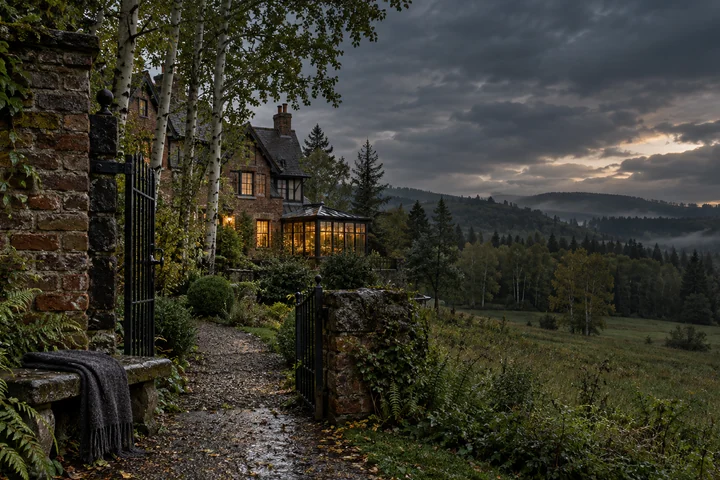
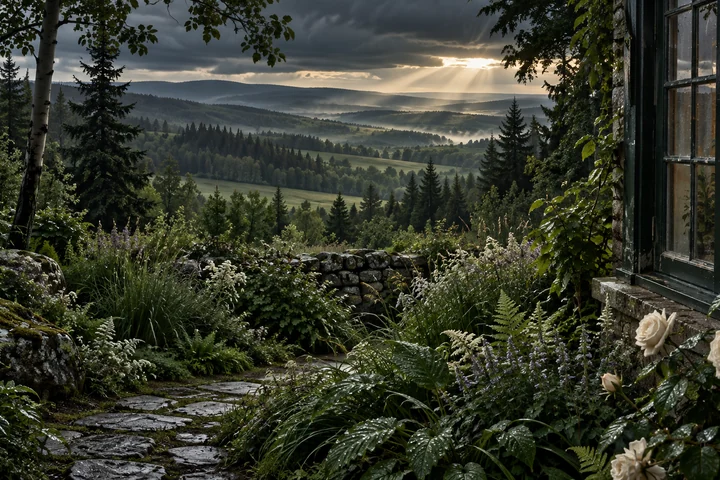
A parkland house can feel especially settled when a garden provides a gradual transition toward the larger land. A small planted court, a seat beside an aspen outlook or a path through a maintained area can bring detail close to the rooms without attempting to domesticate the whole acreage.
Begin with how you want to use it: a morning coffee, space for children, a place to grow something or a quiet seat after work. Those purposes should guide the scale of maintenance. A garden that fits your time can become more rewarding through repeated care.
Inside, let different rooms receive different views. The kitchen might face nearby planting, a living room the meadow and a smaller study the trees. Materials and furniture can support those experiences without repeating the same country-house motif everywhere.
Use professional advice for actual planting, exposure and building changes. The imagined artwork suggests a relationship between home, garden and parkland; it does not prescribe a design suitable for every parcel.
Central Alberta parkland
Build a life that continues between outings.
Seasonal destinations give the year variety, but a country home also needs to be satisfying on days when nothing is booked. A comfortable place for breakfast, a work area that supports concentration and a room for quiet interests will be used far more often than a formal guest space.
Make time outside easy to begin. A seat near the door, somewhere for footwear and a modest maintained path can encourage a few minutes in the garden without turning it into an expedition. On another day, a museum or performance can provide the main reason to leave.
Keep visits through the year if you are considering a move. Notice which routines remain appealing as daylight and weather change. A good fit is a place where ordinary life feels convincing, not only where a summer weekend succeeds.
For another woodland setting, explore Beaver Hills; for a different southern landscape, try Porcupine Hills. Describe the places and activities you would keep returning to when you speak with Dusko about a residential acreage.