Architecture · Interiors
Begin with an ordinary day at home.
Imagine where breakfast happens, where work ends and where people settle after dinner. Follow the routes between those places, including the small pauses: setting down a bag, looking for a book or talking while someone cooks. A useful interior brief describes these scenes as clearly as the larger occasions the house will host.
The result may be an expansive open room or several more enclosed spaces. The right relationship depends on the household’s actual preferences. A beautiful plan becomes more meaningful when you can picture people using it, with furniture and familiar objects in place. The aim is a home that feels convincing on a quiet weekday as well as when guests arrive.
Architecture · Interiors
Let rooms reveal one another.
A doorway can frame the next room without showing all of it at once. A change in ceiling height or wall colour can mark a quieter place beyond a gathering area. These transitions give the interior a sense of depth. The house has several experiences to offer, even when the rooms share a material palette.
Think about the view along that sequence. A table, lamp or garden window can become the point that draws you further inside. Each room should remain useful in its own right, with the transition supporting its purpose. Our arrival guide follows this experience from the approach and threshold into the first view of the home.
Architecture · Interiors
Keep the gathering room at human scale.
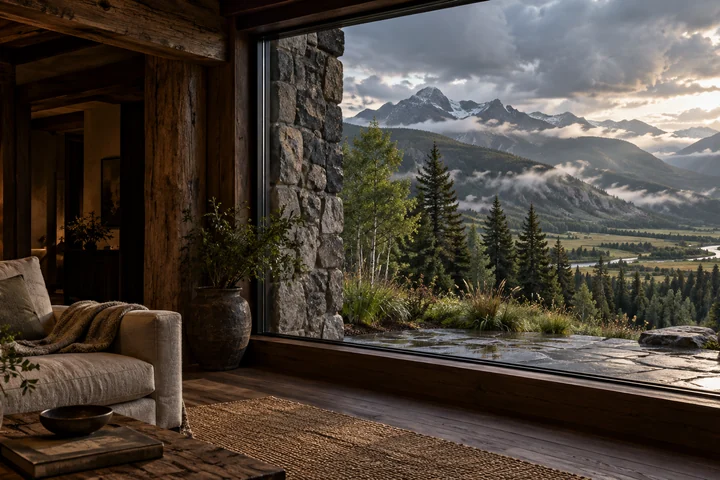
A high ceiling or broad outlook can give a room grandeur. Furniture brings that space back to the scale of conversation. A few seats gathered comfortably around a table can create an intimate centre within a larger room, with the landscape remaining present beyond them. The arrangement gives people a place to belong.
Imagine the room with two people, then with friends visiting. Notice whether the seats encourage conversation and how someone moves through the space. A generous room can offer more than one arrangement, but each should have a clear purpose. The most satisfying gathering place is often the one where people naturally settle without needing the host to explain how it works.
Architecture · Interiors
Let the table take part in more than dinner.
A country table may hold breakfast, a shared project, a long conversation and the evening meal. Its role can be central to the household’s life. Consider its scale alongside the chairs and the room, including what happens when people stand up or carry something past it. The object is experienced through those movements as well as its appearance.
A beautifully made table can carry considerable character while the surrounding room remains quiet. It has enough presence to anchor the space and enough usefulness to become familiar. The food guide explores the local ingredients and outings that can lead back to it. The room’s appeal grows when the table is a place people use often.
Architecture · Interiors
Give the kitchen a natural place for company.
People often gather where a meal is being prepared. The interior can acknowledge that habit by giving company somewhere comfortable to sit or stand without occupying every working route. A nearby table or a small sitting area can make the kitchen part of the home’s social life while retaining a clear purpose.
Think about the scene from both sides: the person preparing food and the person visiting. What do they look towards, and where do the things they carry belong? A useful kitchen conversation is about the household as much as the finishes. The room becomes engaging when its materials, furniture and relationship with adjacent spaces support the life that naturally gathers there.
Architecture · Interiors
Allow a smaller room to feel complete.
A quiet room can have a strong identity with very few elements: a comfortable chair, a useful light, a shelf and a view. Its scale invites a different pace from the main gathering area. The household gains a place for reading, music or a conversation that does not need to occupy the whole house.
Consider the doorway and the degree of separation you enjoy. Some people want a retreat that can close; others like to remain loosely connected with activity nearby. Describe the occupation and atmosphere first, then work towards the arrangement. A modest room can become especially memorable because its proportions suit the way it is used and its details are close enough to know well.
Architecture · Interiors
A historic home offers another way to look at hospitality.
Rutherford House is the restored and furnished Edwardian-era home where A. C. Rutherford and his family moved in 1911. The provincial site describes a household that entertained friends, relatives and visitors from Edmonton’s public life. Its urban university-campus setting is part of the example; it is not a country estate.
A visit can prompt useful questions about rooms and social life. How does one room lead to another? What gives a gathering place its character? Use the site’s visitor information for current arrangements and to ask about the experience appropriate to your group. The value lies in observing a particular historic home, with its own context, rather than treating its plan as a recipe.
Architecture · Interiors
Bring material richness to the places you notice.
The City of Edmonton Archives’ Rutherford record identifies interior oak woodwork, panelling and a stained-glass skylight. Those details provide a specific historic reference for the way material and light can contribute to an interior’s identity. They belong to that building and its history.
For a home today, consider where a material is encountered closely. A cabinet beside the table, a door handle or a timber edge near a favourite seat may matter more to daily experience than a dramatic surface across the room. The timber and stone guide develops that thought. Give each important material a role, with quieter areas around it so its character remains enjoyable.
Architecture · Interiors
Let the palette hold the rooms together.
An interior can feel coherent without giving every room the same colour or texture. A recurring timber tone, a family of quiet wall colours or a few related metal details can establish continuity. The rooms then have room to vary according to their use, light and relationship with the garden.
Begin with the materials and objects you already enjoy. Look at them together in the setting where they will be used, from across the room and at close range. A rich colour may suit a smaller retreat while a quieter surface helps another room feel generous. The palette becomes more personal when it grows from the household’s interests and the actual spaces.
Architecture · Interiors
Give the eye something close to enjoy.
Woven cloth, timber grain, a ceramic surface and the edge of a rug can bring an interior into focus at human scale. These details offer another kind of richness alongside the country view. You notice them while sitting, moving a chair or reaching for a familiar object. Their role is part of the room’s ordinary pleasure.
A restrained mixture is often easier to appreciate than many strong textures competing in the same view. Consider which surface should lead and which can remain quiet. Ask the relevant maker or supplier about use and care for the particular material. The room gains character through relationships you enjoy living with, rather than through a requirement to display every possible finish.
Architecture · Interiors
Let useful objects join the household.
A handmade bowl or woven piece can become part of daily life. You know where it belongs, use it for familiar occasions and gradually notice its particular qualities. The object’s connection with the maker adds another dimension to the room. It has a story that begins beyond the house and continues through the household’s use.
Our art and galleries guide follows Alberta makers, exhibitions and collecting. Begin with a piece that interests you and ask about its intended use and care. Give it enough space to be appreciated. An interior can become more individual through a few thoughtful choices, with the collection growing over time rather than arriving as a complete decorative theme.
Architecture · Interiors
Make room for the interests people return to.
A shelf, music corner or worktable can reveal what matters to the occupants. Books that are actually read, a project ready to resume and objects gathered through travel make the home specific. The interior gains depth because its details relate to lives being lived there.
Consider the practical place for those interests. A useful shelf near a chair, a surface with room for drawing or storage for a collection can make the activity easier to return to. The room need not be dedicated entirely to one pursuit. A carefully chosen corner can give a familiar occupation a permanent place, while leaving the rest of the space open to other uses.
Architecture · Interiors
Give everyday things a place that makes sense.
A country home receives coats, bags, outdoor equipment and the many small objects of a week. Storage works best as part of the rooms and routes people already use. A cupboard near the entrance serves a different purpose from a cabinet beside the table. Name the things before deciding how their storage should look.
The aim is an interior that remains comfortable during ordinary life. Useful storage can leave the main rooms with enough calm to enjoy their furniture, art and views. It can also have character of its own, through proportion and material. A beautifully considered cabinet need not conceal the fact that the home is used; it helps those uses fit naturally into the whole.
Architecture · Interiors
Give a guest room the essentials with care.
A welcoming guest room has a place for a bag, a useful light and somewhere to sit or put down a book. Its atmosphere comes from the relationship between those elements, rather than the number of decorative objects. Imagine arriving in the evening and waking there the next morning. Both scenes help clarify what the room needs.
Consider the relationship with the rest of the home. A visitor may enjoy a quiet retreat while remaining close enough to join breakfast easily. Our hospitality guide develops that experience in detail. The room can feel generous through thoughtful use, with a view or familiar material giving it a connection to the country outside.
Architecture · Interiors
Let the garden appear through the house.
One part of the garden can be seen differently from several rooms. The kitchen looks towards planting, a sitting room catches the edge of a tree and a quieter window frames the path. These related views can give the interior a sense of belonging to its setting without every room opening onto the same panorama.
Think about the route outdoors as well as the view. A door from the main gathering area may lead to a terrace, while another room enjoys a garden seat further away. The outdoor rooms guide follows those places. A considered home offers several ways to be close to the landscape, with the interior retaining its own comfort and identity.
Architecture · Interiors
Make the evening room worth returning to.
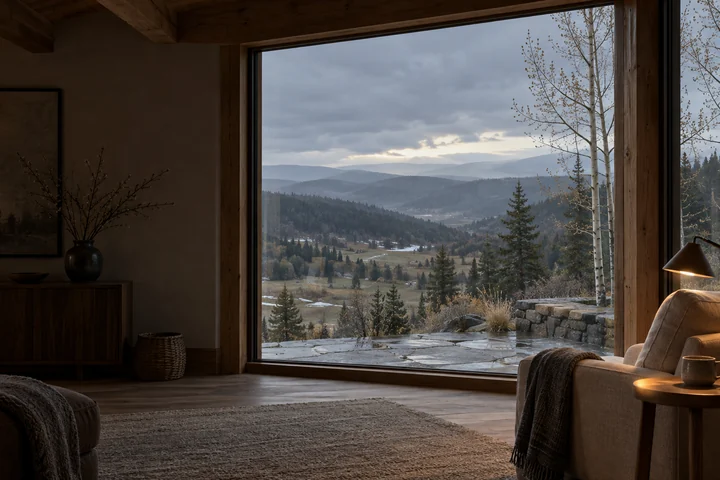
After dark, the country view may become less apparent and the interior takes the lead. A lamp, a textured wall and a familiar chair can create a complete scene. The room has something to offer beyond the glass, allowing the household to settle comfortably through the longer evening.
Imagine the places you use after dinner and the objects you would like to see from them. A lighting designer can develop the specific arrangement alongside the architecture and furniture. The windows and light guide explores the room’s changing character through a day. An interior gains lasting appeal when its evening experience is considered as carefully as its most impressive daytime view.
Architecture · Interiors
Allow familiar pieces to find a new setting.
An older cabinet, inherited chair or contemporary artwork can make an interior feel personal. The pieces do not have to share a date or style to belong together. Proportion, placement and a few considered relationships can give them a coherent setting while allowing their individual character to remain visible.
In an older building, the room itself may be part of that conversation. Understand the features you value and obtain appropriate property-specific advice before planning alterations. Our adaptive reuse guide considers the possibilities of a new chapter for an existing building. The interior can support present-day life while retaining a clear connection with what gives the place its identity.
Architecture · Interiors
The home becomes richer through use.
The favourite room is often the one that quietly accommodates the household. People choose the same seats, know where things belong and notice the garden changing from familiar windows. The architecture has become a setting for repeated pleasures. Its beauty is still present, with another layer supplied by daily life.
A thoughtful country interior gives that life room to develop. It can welcome a larger gathering while preserving a smaller retreat, hold a collection without feeling crowded and keep the landscape part of ordinary days. Begin with the scenes you hope to repeat. The materials, furniture and rooms can then become a convincing home for the life you want to make there.