A welcoming home · Country life
Make the first few minutes easy.
A good arrival has a clear sequence: somewhere to stop, a door that is easy to recognise and a place to put things down. The first impression can be a modest one. A bench, a dry surface for a bag and a host who is ready to greet people often do more for the mood than a grand entrance. When the view is spectacular, allow time to notice it after the practical questions have been answered.
Give first-time visitors simple directions in advance, including which entrance you normally use. At the house, show them the bathroom, the room where they will sleep and where a glass of water or a warm drink can be found. These small explanations help people join the household. They also free the host to enjoy the company instead of answering the same question throughout the evening.
A welcoming home · Country life
An entrance can belong to the country.
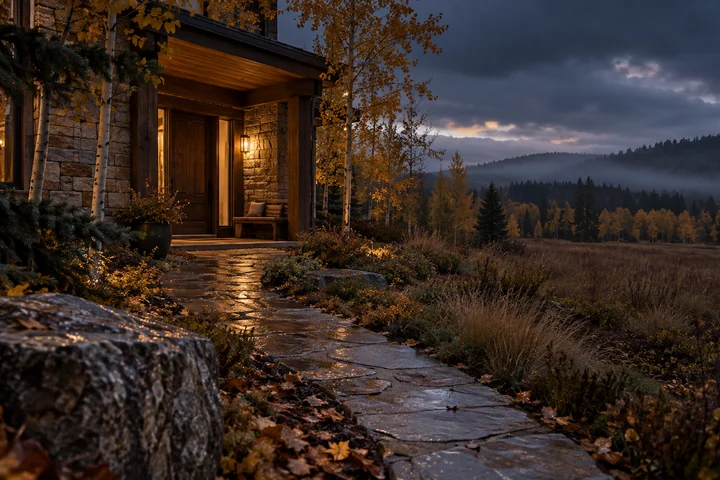
Country visits often bring walking shoes, outdoor layers and a little mud. An entrance that accepts those things comfortably makes a home feel welcoming. A seat for changing footwear, hooks that are easy to reach and a place for damp coats can be more useful than another decorative cabinet. The room can still be beautiful: worn timber, a well-made basket or a familiar runner gives it warmth without disguising its purpose.
Let visitors know the house routine with an easy sentence rather than an elaborate set of rules. If outdoor shoes stay at the door, offer somewhere comfortable to change them. If a guest prefers to keep supportive footwear on, talk about a workable arrangement. The welcome becomes more generous when the entrance accommodates people as well as possessions.
A welcoming home · Country life
Heritage can start a conversation.
Lougheed House in Calgary records a home first occupied in 1891, then a succession of uses including wartime barracks and a Red Cross blood donor clinic. Its history reaches far beyond the family drawing room. Visiting a house with that many chapters can change the way you look at the rooms in your own home: as places that are used, adapted and remembered over time.
At home, a family photograph, an inherited bowl or a story about where a table came from can offer a more personal introduction than a perfectly matched room. There is no need to invent an old connection to the land or dress a new house as a historic one. Share what is known, allow questions and enjoy the objects that have earned their place through use.
A welcoming home · Country life
Choose places to sit before choosing decoration.
People arrive with different habits and different levels of energy. One person wants to talk beside the kitchen, another prefers a chair with a view, and someone else may need a quiet hour after the journey. A welcoming main room offers more than one way to be there. Consider a supportive chair alongside a softer sofa, a small surface for a cup and light that makes a book comfortable to read.
Try the room as a guest would use it. Can someone set down a drink without reaching across another person? Can two people talk without moving heavy furniture? Does the best view require sitting in the darkest corner? These observations are often more helpful than adding another object. For substantial alterations or particular access needs, discuss the actual household and visitors with an appropriate designer.
A welcoming home · Country life
Give the guest room a little independence.
A guest room is easier to enjoy when it has some unclaimed space. Clear a shelf, make room for a suitcase and leave a few hangers that are ready to use. An empty drawer can feel more generous than a crowded display of decorative objects. A reading light within reach, a place for glasses and a simple note about the household Wi-Fi answer the questions people may hesitate to ask at bedtime.
Let the room carry a quiet connection to its setting. That might be a framed local photograph, a wool blanket or a view towards trees. It does not require a theme. Ask about bedding preferences where practical, and make spare layers easy to find. A visitor should be able to adjust a few ordinary comforts without having to search through the host’s private cupboards.
A welcoming home · Country life
Time together works better with room apart.
Long visits need pauses. A guest may want to call home, finish a chapter or simply sit alone for a while. Agreeing that people can come and go from the main room without explanation gives the visit a more relaxed pace. A reading corner, a desk in the guest room or a small sheltered seat can provide that choice even when the house is not especially large.
The same applies to the host. You do not need to fill every hour or remain in conversation all day. Tell people when breakfast is likely, which plans are fixed and which are optional. A shared understanding of the day creates freedom within it. A weekend can feel wonderfully full even when its longest activity is an unhurried conversation over coffee.
A welcoming home · Country life
Make mornings kind to early and late risers.
A country morning is especially pleasant when nobody has to perform it for the whole household. Set out mugs, water and a few familiar breakfast things where guests can find them. Explain how the coffee or tea is usually made. Someone who wakes before everyone else can enjoy the changing light without wondering whether the kitchen is off limits.
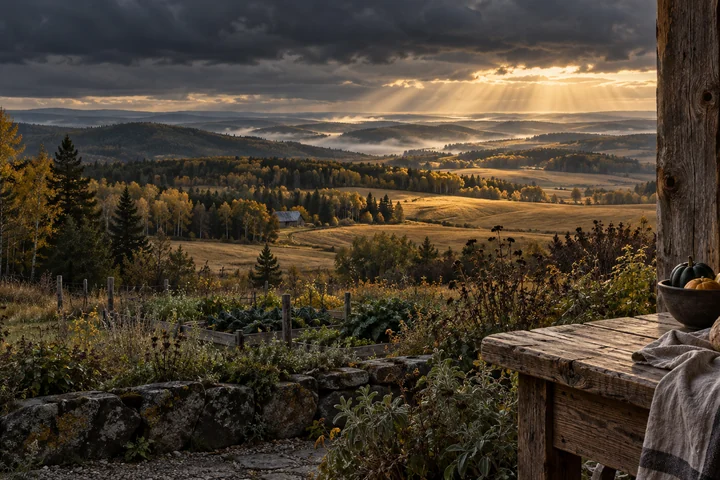
Keep at least part of breakfast flexible. A later shared meal may suit one visit; a simple spread people can return to may suit another. What matters is that the arrangement is clear. The morning view, a favourite chair and the sound of the house beginning its day can be memorable precisely because they are ordinary pleasures, offered without ceremony.
A welcoming home · Country life
Ask about food before the shopping begins.
A brief conversation before the visit gives people a chance to mention allergies, dietary needs and foods they do not enjoy. Keep the question straightforward and private. The useful answer is what will help this particular guest eat comfortably, not a public discussion of why they choose or avoid something. When a need goes beyond your experience, agree on an arrangement together.
A restaurant booking or prepared meal can be part of good hosting too. It may leave more time for a walk, an exhibition or a long conversation. Check directly with the provider about specific requirements and current arrangements. There is no need to turn every visit into a test of the host’s cooking or assume that a beautiful rural setting obliges everyone to eat the same way.
A welcoming home · Country life
Look at how an old house welcomes a new use.
Deane House describes its origins as a 1906 residence at Fort Calgary, its move across the Elbow River in 1929 and the restaurant’s opening in 2016. It is an urban Calgary place, rather than a country inn. Its present life offers a chance to experience hospitality within an older domestic building, with the house’s history still part of the setting.
That can be an interesting outing for guests who enjoy food and architecture together. Use the restaurant’s current site for menus and reservations; a historic building is not automatically open for a casual interior tour. Back at home, the useful question is how a room can retain its character while supporting the way people gather today. Old and new do not have to be arranged as separate stories.
A welcoming home · Country life
A garden can hold part of the visit.
Beaulieu Gardens beside Lougheed House combines formal beds and heritage planting with public green space. The operator recounts generations of gatherings there, including a 1919 visit by the Prince of Wales. The documented history is specific to that Calgary place; it is an invitation to notice the relationship between a house, its garden and the occasions held around it.
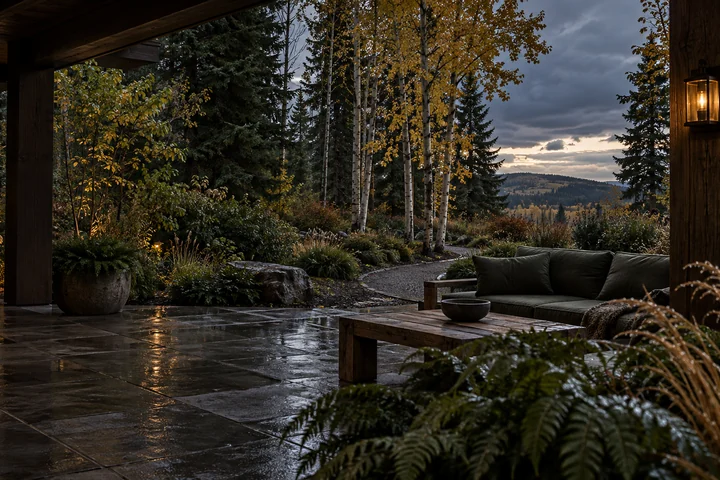
At a private country home, the outdoor room may be much simpler: a terrace beside the kitchen, a bench at the garden edge or a spot where several chairs can face the view. Think about how people move back inside and where they can sit comfortably. Our garden guide explores the transition from close planting to the larger landscape beyond.
A welcoming home · Country life
Have an evening that works without the weather.
An outdoor supper is a lovely possibility, but it need not carry the whole visit. A table indoors, a place to spread out a board game and a few books people can browse give the evening another shape. If the weather changes, a move inside can feel like a continuation. Bring the view into the room through where you sit, rather than depending on everyone remaining outside.
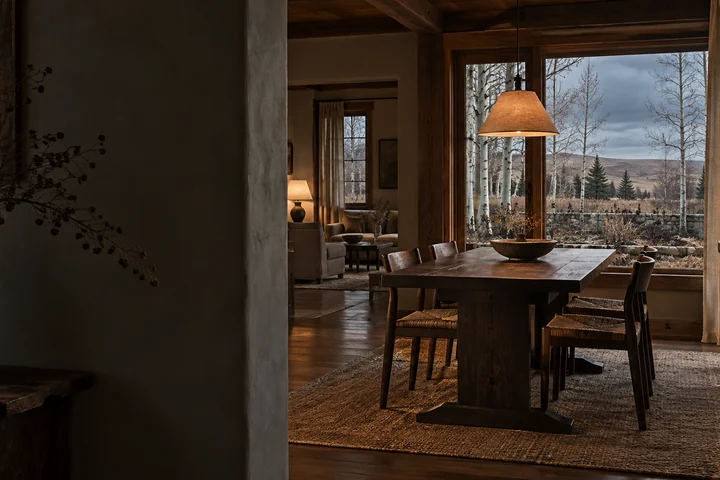
Lighting helps the transition. A few comfortable pools of light make conversation, reading and moving through the house easier than one bright central fitting. Let a darker window show the landscape as it recedes. The mood can be intimate without the room becoming difficult to use. A home after dusk should still feel familiar to someone staying there for the first time.
A welcoming home · Country life
Choose one outing with room around it.
Guests often remember the visit more clearly when it includes one well-chosen local experience rather than a long list of stops. Ask what interests them: a small gallery, a heritage house, a market or a public garden. Choose within the region you are actually visiting. The art guide and living heritage collection offer several different starting points, with access arrangements that belong to each place.
Leave time before and after. A destination may be the reason to go out, but the conversation on the way home or the meal made afterwards can be just as rewarding. Confirm current opening and booking details before setting the day around a place. Avoid promising a private studio visit, access to a working farm or entry to a building merely because it appears on a map.
A welcoming home · Country life
Plan around the people who are coming.
A household with young children has a different rhythm from a quiet adult weekend. Ask parents what would help, make room for familiar routines and choose activities with easy stopping points. A small collection of books or a place to draw can be welcome without turning the whole house into a playroom. The aim is to make the visit comfortable for the actual family, rather than an idealised picture of one.
Talk about pets before the invitation is settled, including whether the home and any planned public destinations can accommodate them. Different gardens, museums and restaurants have different rules. Agreeing on practical details early is kinder than discovering a mismatch at the door. A generous host can also suggest another arrangement when the house cannot meet a particular need.
A welcoming home · Country life
Let leaving be as easy as arriving.
A relaxed last morning gives people time to collect their belongings and enjoy one more conversation. Tell guests whether you would appreciate help with a few things or whether they should simply leave used linens where they are. Clear expectations are more comfortable than a visitor guessing at an unfamiliar household routine. Make space for a final cup of coffee if time allows.
For hosts, leave some breathing room after the departure too. A weekend that requires days of recovery is harder to repeat. Notice what worked: the meal that could be prepared ahead, the room people naturally used and the outing that left everyone happy to return home. Those observations help the next invitation become simpler and more personal.
A welcoming home · Country life
Keep the rooms useful between visits.
A guest space earns its place in a home when it supports everyday life as well as occasional company. It may be a reading room, a place for quiet work or somewhere to sit with a view during the week. Keep the arrangement easy to return to its guest use. A room that must be completely emptied before every arrival can become a reason to postpone invitations.
Objects can evolve with the room. A new lamp, a locally made bowl or a photograph from a shared outing may gradually become part of its character. Our living-with-art guide considers those choices in more depth. There is no need to finish a room in one purchase. Familiarity often gives it more warmth than a complete decorative scheme.
A welcoming home · Country life
The richest hospitality becomes a tradition.
The same weekend can take on a different character each year: a rainy afternoon around the kitchen table, an unexpectedly bright winter walk or an evening that lasts well beyond the planned meal. Returning guests bring their own memories into the house. A favourite chair or breakfast dish becomes a small point of recognition, and the visit starts to belong to everyone who has taken part.
That is one of the lasting luxuries of a country home. There is room for a generous view and for the ordinary details that make people comfortable within it. The house does not need to perform at every moment. It needs to hold a good conversation, offer a little privacy and make the next invitation feel like something both host and guest would gladly repeat.