Architecture · Arrival
Allow the first glimpse to be a glimpse.
A home need not reveal every part of itself at once. A roof beyond a rise, a warm window between trunks or one wall beside an open meadow can be enough to establish its presence. As you move closer, another part of the building comes into view. The experience has depth because the landscape remains involved in it.
Think about the impression you enjoy on an ordinary return. Perhaps the house feels gathered into woodland, or stands clearly against a broad sky. A large frontage is only one possibility. The memorable detail may be a small porch you know well. Describe that feeling before discussing an approach in technical terms; it helps the design team understand the relationship you want between home and land.
Architecture · Arrival
Let the landscape take part in the approach.
An approach can move through several kinds of country in a short distance: open ground, a stand of aspen and the more cultivated area beside the house. Those changes can make arrival engaging without adding ornamental features at every turn. The pleasure lies in noticing what is already distinctive about the setting and allowing the house to emerge within it.
Imagine the sequence in different seasons. Summer leaves may frame a close view where bare branches later reveal the whole building. Snow can make the roofline more apparent, while autumn brings attention to the ground and the shape of trees. These observations are useful design context. Site access, grading, drainage and other technical requirements need a property-specific plan from the appropriate professionals.
Architecture · Arrival
Make the welcome easy to understand.
A guest should be able to recognise where the house is inviting them. The entrance might be marked by a sheltered recess, a path that leads clearly to it or a modest change in the building’s form. Those elements can feel natural to the architecture. The arrival need not depend on a dramatic doorway competing with the rest of the home.
Consider the view from the place where visitors first stop. Does the route towards the entrance make sense? Is the door still evident when the garden is in full leaf or the afternoon is overcast? A home that is visually complex can benefit from a quiet, legible point of welcome. The most useful question is what a person unfamiliar with the property will actually see.
Architecture · Arrival
An entrance can carry an architectural idea.
At Calgary Central Library, DIALOG, working in association with Snøhetta, describes the wood-clad entrance arches as a reference to chinook cloud formations. A distinctive entry gives a large public building a recognisable point of arrival. It offers an Alberta example of architecture expressing an idea through the place where people enter.
A country home operates at a different scale, with different needs. The useful prompt is to consider what its entrance communicates: shelter, warmth, the presence of timber or a connection with the garden. There is no reason to copy the library’s form. If you would like to experience the building, use the library’s location information for current access and hours.
Architecture · Arrival
Give the pause outside a purpose.
The moment before opening the door deserves some attention. You may be waiting for someone, putting down a parcel or talking for another minute before a guest leaves. A sheltered entrance can accommodate that pause and make it part of the pleasure of the home. Its scale becomes clearer when you imagine two or three people using it together.
Look at the relationship between the door, a bench and the route past them. A place to sit is inviting when it belongs to the space, rather than occupying the only clear way through. The material details can remain simple: a substantial timber surface, a close stone wall and a view towards familiar planting. The entrance begins to feel like a small outdoor room.
Architecture · Arrival
Let the porch be more than a photograph.
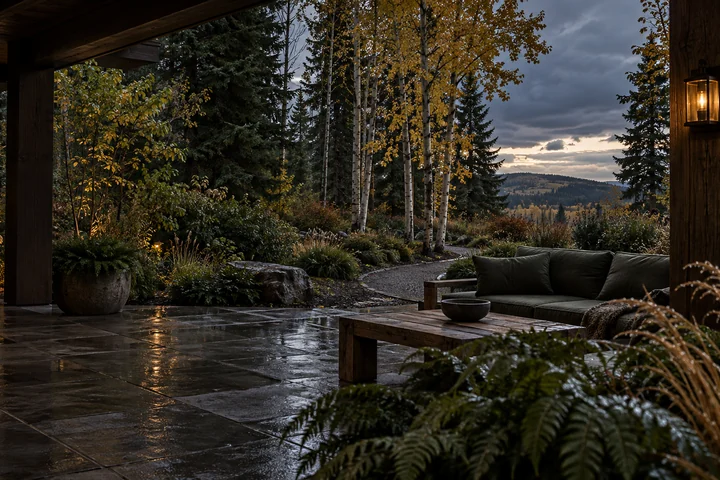
A porch can extend the experience of arriving into the rest of the day. Someone sits there with coffee, a conversation continues after a walk or the household watches the garden in the evening. Its character grows through use. A beautiful roof and posts gain another meaning when the space beneath them becomes a favourite place to spend time.
Imagine how it relates to the rooms inside. A porch near the main sitting room may belong naturally to daily life; another beside a quieter entry may suit a more private pause. Consider the furniture, door movement and view together. The country gardens guide explores how close planting and a seat can connect the house with the larger landscape.
Architecture · Arrival
The threshold changes the pace.
There is a small but important change between being outside and feeling at home. The sounds change, a bag is set down and the next room becomes visible. The threshold can support that transition with a little space and a sense of where to go. An entry does not have to be enormous to feel generous.
Imagine arriving on a wet autumn afternoon. Where does a coat go? Where would a guest stand while you close the door? What is the first thing they notice? These ordinary questions reveal more than a picture of an empty hall. A piece of furniture, a view or a familiar object can give the entrance an identity while leaving it easy to use.
Architecture · Arrival
Design for the people who actually come home.
The household’s routines are the best starting point for a useful entrance. Someone may need a seat while changing shoes, another may carry equipment for work or recreation, and a visitor may find an unfamiliar route difficult to follow. Discuss those experiences openly. They help turn an attractive drawing into a place people can imagine using comfortably.
If particular mobility, sensory or other access needs matter to your household or guests, include them in the brief from the beginning and involve appropriate design expertise. A photograph cannot establish accessibility, and one familiar arrangement will not suit everyone. The ambition is a welcome grounded in the people who use the home, with the relevant technical decisions developed for that specific setting.
Architecture · Arrival
Give the everyday entry the care it deserves.
The family entrance may be the most frequently used part of a country house. It receives coats, boots, bags and the evidence of a day outdoors. Its atmosphere matters because this is often where the household first feels the return home. Useful storage and a pleasant place to pause can make it feel considered, even when it is busy.
Picture what comes through the door in your own life. A dog lead, riding helmet, garden basket and school bag need different places. A design conversation becomes more productive when those objects are named. Think also about what you would like to see from the doorway: perhaps a quiet wall, a view into the kitchen or a bench with enough room around it.
Architecture · Arrival
Let different entrances feel part of one home.
Some country homes have a guest entrance and another used for most daily returns. They can serve different purposes while sharing a material palette and a sense of welcome. The everyday door need not feel like an afterthought, and the guest hall can remain comfortable enough for ordinary visits rather than reserved for rare occasions.
Consider how people move between each entrance and the rooms they use. A family member carrying shopping has one destination; a dinner guest has another. A coherent plan acknowledges those patterns. During a viewing, follow both routes in your imagination and notice which spaces feel natural. This is an experience to discuss with the design team, rather than a rule that every country house needs two doors.
Architecture · Arrival
A garden can make the approach worth noticing.
The Aga Khan Garden at the University of Alberta Botanic Garden is a contemporary interpretation of Islamic landscape architecture designed by Nelson Byrd Woltz. The university describes forest paths, stone terraces, water, light and shadow. It is a public cultural landscape with its own context and purpose, offering a different scale of experience from a domestic garden.
For a home, the broader invitation is to notice how movement changes what you see. Close planting, an open interval and a sheltered place can create a sequence of their own. Let the local landscape and your household’s use shape the result. For a visit to the public garden, check the university’s current seasonal information before travelling.
Architecture · Arrival
Choose what the first room reveals.
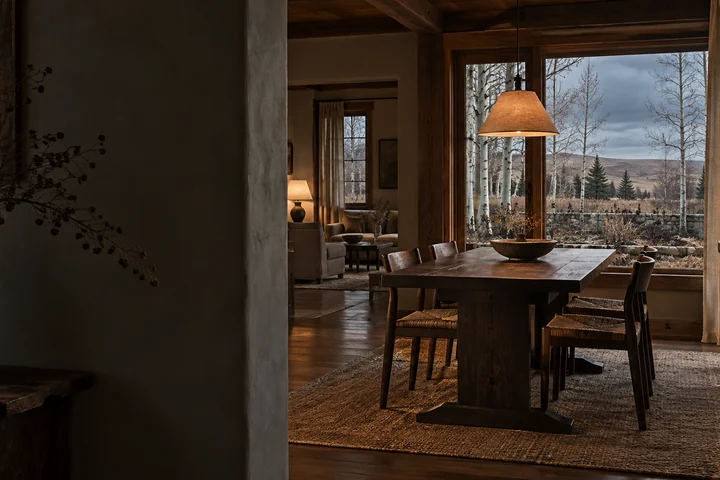
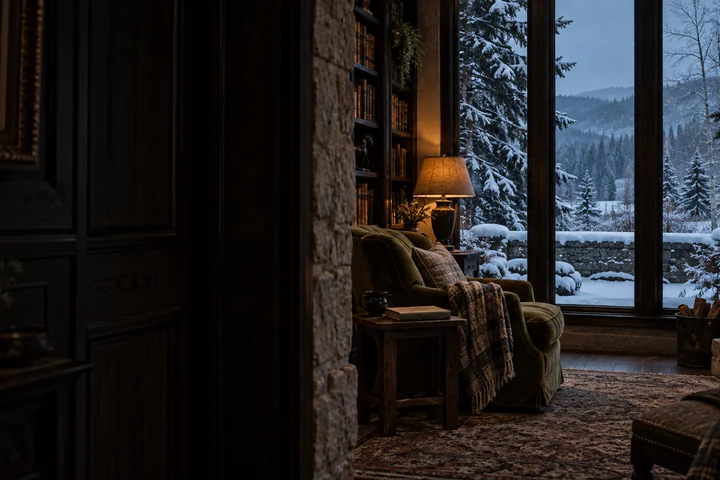
Once inside, a view can draw you further into the house. It might be a distant ridge seen across a room, a garden through a smaller window or a warmly lit place to sit. The first view gives arrival a destination. It need not disclose the entire interior; a little separation can preserve the pleasure of discovering the home gradually.
Think about the experience at different times. A broad landscape may dominate by day, while a lamp and painting become the point of interest after dark. Our windows and light guide explores that changing emphasis. An entrance can feel complete when the view beyond it belongs to a useful, welcoming room rather than a purely decorative composition.
Architecture · Arrival
Keep the welcome comfortable for both guest and host.
A good arrival can make visitors feel expected while giving the household a little privacy. An entry may offer a place to greet someone before moving into the living room. A turn in the plan can keep a private room from becoming the first thing visible through an open door. These relationships are worth noticing when you walk through a house.
Consider the kinds of visits you enjoy. Friends staying for a weekend, someone dropping off a parcel and guests arriving for supper create different moments at the same threshold. The plan can acknowledge that variety without becoming complicated. A clear place to meet, enough room to pause and an understandable next step often do more for hospitality than an imposing entrance.
Architecture · Arrival
The house should understand a day outside.
Country life brings the landscape back indoors in small ways. There are damp coats after a walk, a garden basket on the bench and boots that need somewhere to wait. An arrival space that accommodates these things can help the main rooms remain enjoyable. The house feels welcoming because it accepts the life that happens around it.
This is a useful place to bring the equestrian culture or gardening routines into a design conversation, where relevant. Name what people carry and where it needs to go next. Keep the atmosphere in mind as well as the storage. A warm timber seat, a view outside or a favourite photograph can give an everyday working space the character of home.
Architecture · Arrival
After dark, the welcome moves closer.
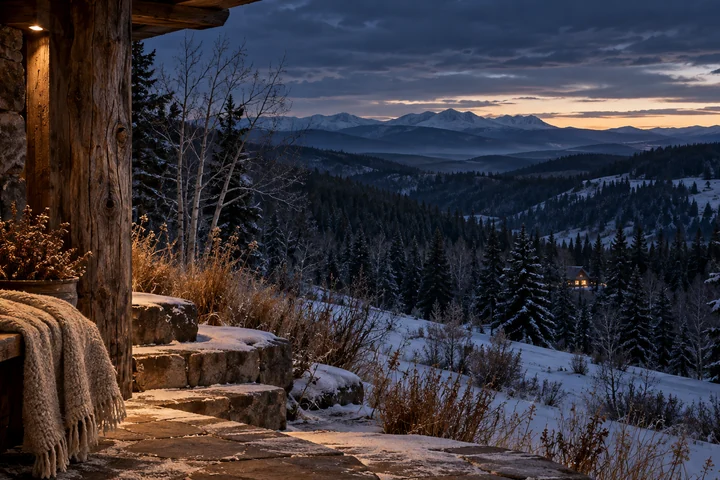
As the landscape fades, the entrance becomes a more intimate scene. A light beneath the porch, the outline of a door and a glimpse of the room inside can make the home feel gathered into itself. The far view has given way to close details. It is a different kind of arrival, often especially memorable in autumn and winter.
Describe the atmosphere you want before selecting individual fittings. Is the entrance quietly lit, with the focus on the door and the place to pause? How does it feel from inside when someone arrives? Ask the relevant designer to develop the lighting for the property and its surroundings. The after-dark guide explores the wider pleasure of country evenings and the night sky.
Architecture · Arrival
Departure is part of the same sequence.
An entrance is also where people say goodbye. A guest looks for a coat, someone remembers a book they borrowed and the conversation continues for a moment outside. The space can allow those small rituals to happen comfortably. Notice the places to set something down and the relationship between the door, furniture and the route away from the house.
The outward view matters too. From the threshold, you may see the garden path, trees or open country that formed the approach. Arrival and departure give the same landscape different meanings. A well-loved home can make both experiences engaging, with enough room for the unplanned pause that often becomes part of a visit.
Architecture · Arrival
Let the arrival have more than one season.
The entrance you enjoy in summer will appear differently beneath bare branches or against snow. Close planting changes, the sky may become more visible and the evening return happens in another kind of light. Rather than imagine one permanent photograph, think of several scenes through the year. Each can reveal a different quality of the same place.
A roof edge may become the strongest line in winter, while a flowering garden carries the eye in summer. The materials and form of the house remain a steady presence beneath those changes. Bring observations from the particular site into the design brief. Alberta’s varied landscapes deserve arrivals that feel specific to their settings, from wooded parkland to open foothill country.
Architecture · Arrival
Describe a return you would love to repeat.
A useful brief can begin with a short scene. You come home in the late afternoon, set down a bag, take off a coat and look towards the kitchen or garden. Another scene might follow guests arriving for a weekend. Explain what each person carries, where they pause and what makes the moment feel comfortable. Those details give the designer something concrete to work with.
The resulting architecture can be ambitious, quiet or richly crafted. Its lasting appeal comes from the relationship between the landscape, the entrance and daily life. Continue with country hospitality to think about the visit beyond the threshold. A welcoming home gives people an immediate sense that there is a place for them, and many reasons to stay a little longer.