Architecture · A home in the landscape
The house and the horizon.
Stand well back from a country home and look at the outline it makes. A long roof may echo a low ridge. A cluster of smaller forms may sit comfortably against woodland. A taller room can give a house a point of emphasis, especially when lower wings connect it to the ground. These relationships are often more memorable than the individual details of a façade.
Then move closer. A house that feels composed from a distance also needs to offer something at human scale: a handle that fits the hand, a place to wait out a shower, the sight of a warm room through a doorway. Grandeur and intimacy can coexist when the building gives both the landscape and the person arriving enough attention.
Architecture · A home in the landscape
An approach that unfolds.
The journey to the front door can reveal a place in stages. A turn beside a stand of aspen, a glimpse of roof above the grass and a final opening onto the house make arrival feel connected to the land. The most satisfying sequence often uses what is already there. A familiar tree or a change in ground level can carry more character than a large ornamental gateway.
Imagine returning with groceries on a dark afternoon as well as greeting friends on a summer evening. Where do you pause? Can a guest see where to go? Is there a natural transition from vehicle to doorway? A memorable arrival supports those ordinary movements. The pleasure comes from knowing that a welcoming, comfortable interior is only a few steps away.
Architecture · A home in the landscape
The pleasure of a sheltered threshold.
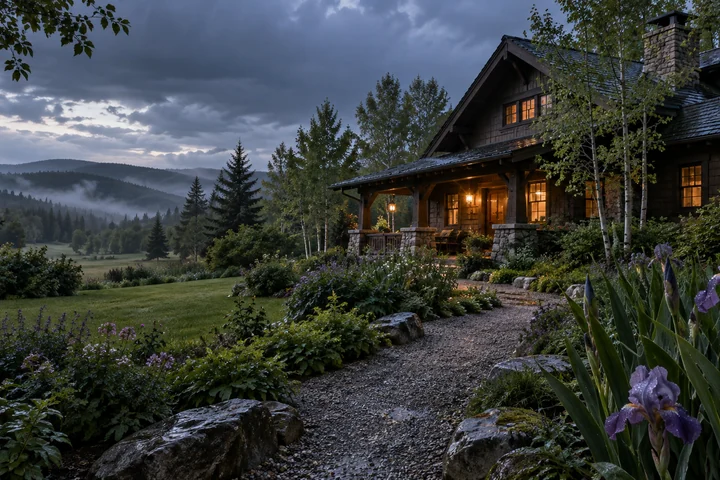
A porch, recess or small entrance court gives the house an edge you can inhabit. It is a place to put down a bag, greet a neighbour or watch rain pass through the trees. The experience can be quiet: a bench beside the door, a textured wall catching low light, a clear view back towards the approach. Even a modest threshold can make a substantial house feel gracious.
Inside, the entry introduces the household. A glimpse of a painting, the smell of dinner and somewhere sensible for coats can be more welcoming than a vast empty hall. Consider what you want someone to feel in the first minute. The answer may be warmth, ease and a sense of the country beyond, expressed through a few carefully chosen elements.
Architecture · A home in the landscape
A foothill home with a creative life.
The Leighton Art Centre museum occupies the last home of artists A. C. and Barbara Leighton. A. C. designed the Arts and Crafts inspired residence in the 1950s. Its collection brings art, craft, furniture and personal objects into a domestic setting, offering an Alberta example of a home shaped by the interests of the people who lived there.
That relationship is worth considering in your own way. A room for drawing, a table for making things or a wall with space for a growing collection can give a house an enduring purpose. Architecture becomes richer when it accommodates particular lives. For an outing, use the centre’s current visiting information; the property is not open to the public when the centre is closed.
Architecture · A home in the landscape
A different conversation with parkland.
The University of Alberta describes Dyde House as Arthur Erickson’s only house project in Alberta. Its account places the building within the Dyde family’s country residence and garden, and draws attention to its early masonry construction and awareness of landscape. It offers a different architectural reference from the foothill home at Leighton.
Use that distinction to widen your own eye. A country home can draw character from the relationship between walls, trees and openings, without a distant mountain as its principal feature. The university’s house information concerns a conservation initiative; a garden visit does not establish access to the house interior. The useful starting point here is the documented relationship between design and setting.
Architecture · A home in the landscape
Different country, different possibilities.
In foothill country, the eye often travels through successive ridges. A room can acknowledge that depth while keeping a close garden or tree in view. In woodland and aspen country, the important detail may be a trunk beside the window or a clearing that fills with evening light. The house can find its character in these smaller distances.
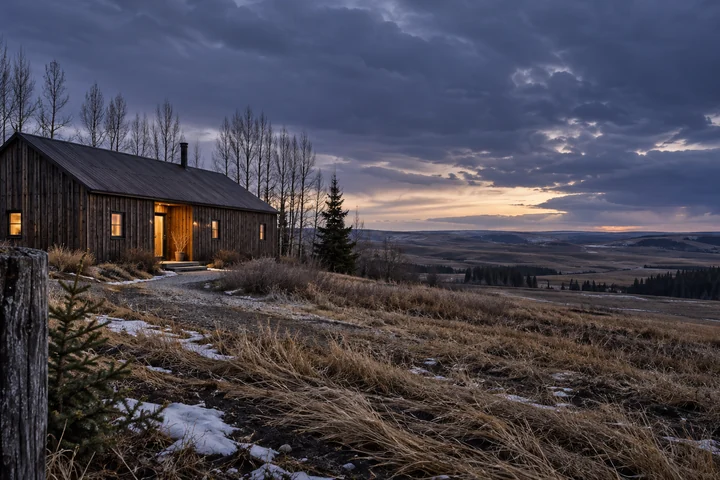
An open southern landscape asks you to notice sky, grass and the silhouette of the building itself. A courtyard or sheltered corner may become a cherished counterpoint to the broad view. These are ways of looking, not a fixed regional style. Spend time with the actual site before deciding which forms and rooms will feel at home there.
Architecture · A home in the landscape
A house experienced one room at a time.
A floor plan becomes meaningful when you imagine moving through it. You leave the entry, glimpse a garden, pass a quieter room and arrive at the kitchen. A change of ceiling height or a framed view can give that walk rhythm. Every room does not need to announce itself at once. A little discovery makes a home interesting long after its first impression.
Try describing the sequence in simple sentences. Where would you read while someone cooks? Could a guest find a bathroom easily? Is there a place to retreat when the main room is full? Those questions reveal how the architecture supports companionship and privacy. They also help distinguish a beautiful photograph of a room from a house you would enjoy inhabiting.
Architecture · A home in the landscape
Keep something close in the view.
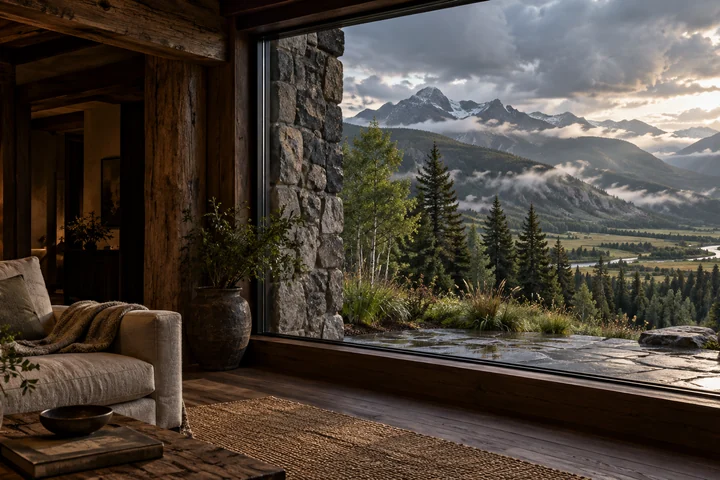
A distant panorama is often strongest when the foreground has character. From a chair, you might see the edge of a stone terrace, grasses moving nearby, a line of aspen and the hills beyond. Each distance adds something. The nearby detail gives scale and makes the view feel like part of the home; the far horizon brings the sense of a larger country.
Walk through the house at sitting height as well as standing height. A window that works beautifully beside a dining table may offer a different experience from a sofa or bed. Consider the rooms where you spend the most time, including the less spectacular ones. A pleasing close view can give an ordinary breakfast as much atmosphere as the grandest living room.
Architecture · A home in the landscape
Roofs, eaves and the shape of shadow.
The roof is a large part of how a country house meets the sky. Gables can break down a long building into smaller parts. A quieter horizontal roof can draw attention to the land beneath it. Deep shadow at an eave can make the wall below feel more substantial. Look at the whole composition before concentrating on decorative brackets or trim.
At the doorway, those larger forms become personal. The underside of a porch roof, the rhythm of posts and the opening towards a garden create an outdoor room even before furniture arrives. When considering a particular building, an architect or appropriate building professional can explain how its roof is made and performs. Here the pleasure is in seeing how its shape gives the house presence.
Architecture · A home in the landscape
Choose materials you want to live beside.
Stone, timber, plaster and quiet metalwork can provide a rich palette with relatively few ingredients. What matters is how they meet and how much of each you see. A single stone wall may carry more character than several competing finishes. Timber beside a window can bring warmth to a room while leaving the landscape as the most intricate thing in view.
Look closely at samples, joints and corners, then step back. A material has a colour, but it also has texture, scale and a response to light. Our timber and stone guide follows that tactile side of country architecture. The aim is a home that feels coherent from the approach to the smallest room, with room for individual objects and a life that changes.
Architecture · A home in the landscape
Build the day around a good table.
The kitchen and dining area often reveal whether a country home suits its household. Imagine two people having coffee while another prepares breakfast. Picture friends staying late, a vase of garden cuttings and a child spreading a project across the table. The relationships between work surface, seating, storage and view shape these everyday scenes more than an impressive appliance list.
A table close to the landscape can become the place everyone chooses first. It might catch morning light or face a small garden rather than the widest panorama. Allow enough calm around it for conversation. The architecture succeeds when the room welcomes an ordinary meal as naturally as a celebration, and when the practical tasks of the day have somewhere comfortable to happen.
Architecture · A home in the landscape
Leave room for the quieter pleasures.
A library corner, a compact study or a bedroom with a single beautiful window can make a large home feel complete. Smaller rooms let you choose a different pace. They can hold the intimacy that is harder to find in a broad open space: a lamp beside a chair, books within reach, a door you can close when someone is still talking in the kitchen.
Think about how those rooms connect to the rest of the house. A study near the entry may suit occasional visitors. A reading room beyond the busiest circulation may feel like a retreat. A guest room can offer a lovely view without exposing it to every arriving car. Luxury includes having an appropriate setting for different moods, occupations and times of day.
Architecture · A home in the landscape
The room at the edge of the garden.
The boundary between inside and outside can be a favourite part of a country home. A terrace beside the dining room, a covered seat at the end of a hall or a garden court visible from several rooms gives daily life a generous edge. These spaces need a purpose you can picture: lunch, a quiet conversation, a cup of tea while watching the trees.
Furniture helps test the idea. Imagine the chairs, the route around them and the place where a tray would land. The view from the house matters too; a terrace is part of what you see throughout the year. Our country garden guide explores how the cultivated ground nearest the home can form a thoughtful transition to the larger landscape.
Architecture · A home in the landscape
A home after the view disappears.
As evening falls, the house becomes more visible to itself. Windows reflect the room, pools of lamplight give shape to furniture and the doorway offers a warm point of arrival. A home chosen entirely for its daytime panorama deserves a second look in this quieter state. The room should still feel generous and interesting when the country outside is dark.
Picture where you would sit, read and talk. Lamps, textured surfaces and a few well-placed objects can create different places within one room. Outside, the experience may be the outline of nearby trees and a restrained glow at the entrance. Our guide to a home after dusk connects those domestic pleasures with Alberta’s public dark-sky destinations.
Architecture · A home in the landscape
Start by noticing what an older home does well.
An existing house may already have the quality you are trying to create: a comfortable window seat, a good proportion between two rooms or a porch that catches the evening. Spend time with those elements before making a list of changes. Some features are easy to overlook in a first visit because they are quiet, familiar and useful.
Where a building has documented heritage value, its history and conservation needs deserve specific attention. Our historic homes and heritage care guides provide a cultural starting point. For an individual property, establish its records and involve the appropriate professionals. A thoughtful new chapter can retain the qualities that made the house worth caring about in the first place.
Architecture · A home in the landscape
Contemporary can be warm and deeply rural.
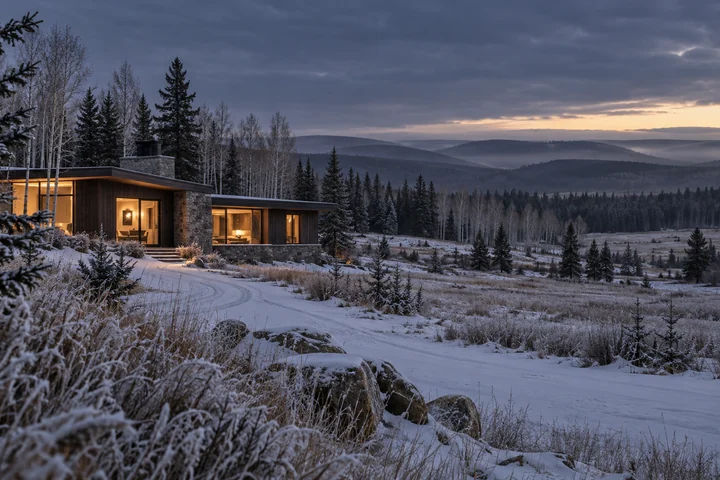
A contemporary country home can offer low forms, beautifully handled timber and rooms that respond closely to the land. Its character may come from a sheltered entrance, a considered sequence of windows and the contrast between a quiet wall and an intricate woodland view. Warmth comes from scale, material and the way people occupy the rooms.
Look beyond the label when comparing homes. Consider how an open living area coexists with private rooms, where daily belongings are kept and what the house feels like at night. Our contemporary architecture guide explores that experience through parkland settings, modern Alberta references and the choices that make a clean-lined home comfortable and personal.
Architecture · A home in the landscape
Make an architectural sketchbook of your own.
Visiting a museum or historic home can sharpen your eye without turning the outing into a design assignment. Notice one or two things: the first view through a doorway, the way a stair changes the room, a bench placed where someone would naturally pause. A short note about how a space felt can be more useful than a folder of unconnected photographs.
Return to those observations when thinking about a home. You may find that your favourite places share a modest ceiling height, a visible garden or a welcoming table. Follow each operator’s access and photography guidance, and let the visit remain enjoyable. The purpose is to understand your own response to buildings, including qualities that are difficult to express with a style name.
Architecture · A home in the landscape
Describe the life before choosing the details.
A useful conversation with an architect or designer begins with the household. Explain what mornings look like, how often guests stay, where work happens and what you enjoy doing outside. Bring a few images that capture the feeling you want, then describe why you chose them. A low roof, warm interior or layered view is a more helpful starting point than a demand to reproduce an entire house.
For a residential acreage search, tell Dusko about those priorities alongside the region and practical requirements. The existing acreage site covers ownership considerations in greater detail. Architecture is one part of the choice: the setting, daily journey and relationship to nearby communities help determine whether the whole place will suit the life you have in mind.
Architecture · A home in the landscape
The house you look forward to coming back to.
Imagine the home after its first season of excitement. There are books on the table, familiar marks in the garden and a room everyone gathers in without being asked. You know which window catches a particular light and which chair is best on a rainy afternoon. These repeated pleasures give architecture its lasting emotional weight.
A remarkable country home can be expansive or intimate, historic or contemporary. Its strongest qualities tend to remain legible in daily use: a graceful relationship to the land, rooms with good proportions and places to be together or alone. The country provides an extraordinary setting. The house makes it possible to feel comfortably, personally at home within it.