Architecture · Material & craft
Read the room before reading the finish list.
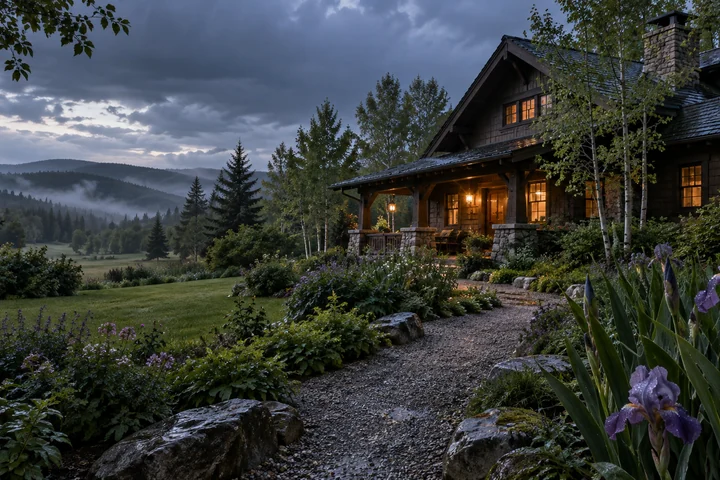
When you enter a timber and stone room, take in the whole space first. Where does your eye rest? Is the ceiling the dominant element, or does a wall frame the view? The room may feel calm because a few substantial surfaces do most of the work. An impressive collection of materials is less interesting than a clear relationship among them.
After that first impression, look at the details within reach. A timber reveal beside the window, a stone ledge or a simple stair rail can make the room feel considered. These smaller encounters are repeated every day. They help explain why a material that appears modest in a photograph can become one of the most satisfying things about living in a house.
Architecture · Material & craft
The direction of timber gives a room rhythm.
Wood grain leads the eye. Long ceiling boards can draw attention towards a window; a series of beams can mark places to gather beneath them. A quieter wall lets those lines remain legible. You can enjoy that rhythm without knowing the name of every species or the method used to assemble the structure.
Pay attention to how much variation you like. Some timber surfaces are relatively even; others show knots, colour changes and a more vigorous grain. A large sample is more revealing than a small chip because the pattern repeats across a real surface. Look at it near the other materials you intend to live with, including upholstery, artwork and the colour of the view outside.
Architecture · Material & craft
Stone has a scale of its own.
A stone wall can feel coarse, quiet, regular or richly varied. The size of the pieces, the depth of the joints and the treatment of corners all contribute. From across a room, the wall may read as one broad plane. Close up, each stone becomes an individual object. That shift between whole and detail is part of its fascination.
Consider where you want that visual weight. At an entry, stone might give the house a grounded introduction. Beside a window, it can make the opening feel especially deliberate. In a smaller room, a more restrained area may be enough. The choice is as much about proportion and light as it is about colour or the appeal of a material sample.
Architecture · Material & craft
A rustic Alberta reference in Banff.
Parks Canada’s Banff Park Museum heritage record documents the 1902–03 log-faced building, its broad bracketed veranda and distinctive roof lantern. Inside, the double-height space and mezzanine give the timber architecture a memorable scale. This is a public museum in a townsite, with its own history and purpose.
As a point of reference, it encourages you to notice how structure, light and detail work together. The rhythm of timber can carry a room before furniture is added; a veranda can make a building approachable at its edge. A country home may interpret those qualities in a much quieter way, with fewer visible elements and a room scaled to the people who use it.
Architecture · Material & craft
An urban stone house broadens the vocabulary.
The provincial Senator Lougheed Residence record identifies the 1891 Calgary house and its quarry-faced sandstone. Towers, an irregular plan and a steep roof contribute to its Queen Anne character. Lougheed House offers an urban comparison for the visual presence of stone, rather than a model of a rural Alberta dwelling.
Look at how a material participates in a larger composition. Stone can support formal, intricate architecture as well as a spare country house. Its meaning changes with the shape of the building, the size of the openings and the details around them. The useful lesson for a home is to choose the architectural character first, then let the material help express it.
Architecture · Material & craft
The meeting of two materials.
A room often reveals its quality where one material meets another. Notice the timber beside a stone wall, the edge of a plaster surface and the line where a window frame returns into the room. A clear, well-proportioned junction can make both materials easier to appreciate. Several decorative strips competing at the same corner may distract from that simple relationship.
When planning work, ask the designer or craftsperson to show how the important junctions will look at full scale. Drawings and samples can make an abstract choice tangible. For an existing home, close observation is a useful beginning, while an appropriate professional establishes how the assembly is made and what work it needs. Visual elegance and technical assessment are separate parts of understanding the building.
Architecture · Material & craft
A small palette can hold a great deal of richness.
Picture aged timber, grey stone, warm plaster and a plain woven fabric. Each has enough variation to keep the room interesting. The restraint allows you to notice light, grain and the landscape. A darker palette can feel especially atmospheric when there are a few softer surfaces and clear places for light to settle.
Try assembling the room as a group of real objects rather than a list of attractive finishes. Put samples beside a chair fabric, a photograph of a painting and a piece of flooring. Look at the balance between warm and cool, rough and smooth, dark and pale. A coherent palette leaves room for a favourite antique or an unexpected work of art without making the interior feel crowded.
Architecture · Material & craft
Watch what daylight does to texture.
Light arriving from the side can reveal the relief of stone and the unevenness of timber grain. Broad light through a large opening may soften those same surfaces. A material you love in one showroom can look different in the room where you intend to use it. Spend time looking at samples near the actual windows, at more than one point in the day.
This is also a rewarding way to experience an existing house. Notice which wall catches the last light and where the ceiling remains in shadow. A room can hold several moods without changing a thing. The most compelling interior may be the one that gives texture enough light to become visible while retaining a quieter corner for sitting and conversation.
Architecture · Material & craft
Let evening light make places within the room.
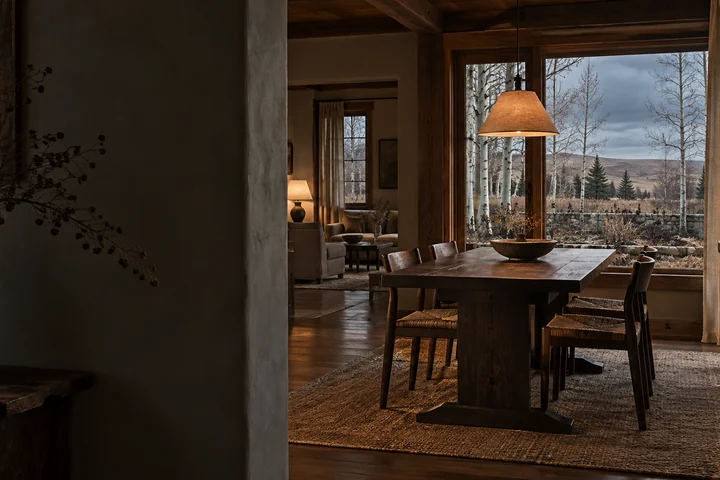
At night, a lamp beside a chair can make a large timber room feel intimate. Another light near a painting or a dining table can create a second place to settle. Materials become part of that composition: stone holds small shadows, timber takes on warmth, and a plain ceiling gives the eye somewhere calm to rest.
Imagine the room after dinner, when the view beyond the glass has become dark. Where would you read? Could two people talk without sitting beneath the brightest light? A layered lighting plan is a conversation to have with a designer. The domestic aim is simple: a room that offers comfortable choices and still feels complete when its daytime landscape is no longer visible.
Architecture · Material & craft
Give the best seat a real purpose.
A timber and stone room deserves furniture that allows you to enjoy it. Place a chair where you can see both the material detail and the land beyond a window. Think about the table beside it, the reach to a lamp and the route past it. A beautiful room becomes inviting when those small relationships are easy.
The main seating group can support conversation without blocking every view. A second, smaller place might be for reading or a quiet morning. Upholstery and rugs bring a softer scale to substantial surfaces; their texture can be simple rather than elaborate. Choose the room’s occupations first, then let the furniture make them visible. Comfort gives the architecture somewhere to land in daily life.
Architecture · Material & craft
The gathering place, with or without a hearth.
A hearth can be a strong centre in a country room, especially when stone gathers around it and timber gives the space rhythm. Its visual role is to provide a place people naturally face. A good gathering room can also find that centre in a window, a table or a group of chairs arranged for conversation.
If a fireplace is part of a particular home or proposed work, its condition, installation and operation belong with the appropriate qualified professionals. The design question here is where the household will gather and how the room supports that moment. Think about sightlines from each seat, places for a drink or book and the balance between the focal point and the landscape outside.
Architecture · Material & craft
The materials closest to the country day.
At the entry, the home meets coats, boots, bags and everything brought back from an outing. A pleasing floor and a comfortable bench can give this everyday space as much dignity as the living room. Storage within reach keeps the transition relaxed. The materials should suit the way the household actually arrives, including guests who are unfamiliar with the house.
Imagine coming in with flowers from a market or returning after a damp walk. Where does each thing go before you enter the main rooms? A designer can help connect the practical brief to suitable finishes and detailing. The pleasure is an entrance that feels settled and welcoming, with enough space for the unremarkable actions that happen many times a week.
Architecture · Material & craft
Frame a landscape with something tangible.
A window bordered by timber or stone makes the view feel held within the room. The near material gives scale to distant hills and woodland. Outside, a terrace edge, a small tree or grasses can provide another layer before the eye travels farther. This sequence makes the country feel deep and inhabitable from a seat indoors.
Look at how the frame relates to the room as a whole. An opening above a desk has a different purpose from one beside a dining table. A view through two connected rooms can be especially memorable because it changes as you move. Material and landscape work together when the architecture lets you appreciate both, including the close details you might otherwise pass without noticing.
Architecture · Material & craft
Wood can express a contemporary idea.
At the Philip J. Currie Dinosaur Museum in Wembley, the architects describe an extensive wood structure and a sequence of spaces related to the museum’s subject and regional landscape. This is contemporary public architecture, with a purpose and scale very different from a home. It widens the ways we can think about timber.
The domestic possibility is a material used with clarity: a ceiling that brings warmth, a visible rhythm that helps organise a room, a restrained palette that gives the grain room to speak. Timber need not carry a nostalgic decorative theme. Our contemporary country guide follows that idea into homes where clean forms and a lived-in atmosphere belong together.
Architecture · Material & craft
Leave space for the things that matter.
A country interior can hold pottery, books, paintings and furniture gathered over many years. Strong materials make a generous background when their patterns and proportions remain coherent. You might give a vivid painting a quiet plaster wall, or place a simple ceramic vessel where stone and daylight already create an interesting setting.
Avoid deciding the entire room as one coordinated purchase. A familiar chair or inherited table can help the house feel personal from the beginning. Our guide to living with art explores that gradual relationship with objects and artists. The architecture supplies a setting; the household gives it an individual history through use, preference and the occasional surprising combination.
Architecture · Material & craft
Read older materials with patience.
Older timber and stone can hold the character of previous decisions: a changed opening, a careful repair or a surface worn by repeated use. Learning that history can deepen your attachment to a house. Start with records and observation rather than assuming that every irregularity is original or that every aged surface should be retained in its current condition.
For a documented heritage building, involve the relevant conservation expertise before planning changes. Our heritage care guide introduces that approach. For any home, appropriate assessment can distinguish character from work that needs attention. The rewarding outcome is a place that remains useful and comfortable while retaining the features that give it a particular voice.
Architecture · Material & craft
Choose in the light of the actual home.
Bring the important choices together before committing to the whole palette. A timber sample, stone sample and fabric can be viewed beside a window and under the room’s evening light. Step away and look again. The colour that seemed subtle at arm’s length may become the dominant note across a large wall.
Keep a short record of what you respond to: a quieter grain, a softer joint, less contrast between floor and wall. Share those observations with the people designing or carrying out the work. You are describing an experience rather than selecting isolated products. That conversation can produce a room with depth and individuality, while the technical decisions remain specific to the building and its use.
Architecture · Material & craft
The materials become familiar through living.
Over time, the most cherished details may be the ones you notice almost without thinking. A warm timber rail on the stair. The stone beside a window as daylight moves across it. A chair placed where the room and the country meet. These repeated encounters are the quiet luxury of a carefully made interior.
Return to the wider architecture guide to consider how those rooms connect with arrival, landscape and the rest of the house. Timber and stone can bring extraordinary character, but their best expression is personal: materials you enjoy looking at, rooms you use comfortably and a home whose beauty grows more familiar with each season.