The country year · Summer
Let the first cup find a place outside.
A summer morning can feel different when you move a familiar habit a few steps beyond the door. You see the house from another angle and notice a part of the garden that usually passes at the edge of attention. The occasion does not need to last long. A comfortable seat and somewhere for a cup can give it enough shape to become a favourite part of the day.
Choose that place through use. The principal terrace may be ideal for company while a quieter corner suits the morning better. Look at what lies close as well as far away: a trunk, a low wall or the edge of planting can make the view feel settled. The value of the setting grows when it offers several small invitations, each suited to a different hour or mood.
The country year · Summer
Make the route between house and garden feel natural.
The door towards the garden earns its importance through repeated movement. Plates go out, a book comes in and someone pauses to finish a conversation at the threshold. Notice whether the route supports that everyday use. A modest outdoor space near the kitchen may contribute more to a summer life than a larger terrace reached by an awkward journey through the house.
Picture an ordinary meal as well as a gathering. Where would things be put down? Can someone sit nearby while food is prepared? Does the view draw you towards the door even when no occasion is planned? Our outdoor rooms guide explores this connection. A persuasive country home makes its outdoor pleasures easy to encounter, with the house remaining part of the experience rather than a distant backdrop.
The country year · Summer
The summer table should welcome ordinary meals.
An outdoor table is most rewarding when it belongs to the household’s routine. Breakfast, a simple lunch and an evening meal with friends may all happen in the same place, with the setting changing around them. Choose the arrangement for those uses first. A clear surface, comfortable seats and space to pass dishes allow the meal to remain relaxed.
The garden supplies much of the atmosphere. A branch above the table or an opening towards the meadow can be more compelling than elaborate decoration. Let the useful objects bring their own character: familiar bowls, linen, a pitcher and plates that people enjoy handling. Summer hospitality becomes generous through the freedom to stay, talk and help oneself, with the host able to join the occasion as well as arrange it.
The country year · Summer
Give the day more than one place to sit.
A garden can offer a sequence of places rather than one large outdoor room expected to suit every hour. A seat near the house may welcome conversation; another looks into the trees; a quieter place allows someone to read apart from the gathering. These choices give a small area variety and help a larger setting feel personal.
Spend time in each position before deciding what it should become. Look from seated height and consider how the place feels in the conditions when you would use it. Existing trees, walls and roof edges can be part of the composition, but the actual site should lead any design. The aim is a garden you enjoy inhabiting often, with enough different invitations that people can find their own place within it.
The country year · Summer
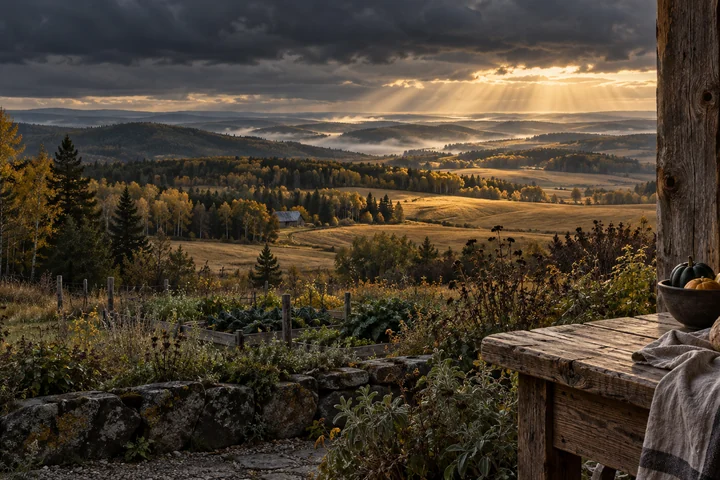
A garden becomes richer when it has several distances.
Close foliage and materials give the summer view texture. A path or cultivated area carries the eye farther, while trees, meadow or a ridge complete the scene. You can experience those layers from a single chair. The garden feels connected to the country without needing to imitate everything beyond its edge or fill every open space with planting.
Look for the same relationships when visiting public gardens. Notice how an opening is framed or where a path allows the eye to pause. The gardens guide follows enclosure, movement and the larger landscape. A useful personal brief describes what engages you in these compositions. Plant choices, work and site suitability then belong in an informed conversation about the place itself.
The country year · Summer
A public garden offers another way to look.
St. Albert Botanic Park is maintained and operated by volunteers, with distinct garden areas and a collection of labelled plants. Its paths give a visit a close, human scale: you can look at a combination, move a short distance and find a different arrangement. The pleasure lies in attention rather than in covering a large route.
Use the park’s visitor information for current facilities and arrangements. Garden access and the schedules of the shop, patio and washrooms are different things. Take away observations rather than a universal planting recipe. A public collection can help you recognise a preference for texture, enclosure or a particular relationship between trees and open ground, then describe it more clearly when considering your own setting.
The country year · Summer
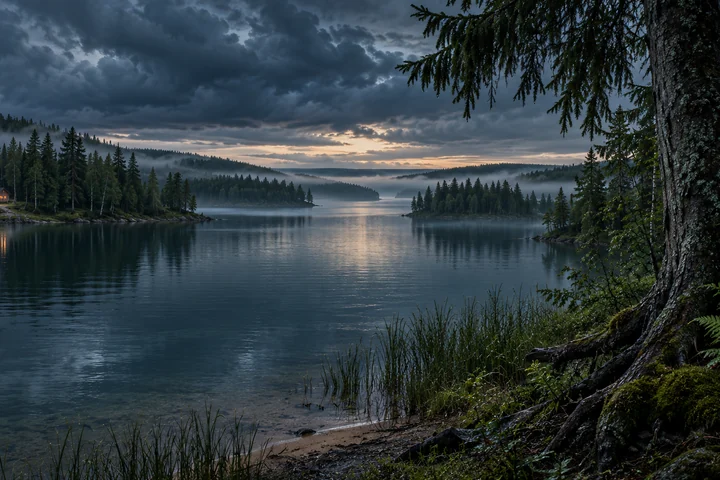
A wooded shore can make the view feel close.
Lake country offers a particular relationship between enclosure and openness. A tree or dark bank gives the foreground weight, while the water carries the eye towards a farther shore. From a quiet seat, the landscape can feel intimate and expansive at once. The most memorable view may include a small cove or a layered edge rather than an uninterrupted panorama.
Our Alberta lake-country guide explores distinct regional settings and public places. When considering a home, experience the outlook from the positions you would actually use and establish the property facts separately. The artwork on this page is an invented private shore, with no named lake or promised access. Its useful idea is compositional: the close natural detail makes the broad scene feel like somewhere to spend time.
The country year · Summer
Enjoy the scene without filling every interval.
Water can hold a view through small changes. A reflection becomes less distinct, a line of light shifts or the far shore takes a quieter place beneath cloud. You may sit for a while without deciding that the moment needs an activity. A useful chair and a little space around it allow the landscape to supply its own movement.
That pleasure is available in many forms of country life, including away from a lake. Moving leaves, cloud over open ground or a garden seen after rain can invite the same attention. Describe the experience you value rather than insisting on one image of the ideal property. A home brief becomes more flexible when it identifies the wish beneath the photograph: quiet, close natural detail and enough time to notice change.
The country year · Summer
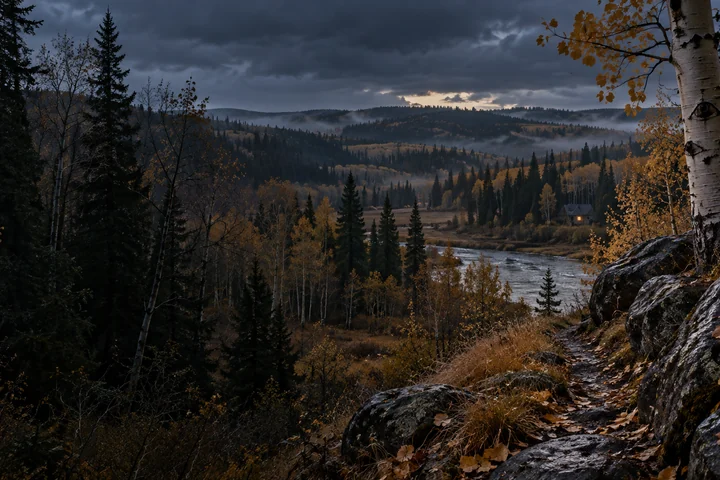
The woodland edge can become a room of its own.
A seat near trees has a different atmosphere from one in an open garden. Trunks establish the nearest boundaries, branches break the view and the space beyond appears through a series of openings. The feeling can be informal without being shapeless. A simple place to sit may be enough to make the edge of a wooded setting part of the household’s day.
Learn the actual place through repeated visits. Which view draws you back? Where does conversation feel comfortable? Is there a quiet position that remains connected to the house? The woodland guide explores regional settings and the pleasures of living with trees. A summer seat can become especially meaningful because it allows you to know a small part of a larger landscape closely, at your own pace.
The country year · Summer
Let local food give the gathering a subject.
A meal can begin with something found during an outing: an ingredient, a conversation with a producer or a dish you want to try again at home. Keep the plan generous enough that those discoveries have room. A few well-chosen things can be more enjoyable than a menu that keeps the host occupied throughout the visit.
The country food guide introduces researched Alberta markets, producers and dining references, with their own seasonal arrangements. Use those direct links for a particular visit or purchase. At home, the table need not become a display of everything local. One ingredient can start the conversation, with familiar dishes and a comfortable setting allowing people to settle in. The connection with the wider country becomes part of the meal through its story and use.
The country year · Summer
Give a simple meal a different setting.
A picnic changes the pace because it asks you to choose a place and stay there for a while. At home, that might be a permitted garden corner a short distance from the kitchen. For a public outing, use a place where the activity is welcome and plan around the group’s needs. Keep the food straightforward enough that the setting remains part of the pleasure.
Notice what makes the occasion inviting: a view with close detail, comfortable places to sit and enough time that eating does not feel like a pause before the real activity. You can carry those observations back into a home brief. The garden may need only one useful stopping place to offer a meal with a different atmosphere. Country space gains value through these modest occasions as well as through large gatherings.
The country year · Summer
An outdoor performance can give summer another scale.
At Badlands Amphitheatre, arts and culture are presented within Drumheller’s distinctive Badlands setting. It is a different kind of landscape encounter from a quiet garden afternoon: the country becomes part of a shared performance experience. Choose an actual event through the operator’s current programme, with its own ticketing and visitor arrangements.
Give the occasion space in the day rather than treating it as one more stop. An outdoor venue brings weather into the experience, and specific events can have different entry and accessibility arrangements. The conversation afterwards may become as memorable as the outing itself. Summer country life can include those public gatherings alongside private rooms and gardens, connecting the home with the creative life of the wider region.
The country year · Summer
Let a heritage visit deepen the landscape.
A public historic place can change what you notice on the return home. A building’s relationship with the ground, a carefully interpreted object or a story about work may give a familiar view another layer. Choose a destination because its subject interests you, with enough time to engage with the interpretation rather than only photograph the exterior.
The living heritage guide, ranch-country guide and railway-town guide offer distinct Alberta starting points. Each place has its own access and programme. These visits need not be gathered into a single ambitious day. A country life can become richer through returning to nearby cultural places over several seasons, allowing local history to sit alongside the pleasures of your own house and garden.
The country year · Summer
Let guests settle into the place.
A summer guest may remember the unarranged hours most clearly: the first cup outside, a quiet walk where access permits or conversation continuing while supper is prepared. Give the visit enough structure to feel welcoming, then leave room around it. A comfortable place to put things and a few clear choices can do more than a full itinerary.
Think about the house during the quieter intervals too. A guest room with a lamp and chair, somewhere to read away from the group and an easy next morning all contribute to the stay. The hospitality guide develops these ideas. A generous country weekend allows people to join the gathering naturally and to enjoy a little independence, with the setting remaining part of both experiences.
The country year · Summer
A good gathering leaves room for different paces.
Some people want to look closely at the garden while others prefer a long conversation at the table. Children may become absorbed in a small activity and return later. A welcoming home allows those rhythms to coexist. Keep a few places connected enough that moving between them feels easy, with quieter seats available beyond the centre of the gathering.
The design question is how people actually use the space. Can someone remain indoors without feeling excluded? Is there a table where an activity can continue after lunch? Does the route to the garden welcome an ordinary movement with a plate or book? These details reveal a house’s generosity more clearly than its scale alone. Summer makes them visible because the day can spread across several rooms and outdoor places.
The country year · Summer
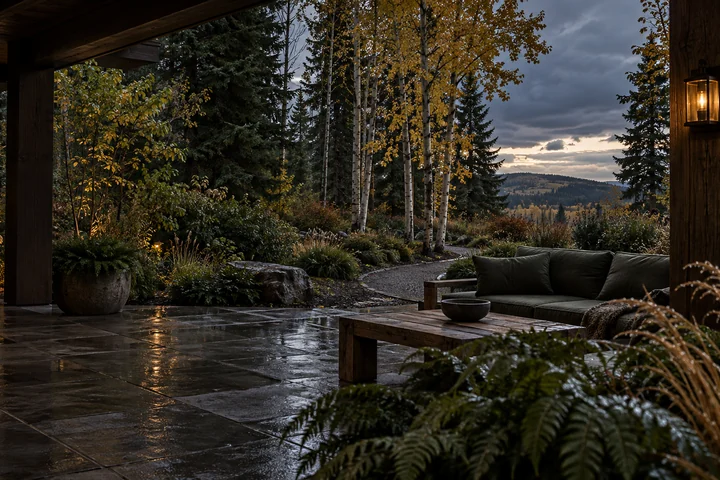
A summer room should be inviting when the garden is wet.
A rainy afternoon can bring people back towards books, a game or the kitchen table without making the day feel unfinished. Keep the view of the garden present from a comfortable indoor place. Wet leaves and subdued light offer another version of the scene, with close materials and branches becoming more apparent. The room supplies continuity while the day changes around it.
Choose an interior that can support those ordinary hours as well as a large occasion. Our interiors guide explores gathering, quiet rooms, storage and useful objects. A summer home feels convincing when staying inside is a pleasure in its own right. The outdoor setting remains important, but the household is free to respond to the day instead of depending on one ideal sequence of weather and activities.
The country year · Summer
Leave an evening without a second destination.
After supper, allow the gathering to find its own pace. Someone takes another seat, the conversation changes and a familiar view becomes quieter as the light moves. The value of a comfortable outdoor place is especially clear in that interval. It offers somewhere to remain without needing a new activity to justify the time.
Watch the near landscape as well as the horizon. A trunk or garden wall may hold the last clear detail while the distant ridge recedes. The art’s silver lake and warm boathouse window suggest one imagined version of that relationship. Your own evening might happen beside open prairie or a small garden. The enduring pleasure is a place where the end of the day can unfold naturally, with the house close enough to welcome the return.
The country year · Summer
Describe the summer life before choosing its setting.
Imagine a few specific occasions: a quiet morning, a meal for friends, an afternoon with guests and an evening after everyone has stopped making plans. Follow the people and objects through them. Where would you sit? How would the kitchen and garden connect? Which nearby public places would give you reasons to return through the season?
Record what matters beneath the imagery. You may want close woodland detail, space for a generous table or a comfortable room that remains inviting during rain. Those wishes can be met in different ways. Connect the lifestyle brief with the real property’s records, access and appropriate professional advice. The aim is a home whose everyday use supports the country life you actually hope to enjoy.
The country year · Summer
Let the familiar occasions become the memories.
A summer home gains meaning through the things people ask to do again: breakfast in a particular place, a favourite public outing or a supper that continues into the evening. The setting becomes personal because of those repeated uses. Its beauty is still there, but it now holds the memory of conversation, discoveries and people who have made themselves comfortable.
Continue with autumn country life, the winter home and spring beyond the garden gate to imagine the year around those occasions. Summer gives the country home a broad stage, from a close garden seat to a distant shore. The lasting luxury is having time and a welcoming place to enjoy the parts of that world that matter to you.