Horses & country life
Find a place to watch, then stay for a while.
A first visit can be pleasantly simple. Choose a public competition session, learn where spectators may sit or stand, and give yourself enough time to watch several rounds. The repetition is part of the appeal. A fence that looked straightforward on the first approach becomes more interesting when another partnership reaches it from a different line or at a different pace.
You do not need to understand every term before arriving. Listen to the commentary, look at the published programme and let a few questions develop naturally. Which part of a round held your attention? Did you notice the approach, the jump itself or the recovery afterwards? Watching with one small question can make an unfamiliar sport absorbing without turning the afternoon into a lesson.
Horses & country life
Give Spruce Meadows a day of its own.
Spruce Meadows provides a public point of entry to show jumping near Calgary. Its 2026 tournament calendar includes the September Masters and the later Harvest Classic; both have already passed at this October 11, 2026 check. Use the organiser’s next published calendar when planning a tournament visit. A past event page can be enjoyable reading, but it cannot supply a future admission promise.
For a future visit, choose the programme before building the rest of the day around it. A major competition and a quieter session may suit different companions. Allow time to settle into one ring rather than feeling obliged to cover the entire grounds. A return visit with a clearer sense of what you enjoy can be more rewarding than a first visit crowded with stops.
Horses & country life
A winter gathering has its own character.
The Spruce Meadows homepage advertises its 2026 Christmas Market for November 13–15, 20–22, 27–29 and December 4–6. These are seasonal market dates, separate from the completed tournament season. Check tickets and the specific day’s arrangements directly before travelling.
That distinction helps you choose the right outing. Someone interested in a day of sport may prefer to wait for a new competition calendar. Someone drawn to a seasonal gathering may enjoy an entirely different visit to the same place. Let the actual programme set the expectation. Familiar grounds can acquire a new mood through changing light, weather and the reason people have gathered there.
Horses & country life
Plan for the scale of the grounds.
Spruce Meadows’ accessibility information describes varied terrain and the size of the site, and says it does not provide on-site wheelchair rentals. It also distinguishes general admission arrangements from reserved accessible seating. Contact the ticket office about the needs of your party before booking; a ring being accessible does not describe every path between destinations.
Comfort shapes how long you can enjoy watching. Think about the distance from parking to your chosen area, the places where you can pause, and whether everyone wants the same length of visit. A shorter, well chosen session can be a complete day out. For a mixed group, a clear meeting point and a generous departure plan are more useful than an ambitious schedule.
Horses & country life
Look beyond one famous destination.
Rocky Mountain Show Jumping is based at Anderson Ranch south of Calgary and welcomes visitors during its tournament season. Its tournament information links to current prize lists, entry information and daily schedules. Confirm the particular event, venue and spectator arrangements with the organiser. A rider’s entry page answers different questions from a visitor’s admission enquiry.
Following more than one organiser can broaden your sense of the sport. You may discover that you enjoy a particular kind of class, prefer a certain pace of day or want to return with a friend who rides. Keep the interest specific. The value of a visit is the experience you actually have, whether that is a single memorable round or an afternoon spent learning how a show unfolds.
Horses & country life
Meet the wider agricultural community.
The Millarville Racing & Agricultural Society’s equine programme includes working equitation, ranch riding and other organised activities. Several carry participation requirements or require contact with the organiser; an advertised practice is not automatically a public spectator event. Ask what is appropriate for a visitor before making it the centre of your plans.
An agricultural society gives equestrian interests a wider setting. The horse-related activity may sit alongside making, gardening, food and local volunteering. If that surrounding life appeals to you, explore the community gatherings guide as well. It follows the shared places that allow a country interest to become a recurring relationship with neighbours, rather than an isolated day on a calendar.
Horses & country life
Watch for the work between the jumps.
A course offers more to notice than the instant a horse leaves the ground. Watch how a partnership arrives at a turn, finds a line and prepares for what comes next. Stay with one round from beginning to end. The sequence often becomes easier to appreciate when you resist dividing it into a collection of spectacular moments.
For an interested beginner, a little observation can be enough for one visit. You might come away remembering a quiet transition or a rider’s patience rather than the result. Let that be a useful starting point for the next conversation. An experienced companion or coach can explain what you saw more accurately than a guess made from a brief glimpse across the ring.
Horses & country life
Make room for different levels of interest.
A group outing works well when everyone has a reason to be there. One friend may follow the competitors closely; another may simply enjoy the setting. Agree on a few shared moments and leave breathing room around them. You can meet for a meal or watch a chosen class together without expecting every person to spend the whole day in exactly the same way.
Children and first-time visitors may enjoy a shorter visit with one clear focus. Check the organiser’s current family, seating and access information, then keep the day flexible. Bring your attention back to what is in front of you. An afternoon remembered for one wonderful round and a relaxed conversation can become the beginning of a tradition.
Horses & country life
Let a good teacher give the interest structure.
The Alberta Equestrian Federation administers Equestrian Canada’s progressive Learn to Ride/Drive programme, including English, Western and driving disciplines. It describes a pathway guided by a qualified instructor or coach, with assessments and certificates. The programme information is a starting point for a conversation about learning, rather than a promise that a lesson or assessment is available on a chosen date.
If riding interests you, explain your experience and what you hope to enjoy to a suitable provider. Ask about the introduction they offer, the practical commitment and how they decide which next step is appropriate. A thoughtful beginning leaves room to discover the interest at a realistic pace. There is pleasure in learning something patiently, especially when the routine itself becomes part of the attraction.
Horses & country life
Give each discipline its own introduction.
The first equestrian activity you encounter need not become your only reference point. The federation’s learning programme encompasses several disciplines. Use that breadth as an invitation to ask questions of knowledgeable teachers. Understanding what a particular lesson or demonstration involves will help you decide which experience to pursue.
You may be drawn to the quiet concentration of a session, the social life around a club or the setting in which an activity takes place. Those interests can develop independently. A person who loves attending a show may never want to compete; someone who enjoys regular lessons may have little interest in a large event. Let your own experience determine the shape of the commitment.
Horses & country life
There are ways to take part beyond riding.
Ask an organiser or local group about the roles it actually needs filled. Event support, administration and preparation can involve quite different skills and time commitments. A clear description of the task helps you decide whether it fits your experience. Working near horses also requires the organiser’s induction and boundaries, even when the role itself is not a riding one.
Start with a commitment you can keep. Being dependable for one agreed task is a good way to get to know how a group works. Over time, you may learn the names behind an event and understand the preparation that visitors rarely see. That knowledge can make a familiar day feel richer: a gathering becomes a place where you recognise both the occasion and the people who make it possible.
Horses & country life
Read an open landscape with care.
The federation’s trail-riding guidance points out that trails are not all designated for equestrian use. The relevant land manager’s current rules and conditions matter. For a prospective rider, choose an appropriate provider and ask about the route and experience required. A beautiful view alone cannot tell you what activity is permitted there.
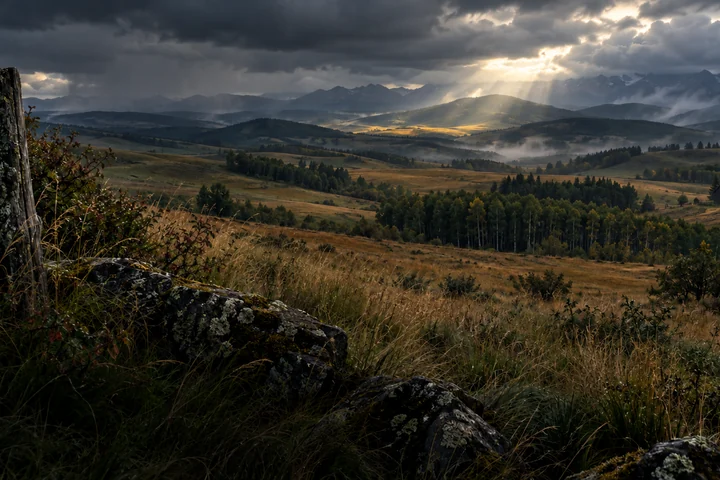
As a walker or spectator, you can still enjoy the relationship between horses and country without making every landscape into a riding destination. Watch from public places where stopping is permitted and respect private boundaries. The imagined scene at the top of this story captures an atmosphere; an actual outing begins with a real, confirmed place to visit.
Horses & country life
Hold the history and the present together.
Our ranch-country guide explores documented places where you can learn more about a particular working history. Equestrian life today has its own participants, clubs and ambitions. Keeping those stories distinct makes both more interesting. A modern competition can be enjoyed on its own terms while a heritage visit asks different questions about work, land and the people remembered there.
Resist treating every fence, saddle or old building as evidence of one simple Alberta story. Ask whose account a museum or organiser is telling, and follow its interpretation. If a place leads you towards another community’s history, use that community’s own sources. Curiosity becomes more rewarding when the specific people and setting remain visible.
Horses & country life
Let the day come home with you.
A country house can hold the quiet remainder of an outing: coats drying near the entrance, a book opened to a newly interesting subject, a late lunch that leaves time to talk. You do not have to recreate a stable interior to make room for an equestrian interest. A few things you actually use or care about will carry more meaning than a room assembled around a theme.
Think about the routines the interest introduces. You may want a comfortable place to read a programme, a small shelf for books or a table large enough for friends returning from an event. Our hospitality guide follows those ordinary pleasures in more detail. The country feeling often comes from how naturally the house accommodates a good day.
Horses & country life
Enjoy the landscape at its own pace.
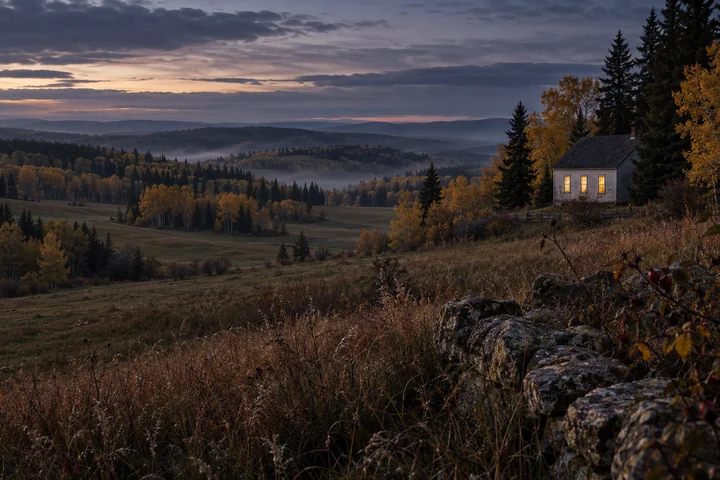
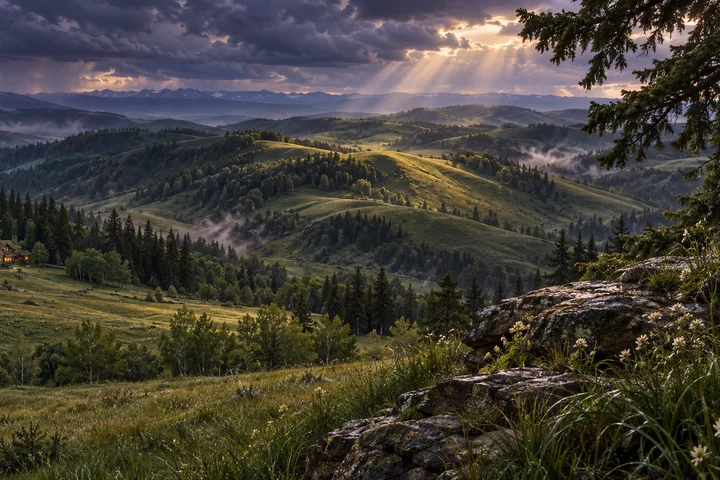
A meadow view has a different tempo from a close garden. In early light, grasses and fence lines may be the most visible elements; later, tree shadows can divide the same field into a new composition. If you are visiting a country home, look from the places where you would spend time. A view from a doorway and one from a sheltered seat can feel surprisingly different.
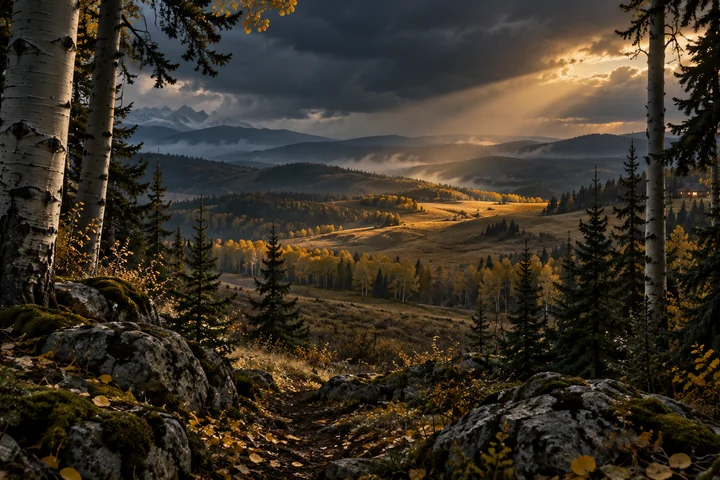
Notice the foreground as well as the horizon. A weathered rail, an aspen trunk or a patch of tall grass gives the distance a beginning. The relationship between close detail and far land is part of the appeal of our foothill landscape guide. Enjoy it without assuming that every open field belongs to the same property or is available for a new use.
Horses & country life
Accept the invitation that is actually offered.
A public event, an arranged stable visit and a private property showing each provide a different kind of access. Follow the host’s directions about where to go, what may be photographed and when to arrive. Keep a camera within the permissions of the occasion. A friendly introduction is an opportunity to listen, rather than an invitation to wander into working areas.
This makes the experience easier for everyone involved. You can enjoy the parts of a place that are open to you and ask a useful question about the rest. When the setting is a business or working yard, daily tasks continue around the visit. Leaving room for that work is a simple expression of appreciation for the scene you came to enjoy.
Horses & country life
Separate the interest from the property decision.
An enjoyable season of lessons or spectator visits may clarify what you value about country life. It may be the landscape, a regular activity or the people you meet. Put those observations into words before assuming they require a particular property. Proximity to an activity and the ability to carry it out at home are different questions.
For residential acreage guidance, speak with Dusko through the existing acreage site. A property intended for agricultural or commercial equestrian use calls for appropriately licensed representation and property-specific advice. Let the intended use be explicit from the beginning. That leaves the lifestyle conversation grounded in the life you plan to live.
Horses & country life
Choose one reason to return.
At the end of a first visit, identify the part you would like to experience again. It might be another class at the same grounds, a lesson enquiry or a local event where you could help. Make the next step modest enough to fit the rest of your life. A returning interest has room to deepen through familiarity.
Keep a few notes rather than an elaborate itinerary: the session you watched, the question you want answered and the person or organiser to contact. Over several visits, those details become your own map of horse country. The pleasure lies in recognising more each time, while preserving the unhurried attention that drew you to the landscape in the first place.