Heritage care · Country homes
Describe what makes the place feel like itself.
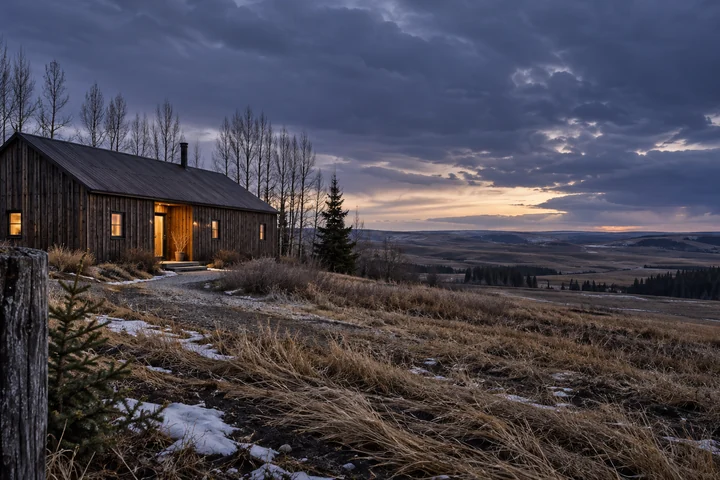
Start in ordinary language. Perhaps the entrance feels sheltered, the sitting room has a quiet scale or a low garden wall gives the house a settled edge. Describe those qualities before listing products or finishes. This gives a designer or specialist a clearer account of what you hope to retain.
Be specific about where the feeling comes from. A photograph of the whole room is useful, but so is a note about a window seat at the time you actually use it. Record how the rooms connect, which view matters from the table and where people naturally pause when they arrive.
This exercise is about your relationship with the place, not a formal assessment of its historic importance. The two can inform each other, but they are different. Personal affection is a useful beginning; documentary research and professional investigation help establish what the building is and how it can be cared for.
Heritage care · Country homes
Read a building as more than a collection of attractive parts.
A Statement of Significance for Beatty House connects its domestic design, natural materials and landscaped setting. The record includes the relationship between rooms and the treed lot, alongside individual architectural features. Such records show why a place’s interest may extend beyond a façade.
For a home of your own, ask what evidence exists and what it actually covers. A designation record, a historical survey and a recent condition report have different purposes. A beautiful old photograph does not establish present structural condition, while a technical report may say little about the memories attached to a room.
Keep those kinds of knowledge together without confusing them. A simple project folder can hold historical research, photographs, drawings, professional reports and your own observations. When a decision becomes complicated, it is easier to discuss if everyone can see which part is documented, which is an assessment and which is a preference.
Heritage care · Country homes
A conservation approach begins before the physical work.
Parks Canada’s conservation guidance places understanding and planning ahead of intervention. Its principles favour retaining heritage value, minimal change, care for repairable elements and a suitable continuing use. It also cautions against inventing a misleading historical appearance.
For a homeowner, the useful first step is to replace a vague ambition with a clear purpose. “Make it feel cared for” may mean several very different things: addressing a known problem, improving daily comfort or changing the way a room is used. Those purposes deserve to be discussed separately before a single visual scheme begins to drive them all.
Allow the building’s particular story to shape the brief. The aim might be to preserve a familiar room, make an existing space more useful or recover a documented feature. Choosing an approach depends on the evidence and the place; it should not be decided simply because one word sounds more prestigious than another.
Heritage care · Country homes
Establish status before promising a project.
Alberta’s provincial designation information explains that a Provincial Historic Resource has legal protection and that written ministerial approval is required for the interventions it lists, including alteration, restoration and repair. Owners are directed to discuss proposals with programme staff first. Confirm the requirements for the specific resource; municipal and other approvals are separate questions.
That investigation belongs early in a conversation about an older property. Ask for the actual records rather than relying on a listing adjective such as “heritage” or “historic.” Find out what is designated, which documents describe it and which authority should be approached about your intended work.
Clear information supports a more satisfying design process. You can describe what you would like to achieve while the right people explain what the building and its status require. A project becomes easier to evaluate when its possibilities are grounded in the actual place, rather than in assumptions carried over from another house.
Heritage care · Country homes
Use the right expertise to frame the next questions.
The province’s heritage conservation advisers support owners of designated historic resources and provide regional contacts for conservation and rehabilitation questions. Use that channel to establish the appropriate process for a protected place, alongside the building professionals and authorities relevant to the proposed work.
A productive first conversation can be quite focused. Explain the building, the records you have, the problem you are trying to understand and the outcome you hope for. Photographs and a short account of previous work can help a specialist identify what further investigation is needed.
You are looking for an explanation of choices, not merely an assurance that everything can be made to look old. Ask what is known, what remains uncertain and which specialist should answer the next question. The ability to recognise the limits of one person’s role is a valuable part of a team’s expertise.
Heritage care · Country homes
The Sutherland bungalow shows the value of patient work.
A 2021 provincial conservation account describes the Duke of Sutherland bungalow near Brooks and its owner’s long restoration programme. It records a substantial veranda, domestic woodwork and a skylight, and explains how photographs, drawings and physical evidence informed work on the house.
What makes the account compelling is the attention given to individual decisions. A distinctive home is not saved by one dramatic gesture. Its character depends on many relationships between materials, openings and rooms, each of which asks for care.
Read it as a documented project, not an invitation to visit a private residence or a specification for your own. The useful inspiration is the depth of engagement: someone knew the place, valued its particular qualities and sustained that interest through a long programme of work. That is a different kind of luxury from replacing everything at once.
Heritage care · Country homes
A long programme needs a sense of sequence.
The province’s 2022 Heritage Awards account recognises Sandra Hajash’s work on the bungalow, including a recent phase within a roughly three-decade conservation programme. The award is historical evidence of that recognised work; it does not establish today’s condition or visitor arrangements.
For your own home, discuss sequencing with the appropriate professionals. The decisions that affect later work should be understood before a room receives its final decoration. Ask which investigations are needed, which choices depend on them and what can sensibly wait. A coherent sequence is more useful than a list organised only by what will photograph well first.
There can still be enjoyment while a longer plan develops. A comfortable room, a few well-chosen possessions and a realistic understanding of the next stage can make a house feel inhabited. The purpose of a long programme is to support life in the building, not to postpone every pleasure until an imagined final day.
Heritage care · Country homes
At Circle L, a small building carries a large story.
The provincial account of Circle L Ranch describes conservation of its spring house in the Porcupine Hills. The project documented and tagged the logs, repaired the structure and returned it to its setting with carefully considered support. The account records completion in July 2019.
The example broadens the idea of what deserves attention. A modest service building can explain how a household or ranch worked, even when it lacks the public presence of the main residence. Its value comes from its relationship to use and setting, not from its size.
When looking at an older country property, include the less prominent structures in your questions. Ask what they were used for, what records exist and how they relate to the home. Any intended access, use or work needs its own assessment; historical interest should encourage investigation rather than invite entry into an unassessed building.
Heritage care · Country homes
Craft is a form of close observation.
The Circle L account is striking for the way it makes workmanship visible. The linked project record describes local timber and traditional fitting skills within a carefully documented repair. These details belong to that specific project and its specialist team.
For a homeowner commissioning work, ask to understand the craft involved. How will a proposed sample be judged? Which surviving details guide the work? What should be recorded when it is complete? A good conversation can reveal differences that are difficult to see in a general quotation or a distant photograph.
Take an interest without confusing interest with expertise. It is possible to appreciate how a joint is made or why a finish was selected while leaving assessment and execution to qualified people. That understanding can deepen your enjoyment of the house: you begin to notice the decisions and skills present in ordinary surfaces.
Heritage care · Country homes
A former courthouse demonstrates a different continuing use.
A 2019 conservation account of Taber Courthouse describes work on original windows, masonry, plaster, floors and woodwork before new occupants moved in. The article explains that historical records and evidence in the building helped inform the project, while contemporary requirements also shaped decisions.
It is a public-building example, included for the questions it raises about continuing usefulness. The interest of an older place need not depend on every room continuing its first function. What matters is understanding how a new use interacts with the features and relationships that make the building significant.
In a home, that might begin with a simpler conversation about a room that no longer has a clear role. Before proposing major changes, ask what activity could fit there comfortably. A library, music room or place for a particular craft may make better use of an existing atmosphere than a general ambition to make every room identical.
Heritage care · Country homes
Windows influence the feeling of a room.
A 2026 provincial heritage discussion of windows considers their contribution to character alongside comfort, upkeep and performance. It calls for a case-by-case approach; assumptions based on age alone do not settle whether repair, improvement or replacement is appropriate. The advertised May webinar is a past event, not a forthcoming session.
From a resident’s point of view, a window also determines where you choose to sit and what you notice outside. A low view of a garden has a different effect from a distant horizon. Divisions in the glazing, the depth of the opening and the way curtains sit can all influence the experience of the room.
Describe the comfort you need and the quality you hope to retain, then ask a qualified team to investigate appropriate options. The conversation is more useful when it includes both daily experience and the actual condition of the building. An appealing photograph alone cannot answer a performance or conservation question.
Heritage care · Country homes
Let the material details contribute to daily enjoyment.
An old home becomes familiar through things you encounter at hand: a door’s weight, the edge of a shelf, the way light rests on timber in the evening. These details may be less conspicuous than a staircase, yet they can give the house much of its domestic pleasure.
Spend time noticing them before deciding on an overall interior scheme. Which textures are already doing useful work? Where does a room need softness, and where would another decorative layer obscure something you like? A carefully placed rug, lamp or chair can change the way a space feels without first requiring a comprehensive alteration.
For any change to building fabric or fixed elements, establish the appropriate advice and permissions. Furniture and the arrangement of daily life offer another kind of response: they let you learn how a room works while the bigger questions are properly investigated. That period of observation can make later decisions more confident.
Heritage care · Country homes
The Leighton story connects care with a continuing purpose.
The Leighton Art Centre’s history describes Barbara’s transformation of the home into a gallery and museum, alongside art education using the historic schoolhouse. It is one example of domestic and educational buildings finding a shared cultural role.
A visit can make that idea tangible. You are there for art, history and the landscape as well as the building itself. The house’s public life gives people reasons to return and reasons to care about its future.
For a private country home, a continuing purpose is usually more intimate. It might mean making the dining room a place where family actually gathers, giving a studio a daily rhythm or maintaining a garden you enjoy working in. Care is easier to understand when it supports activities that matter, rather than simply preserving an appearance for an occasional photograph.
Heritage care · Country homes
Consider the setting as part of the home’s character.
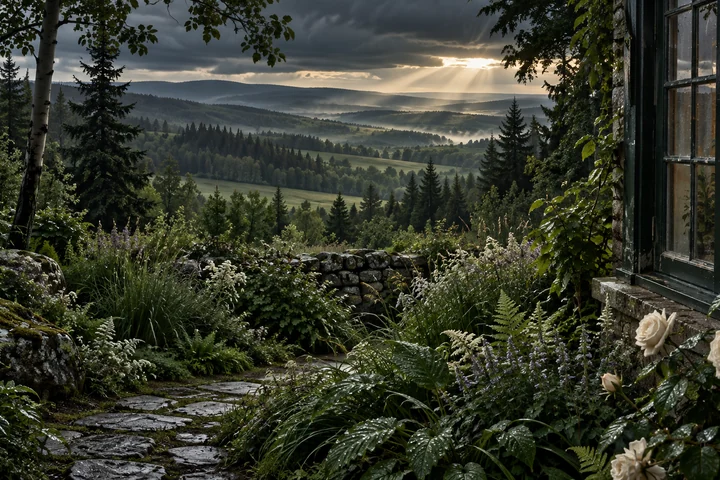
A mature tree, an approach or a garden edge can shape the way you experience an older home. Before redesigning the outdoor setting, make observations across the places you use: arrival, kitchen door, sitting room view and the spot where you spend time outside.
Describe what belongs to each scale. The close garden may offer shelter and detail, while the wider land provides openness. A strong relationship between them does not require every part of a country property to be landscaped in the same way. Think about where a domestic setting ends and the surrounding country becomes the main experience.
Trees, ecological features, drainage, heritage landscapes and new work each bring questions for relevant specialists and authorities. Start by understanding what is present. The pleasure of a settled landscape is a good reason to investigate it carefully, especially when the feature you value has taken many years to develop.
Heritage care · Country homes
Keep an account that another person can understand.
A useful house record need not read like a memoir. Begin with dates, photographs and clear names for rooms or locations. Keep the reports and approvals associated with work, along with who carried it out and what was actually done. Ask the project team what information will help future care.
Family memories can sit beside that record. A recollection about an earlier layout or an old photograph may raise a valuable research question, but label it for what it is. Where an account is uncertain, preserve the uncertainty rather than turning a repeated story into an established fact.
The result is a considerate gift to a future owner or caretaker. It also improves life in the present: when a question arises, you have a way to find the relevant information. A home with a long history deserves a clear account of your own period within it, including modest work that might otherwise be forgotten.
Heritage care · Country homes
Make conservation an interest you can keep developing.
Parks Canada and the Royal Architectural Institute of Canada offer an introductory, open-access conservation course. It covers heritage values, the decision process and the application of the national standards through case studies. Check the current registration details; an introductory course does not replace project-specific professional advice.
Learning a little of the language makes conversations easier. You can ask more precise questions about a record or a proposal without needing to become the person responsible for every technical judgment. The subject also gives visits to older buildings a new dimension: you begin to see the choices behind what survives.
Choose sources that explain their evidence and purpose. A project account, an operator’s interpretation and a product advertisement are different kinds of material. Reading with that distinction in mind helps keep curiosity open while preventing one attractive solution from becoming an assumed answer for every building.
Heritage care · Country homes
Match the project with its real responsibilities.
Alberta’s historic resource conservation grant information describes support for eligible conservation work and associated professional studies. Eligibility, applications and funding are separate from an owner’s wish to undertake work. Discuss the current programme with the relevant adviser; do not build a budget on assumed approval or a maximum award.
For the household, consider the commitment in practical terms. Who will coordinate questions and records? How will the home be used during work? What parts of the plan depend on investigations or approvals that are still outstanding? A realistic scope leaves room for proper decisions as information develops.
This is also a question of fit. Some people enjoy a long relationship with an older building and its continuing care. Others would prefer a newer home with a different kind of responsibility. Being clear about the life you want is more useful than assuming that historical character is automatically the right choice for every country-home search.
Heritage care · Country homes
A cared-for home should remain a place to live.
The most appealing result is a home where its character and present life support each other. A familiar room can hold new books and new conversations. A carefully understood building can accommodate another household without pretending that time has stopped.
Keep the pleasures concrete: a chair beside a favourite window, a table with room for people you welcome, a path that draws you into the garden. Those are good reasons to care about architecture. They give the larger responsibility a human scale and make its rewards part of an ordinary day.
Explore the documented historic homes for contrasting examples of domestic life, or return to ranch-country heritage for buildings shaped by work and hospitality. When your interest becomes a residential acreage search, Dusko’s practical guidance provides the next conversation about a home and the country life around it.