Historic homes · Alberta country life
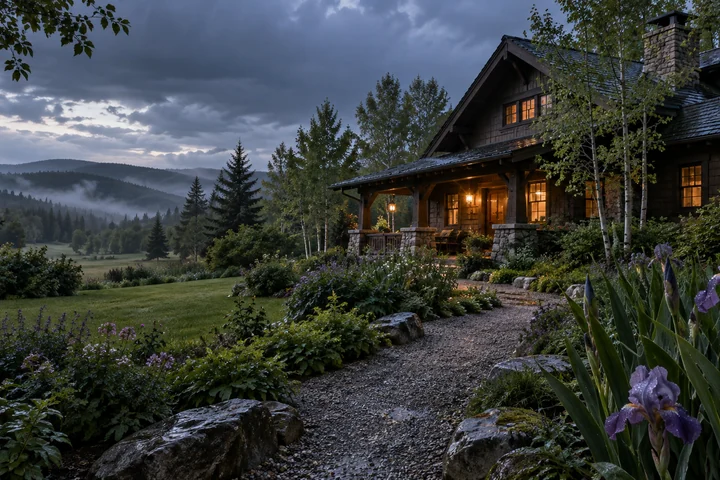
Start with the relationship between house and land.
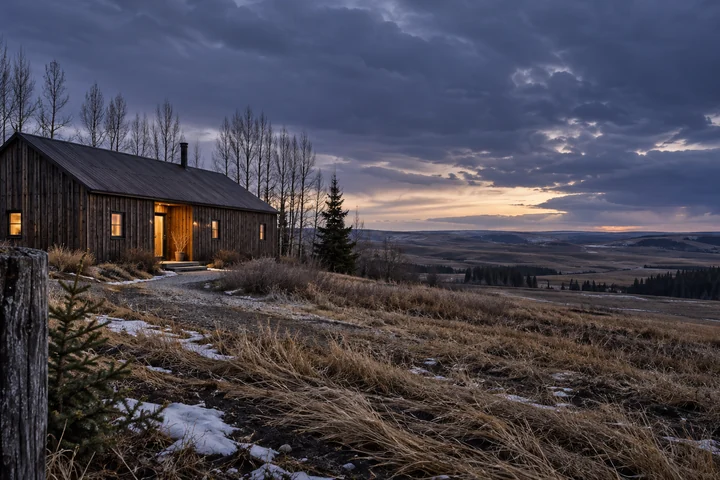
Before looking at decorative details, consider where the house meets its surroundings. A porch may face the broadest view, yet the most comfortable outdoor room could be on a sheltered side. A garden might sit close to the kitchen while open land begins beyond a modest boundary. Those relationships give domestic architecture its particular place in the country.
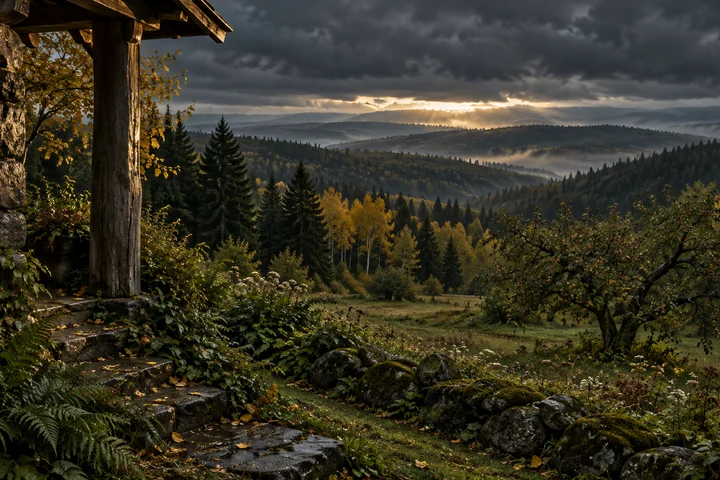
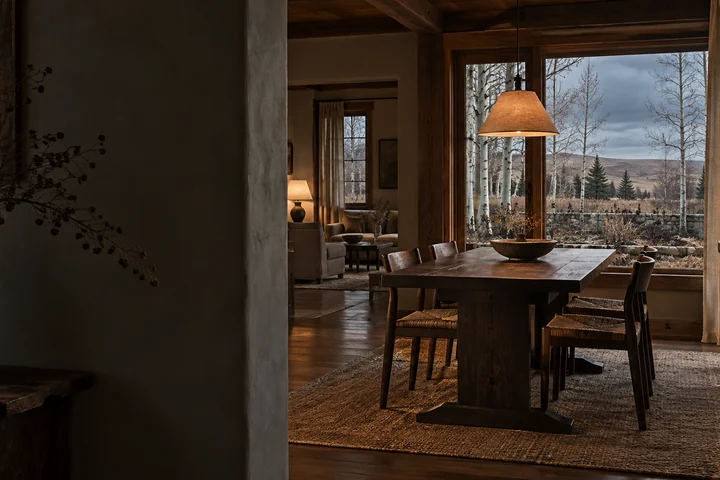
On a visit, look from inside as well as toward the building. Which part of the landscape appears from a seated position? Does the doorway frame a tree, a yard or the horizon? A distant prospect and a nearby detail can work together, giving a room interest on both a clear afternoon and a day when cloud obscures everything farther away.
For your own country home, this is a richer starting point than choosing a historic-looking exterior. Think about the small settings you would actually use: a breakfast table, a place to read, a sheltered seat after a walk. The architecture becomes meaningful when it makes those everyday moments feel connected to the land.
Historic homes · Alberta country life
The Leightons made a home around an artistic life.
The Leighton Art Centre museum occupies A.C. and Barbara Leighton’s last residence. A.C. designed the Arts and Crafts inspired home in the 1950s. Its collection brings their fine art together with craft, furniture and personal objects, within the house where the couple lived.
That combination invites you to look at the home as a working setting for creative interests. A painting is one part of the encounter; the room around it, the furniture and the landscape beyond a window are others. Allow time to move between those scales instead of using the museum only as a brief stop before the view.
It is an appealing model for a country life with an absorbing purpose. A house might make space for drawing, music, collecting or simply sustained reading. The useful question is whether an interest has a comfortable place in the daily arrangement of rooms, rather than a magnificent room that rarely gets used.
Historic homes · Alberta country life
Ballyhamage grew through decisions made over time.
The centre’s history records the Leightons’ purchase of the Millarville-area property in 1952 and the staged construction of their home and studio. Around 1960 the house was completed. The western view became a recurring subject for A.C.’s painting.
A house made in stages can prompt interesting questions about intention. Which rooms formed the original centre of life? What became possible later? Looking for those relationships is more rewarding than assuming every part of an older home arrived at once as a finished composition.
There is room in a contemporary country home for that same patience. An established reading corner or studio can be more satisfying than furnishing every available room immediately. Let repeated use clarify what is missing. A home gains coherence when its contents answer real interests and habits, even when those interests develop slowly.
Historic homes · Alberta country life
Barbara turned private interests into a public legacy.
Barbara’s later work and the centre’s beginnings are also documented in its historical account. She developed fibre and metal crafts, supported an art school using the historic Ballyhamage schoolhouse and helped establish a gathering place for artists. The centre was incorporated in 1974.
Read the house with her role in mind. A historic home can become associated so strongly with one name that another person’s work slips into the background. Here, creative practice and the development of a continuing institution give the domestic story a wider reach.
This changes what you might bring home from a visit. The inspiration need not be a particular finish or piece of furniture. It may be the decision to make room for other people’s creativity: a table suitable for a workshop, a small collection that starts conversations, or a regular afternoon when friends gather to work on their own projects.
Historic homes · Alberta country life
Walk outside with the same attention you give the rooms.
The centre’s nature information describes its foothill grasslands, walking trails and Bird Box Art Walk. It welcomes visitors with their own snowshoes in winter during operating hours. Conditions and suitable routes should be checked for the day; past nature workshops are not a promise of a current guided programme.
A walk can give the house visit a second dimension. Notice how a nearby tree changes the scale of the open land, or how a fold in the ground briefly hides the building. Returning to a room after being outdoors makes its sense of shelter easier to appreciate.
You do not need to turn this into a distance goal. A short, attentive walk and time to look back can be enough. For country living, the most valuable outdoor route may be the one you enjoy using regularly, because it offers interest close to home without requiring a full day of preparation.
Historic homes · Alberta country life
The home continues to hold new creative work.
At the October 11 check, the centre’s programme lists Tracey-Mae Chambers’ Hope and Healing Canada installation and YouthWorks 2026 through October 25. The Festive Foothills Art Market is listed from November 7 to December 20. Confirm the current programme and any separate event arrangements before travelling.
Changing work keeps a return visit from becoming a repetition. The familiar rooms provide continuity while a different exhibition offers new subjects, materials and perspectives. That balance can be an especially pleasant reason to revisit a place in another season.
At home, a similar rhythm can be achieved without frequent wholesale changes. Rotate a few works, bring a book into view or give a recent piece of craft an uncluttered place. A collection feels alive when you continue to notice it, rather than treating every object as part of a permanently completed display.
Historic homes · Alberta country life
A historic setting calls for specific visit planning.
The centre’s visit page lists Tuesday–Sunday opening, with Monday closure, and says the property has no public access when closed. Its accessibility information describes multiple level changes and an upper gallery reached only by stairs. Discuss individual needs with staff beforehand.
Make the visit comfortable in the terms that matter to your group. A shorter interior visit, a carefully chosen outdoor route or a quieter time may suit people differently. The presence of a heritage home does not establish that every room or path is suitable for every visitor.
It is useful to carry that specificity into your own architectural preferences. An attractive staircase, a veranda step or a secluded room can have a different meaning when daily use changes. Historical character is most enjoyable when the way you actually move through a house has been considered with equal care.
Historic homes · Alberta country life
Stephansson House joins domestic life with literature.
Near Markerville, Stephansson House interprets the home of Stephan G. Stephansson and his family as it appeared in 1927, with original furnishings. Its current notice gives a seasonal closure from September 8, 2026 to May 21, 2027. It belongs on a future visit plan, rather than an assumed October interior itinerary.
A poet’s farmhouse offers a different measure of domestic richness from a grand reception house. The interest is in how an imaginative life sits beside ordinary demands: a family, a table, household tasks and the land outside. A room can support serious creative work without looking like a dedicated cultural institution.
For a country home today, that is an encouraging thought. The space for an absorbing interest might be a quiet desk with a useful light and a shelf within reach. Its success depends less on impressing a visitor than on making it easy to return to the work, including on an entirely ordinary evening.
Historic homes · Alberta country life
The family story gives the furnishings their meaning.
A Government of Alberta heritage article places the home within Icelandic-Canadian life around Markerville. It describes Stephansson as a farmer and poet who wrote largely in Icelandic, and identifies objects associated with writing, music, sewing and domestic work.
Those objects reward looking beyond a simple label of “pioneer life.” What did a household choose to carry forward? Which activities needed a place indoors? How did language, reading and music remain part of the family’s life? An interpreter’s account can make a familiar-looking room feel far more particular.
Allow the history to be more than a picturesque backdrop. Questions about migration and belonging add substance to a visit, while reminding you that the house represents one household within a much larger country. Its story can be explored alongside, rather than substituted for, the distinct Indigenous cultural histories introduced elsewhere in this guide.
Historic homes · Alberta country life
Historic houses can challenge a restrained idea of taste.
The same heritage account describes Stephansson House’s green and pink exterior and its mix of interior wall finishes. These details make the building more specific than a general image of a neutral old farmhouse.
It is a useful reminder to approach a historic home with curiosity. An unfamiliar colour or a practical finish may belong to the documented household rather than to a modern expectation of how the past ought to look. Ask how the interpretation was established, and distinguish a researched choice from your own preference.
The contemporary lesson is permission to have a point of view. A country interior can be calm without being anonymous. A personally meaningful textile, a strong colour in a smaller room or a collection with a clear story may give the home more character than trying to keep every surface compatible with every imaginable visitor.
Historic homes · Alberta country life
Rutherford House offers an urban comparison.
In Edmonton, Rutherford House is a 1911 brick mansion and provincial historic site associated with Alberta’s first premier. Its city location is part of the comparison here: a substantial domestic setting can offer ideas about hospitality and rooms without being a country property.
The provincial heritage record identifies the central hall, staircase, stained-glass skylight, library and other domestic spaces. Look at how a sequence of rooms creates both occasion and intimacy, rather than assuming that grandeur requires every room to feel equally formal.
For a modern country house, the useful translation is a range of moods. The entrance can welcome guests, while a smaller room offers somewhere to talk quietly. A dining table may hold a large gathering on one evening and a simple family meal on another. A house feels generous when it accommodates both comfortably.
Historic homes · Alberta country life
Hospitality is interpreted through people as well as rooms.
The site’s visitor information lists Wednesday–Sunday opening and recommends calling ahead to ensure an interpreter is available for a tour. It distinguishes accessible main and basement levels from a second floor that is not wheelchair accessible. Confirm holiday exceptions and arrangements before a visit.
A guided visit is an opportunity to ask how the home worked, not only who owned it. Which rooms were used together? How did a gathering change the household’s routine? A building’s public face becomes more interesting when the work behind hospitality is also visible.
That perspective can improve contemporary entertaining. Consider where coats, food preparation and conversation fit without making guests feel managed. The most memorable gathering often depends on an easy sequence of small comforts, from a clear welcome to a room where people can remain comfortably after the formal part of the evening ends.
Historic homes · Alberta country life
Lougheed House brings sandstone into the domestic story.
Calgary’s Lougheed House was built in 1891 for Sir James and Lady Isabella Lougheed. The sandstone house occupies its original Beltline location and was restored as a museum in 2005. It is a city house, included for its material character, gardens and changing public life.
Stone can give a house a strong presence without explaining how it feels inside. During a visit, compare the weight of the exterior with the scale of doorways, the movement between rooms and the relationship to the garden. The experience of a home is made through those transitions as much as through its outline.
In country design, material should likewise be considered at close range. A stone base or fireplace may bring texture into daily life, while timber and softer furnishings make a room welcoming. The aim is a composition you enjoy inhabiting, rather than an exterior whose strongest moment is a photograph taken from the road.
Historic homes · Alberta country life
A house can contain more than one important period.
The museum’s Foundation to Future exhibition explores the building’s different residents and uses, including its time with the Women’s Army and the Red Cross. Its history extends beyond its first role as a family home.
This is a rewarding way to approach a restored building. Instead of asking only what has been returned to an early appearance, ask what happened afterward and why the building continued to matter. A house may carry memories of domestic life, service, work and community activity in the same set of rooms.
For a home you might own, later changes deserve understanding before judgment. A feature that seems awkward at first may have answered an earlier household’s needs. Its significance and condition require proper assessment, but knowing the reason behind it gives a design conversation more depth than simply dividing everything into original and unwanted.
Historic homes · Alberta country life
Beaulieu Gardens make the house part of a larger place.
The operator describes Beaulieu Gardens as a setting that combines formal beds and heritage plants with present-day public green space. It is a garden with a continuing civic role, rather than a sealed illustration of one past moment.
Give the outdoor setting its own attention. A garden walk can change the impression of a substantial house by offering smaller places to pause. Look at the relationship between open lawn, planting and the building’s edges, and at how a path gives you different views as you move.
For country living, a close garden need not compete with the wider landscape. It can provide a more intimate scale near the door: a place for a chair, a few favourite plants and a comfortable route between rooms and outdoors. The horizon supplies distance; the garden supplies detail you can return to every day.
Historic homes · Alberta country life
Beatty House shows another kind of domestic distinction.
In Rimbey, the provincial record for Beatty House describes a mid-1920s Arts and Crafts inspired semi-bungalow. Its veranda, fieldstone, wood siding and shingles sit alongside interior features such as ceiling beams, built-in cabinetry and a kitchen eating nook.
The appeal of these details is their relationship to use. A built-in seat gives a particular activity a place; a veranda adds an intermediate space between household and street. Distinction can come from that completeness at a modest scale, without requiring an exceptional number of rooms.
It is a useful comparison for anyone imagining a country home. A well-placed nook, a comfortable entrance bench or a room with carefully considered storage may contribute more to everyday enjoyment than adding another formal space. Look for architecture that makes ordinary activities feel settled and welcome.
Historic homes · Alberta country life
Continuing gatherings keep a house in community life.
Rimbey’s municipal calendar lists Beatty Heritage House concerts on October 17 and November 3, 2026, with advance reservation contacts. Check directly for current availability and event arrangements; a concert listing does not establish general daily access to the house.
An event can offer a different encounter from an architectural tour. You are attending for music and the company around it, with the building providing the setting. That active use gives heritage a place in an ordinary local calendar.
A country home is also connected to the places where people gather beyond its boundary. When exploring a region, notice the cultural venues you would actually return to: a small concert room, a library event or a familiar seasonal exhibition. A beautiful home becomes a fuller life when those continuing interests have somewhere nearby to grow.
Historic homes · Alberta country life
Bring home better questions, not a copied interior.
After a visit, write down two or three things that stayed with you. It may be the comfort of a sheltered doorway, the way a library sits beside a larger room or the presence of art within everyday spaces. Naming the quality helps separate it from a wish to reproduce a museum room exactly.
Then test that quality against your own habits. A formal dining room may be right for frequent hosting, while another household would use a generous kitchen table more often. A studio needs the conditions of the work you do. A veranda has to be pleasant at the times you are likely to sit there.
The companion heritage conservation guide considers how older buildings retain character through careful care. For a residential acreage search, Dusko’s practical .ca guidance connects your preferred country life with the property questions that follow. A compelling home joins a particular place with the life you will actually lead.