Lakes & boreal country
Find the kind of shore that holds your attention.
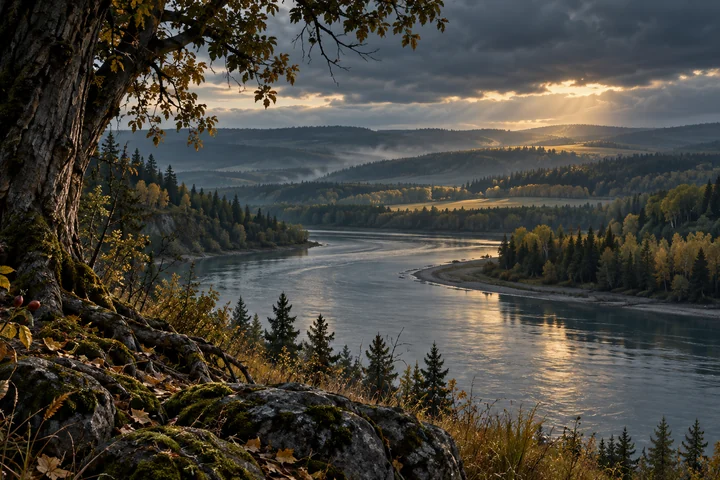
A broad open shoreline and a sheltered inlet can feel like different worlds. On the open lake, the horizon and changing sky take the lead. Within a bay, reeds, reflected branches and the movement of small waves bring the experience closer. Neither requires a dramatic mountain backdrop to feel absorbing.
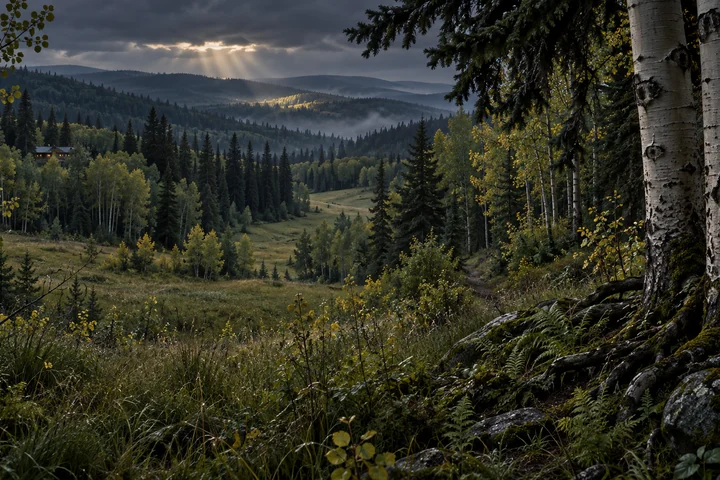
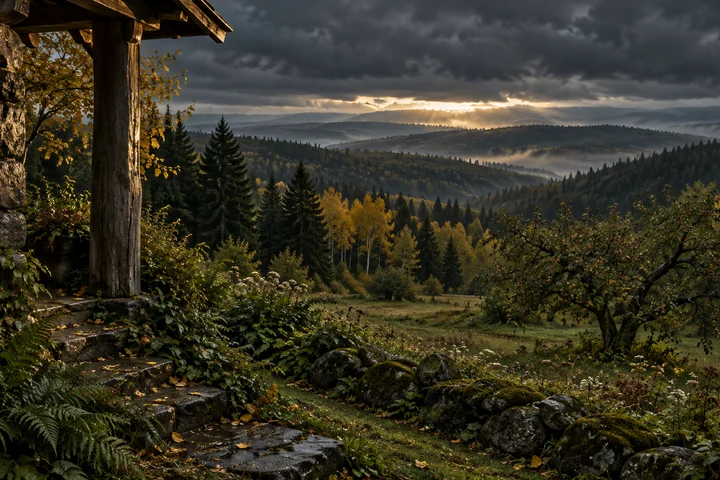
Spend part of a visit looking away from the water. The trees behind you determine how enclosed the place feels; the route back to town helps explain how a stay would work. A home with glimpses through woodland may offer a more varied daily experience than an uninterrupted panorama.
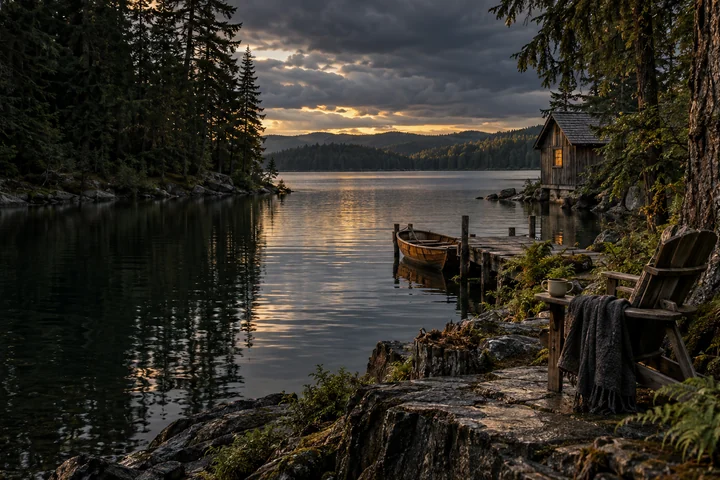
Notice the sound as well as the view. Water against a natural edge, leaves above a seat and activity at a public beach create different settings for conversation or reading. The quiet you enjoy on one visit may be a product of the hour or season rather than a permanent quality.
Keep these observations specific when describing a future home. You might want an inland woodland setting with easy public lake outings, a distant water view or a property with a particular verified shoreline relationship. Those are separate searches, each with its own possibilities.
Lakes & boreal country
Begin with the island forest at Sir Winston Churchill.
Sir Winston Churchill Provincial Park offers a memorable introduction to Lac La Biche. The provincial park map describes a group of islands, beaches and an old-growth forest on the largest island. That combination makes the change between enclosure and open water especially interesting.
Choose the outing from the park’s current trail information. As checked October 11, 2026, Alberta Parks carries a Big Island trail warning for high water and poor conditions, a Camper’s Beach water-quality advisory under which swimming is not recommended, and a blue-green algae advisory. Follow the linked notices rather than using an attractive shoreline image to decide what is suitable that day.
A forest visit can still begin with a simple intention: look closely at trunks and the spacing between them, then notice how the lake appears through the trees. The forest gives a scale to the water. A distant shore becomes more legible when a branch or a narrow opening frames it.
Give the park its own time. The pleasure lies in attending to one place, with a route appropriate to current access, rather than making it a brief photograph stop between several museums.
Lakes & boreal country
Learn to see the forest as a changing landscape.
The Lac La Biche Museum’s boreal forest exhibit connects trees, wetlands, wildlife and natural resources with the development of local communities. It provides a useful beginning for looking at a landscape that can seem uniform from a passing car.
On a permitted walk, let your eye move between scales. Look at the outline of the canopy, the colour of a trunk, the way light reaches the ground and the places where vegetation changes. A small opening can be as visually rich as a long view across water.
This is also a good setting for photography without an ambitious checklist. Choose one subject—a group of pale trunks, a reflected shoreline or the pattern of leaves—and return to it in another light. Looking repeatedly at the same place can reveal more than trying to collect a different scene every hour.
At home, a nearby tree or a modest garden can provide that continuing interest. A window need not face the largest view to become the one you enjoy most often.
Lakes & boreal country
Let Lac La Biche’s museum connect the journeys.
The Lac La Biche Museum in Jubilee Hall brings natural and community history into the same visit. Its permanent themes include the boreal forest, the fur trade, Portage La Biche and railway-era stories, while changing exhibitions and community projects add other perspectives.
Begin with one question instead of trying to read the whole building at an even pace. How did people travel between waterways? Which kinds of work left records? How do family photographs change an account that first appears to be about transport or trade?
The museum also hosts creative programmes. Its October 2026 calendar, checked October 11, includes an October 17 World Singing Day gathering with Boreal Chorus Choirs. That is a dated example of the museum’s community role, not a standing promise of a performance whenever you visit.
Leave time afterward to write down a name, a book or a subject you want to follow. A local museum can become the beginning of an interest that gives future stays more substance.
Lakes & boreal country
Read the region through its routes across land and water.
The museum’s Portage La Biche exhibit explains a route linking the Athabasca and Beaver river systems and the movement of furs by voyageurs. Its mural was created by the Lac La Biche Art Club, bringing a community artistic voice into the interpretation.
Thinking about a portage changes the map. A stretch of land that appears to separate two waters can also be the connection between them. Movement depended on knowledge of routes, work and relationships, not simply on the presence of a large lake.
Ask how a display distinguishes a recorded journey from the much longer human history of the country. An explorer’s written account can be a valuable document without being the beginning of the place itself.
For a visitor, that shift in attention is useful. The route, the landing and the ground between destinations may tell you as much as the view at the end. Use the museum to understand the historic connection; do not assume a historic route is a present-day public walking or paddling itinerary.
Lakes & boreal country
Make time for Indigenous art at Portage College.
The Museum of Aboriginal Peoples’ Art and Artifacts at Portage College began as a teaching collection in 1978. Its holdings include work by First Nations, Métis and Inuit artists and a permanent collection associated with Professional Native Indian Artists Inc., the influential collective formed in 1973.
Daphne Odjig, Alex Janvier, Joseph Sánchez, Norval Morrisseau, Eddy Cobiness, Carl Ray and Jackson Beardy brought distinct practices to that collective. Give individual works and artists your attention rather than treating the collection as a single regional decorative style.
Start by looking before reading. Notice the scale, the movement of a line or the relationship between colours; then use the label and interpretation to understand the work’s context. A second look after reading can be quite different from the first.
The college distinguishes ordinary museum hours, summer self-guided access and guided tours by prior arrangement. Use its current information to plan the visit. The museum is a cultural destination within a working college, with its own programme and responsibilities.
If the visit leads you toward collecting, begin with the artist, the work and an established source. A meaningful piece belongs in a home because you want to live with it and understand it, not because it supplies a generic notion of northern character.
Lakes & boreal country
Look at the long lots, then at the family histories.
The museum’s River Lots Project is gathering histories, photographs and documents connected with the long, narrow lots around Lac La Biche. Its account explains how that form connected families with water, travel and farmland, and expressly seeks Métis and other family histories.
A map becomes much more interesting when it is read beside a person’s story. A boundary line can organise land on paper while a photograph reveals an entrance, a garden, a gathering or a way of working that the map alone cannot convey.
Look for the relationship between different kinds of evidence. A survey, a remembered event and a family album answer different questions. They can enrich one another without becoming interchangeable.
The project is described as developing an interactive exhibit; do not assume every element is already available in a finished display. Ask the museum what can be explored now. For a present-day property, use current title and professional advice rather than historical lot shapes to establish rights or access.
Lakes & boreal country
Visit the Mission with its full history in view.
The Lac La Biche Mission occupies a rural lakeside setting and has both national and provincial heritage recognition. Its buildings and grounds can prompt an interest in materials, work and institutional life, but the history requires more than admiration of an old exterior.
Parks Canada’s account explains the site’s connection to residential education and the residential school system. That history belongs at the centre of understanding the place, alongside the experiences of Indigenous children and communities; it should not disappear into a picturesque mission narrative.
Use a guided visit, when available, to ask what survives, how the site has changed and how its interpretation addresses that history. Give yourself time to absorb the account rather than treating the stop as another attractive building to collect.
The operator’s hours and admission page, checked October 11, lists the 2026 regular season as ending August 31 and says tours outside it may be arranged subject to availability. The homepage’s general welcome does not establish autumn drop-in access.
Lakes & boreal country
Give Plamondon its own place in the journey.
The Plamondon and District Museum presents Métis, trapping, music and community displays. Its account acknowledges Métis help to the families who arrived in 1908 and the later arrival of Russian Old Believers in 1973. The community’s history is more layered than a single settlement story.
Choose a subject you can follow closely: an instrument, a household object, a photograph or the way a family kept its records. Small collections often allow an encounter with the texture of daily life that a broad regional overview cannot provide.
The museum publishes July and August opening and invites enquiries for out-of-season tours. It also describes Mini Parc’s small replicas of early buildings, with access requested through the Festival Centre. Distinguish those replicas from surviving historic buildings; each offers a different kind of encounter.
Allow time for the community beyond the collection. A return visit for a public cultural event, when one is actually scheduled, can show another dimension of a place first encountered through its history.
Lakes & boreal country
At Cold Lake, bring the town and the water together.
Kinosoo Beach provides a public shoreline setting with walking paths and summer recreation facilities. The city describes it as a place for both residents and visitors, with events and activities varying through the year.
A town beach offers a different pleasure from a secluded woodland bay. You can watch people arriving, pause for a conversation and combine the shore with a meal or an indoor cultural visit. The surrounding everyday life is part of its character.
Choose the experience you actually want that day. A walk beside the lake, time on a bench and an outing involving water equipment are different plans. Seasonal facilities and the conditions at the particular beach determine what belongs in each.
For someone considering a home in the wider area, this distinction matters. You may enjoy private woodland at home and public activity beside the water, rather than wanting every part of the lake experience on one property.
Lakes & boreal country
Explore the different stories gathered on Radar Hill.
The City of Cold Lake’s museum information describes a complex in the former 42 Radar Squadron facility. Separate museum buildings, joined by a covered walkway, interpret Air Force, Indigenous, heritage, and oil and gas subjects.
The setting makes an interesting architectural encounter in itself: a place built for one purpose now receiving visitors for another. Look at how the buildings are connected and how the exhibition spaces organise their different subjects.
The Indigenous Museum was created by the Cold Lake Friendship Centre and the museums, with Dene Suline, Cree and Métis histories represented. Give that interpretation its own attention rather than assuming the military or industrial account describes the whole community.
The city lists regular summer opening through the end of August. Confirm current arrangements with the museum operator for a visit outside that season. An outdoor view of an aircraft or a building is not the same experience as entering the galleries.
Lakes & boreal country
Follow Alex Janvier’s work beyond a single visit.
Alex Janvier’s official site introduces the Cold Lake artist’s work and life, including his relationship with Denesuline culture and his practice as a painter and muralist. It offers a starting point for following an artist whose work has a presence far beyond the region.
Look at more than one work over time. A line that appears spontaneous may organise a complex composition; a small work on paper can invite a different kind of attention from a large public commission. Reading about the artist can deepen that looking without replacing it.
Access needs particular care here. The gallery’s contact page, checked October 11, 2026, says Janvier Gallery is closed for appointments. Use official information about future opportunities; a general tourism listing is not a current invitation to turn up.
At home, the lasting response can be curiosity: a book, a visit to an authorised exhibition elsewhere or a carefully researched acquisition. Do not reproduce an artist’s imagery as an anonymous regional motif.
Lakes & boreal country
Let a market and a café shape the day.
The Lac La Biche Farmers’ Market grew from a local horticultural initiative in 1973 and later became part of the agricultural society. Its current information describes Friday markets between Easter and Christmas at the Lakeland Agricom.
Arrive with room in the meal plan. Ask a producer or maker about what they have brought, choose something you will use and let a few purchases determine supper. The market can also introduce craft and community work that you would miss by shopping only from a fixed list.
In Cold Lake, Beantrees Café describes homemade food, baking, coffee and local artisan items, with daily updates for changing specials. It is a useful kind of town stop: a place to pause between the shore and another destination.
The café’s homepage and older menu page display different opening patterns, so confirm through its current channel rather than relying on a copied timetable. A specific dish or specialty evening should be checked for the day you intend to visit.
Lakes & boreal country
Make a woodland home generous at its edges.
In lake country, the place between the door and the trees deserves as much thought as the main room. A covered entrance, somewhere to leave damp clothing and an inviting seat can make returning from a shore walk feel easy.
Consider a sequence of views rather than one wall of glass. A close view of birch, a partly screened garden and a broader opening toward the sky create different kinds of attention. A smaller room can feel particularly rich when its view has detail through the seasons.
Materials need not compete with the landscape. Timber can provide warmth, a plain wall can hold a work of art and a quiet floor can let reflected light move through the room. A few well-chosen objects will often be more absorbing than a complete collection of lake-house signs and motifs.
Take these as design questions for an actual site, with appropriate local advice. Existing trees, exposure and the condition of the building should guide the response. The aim is a home that makes daily contact with the landscape comfortable and natural.
Lakes & boreal country
Keep a lake-country stay open to different interests.
A good visit can accommodate the person who wants a museum afternoon and the person who would rather read. Offer a clear plan for one shared outing, with time before and afterward that guests can use in their own way.
Provide ordinary comforts well: somewhere to put a bag, a lamp beside a chair, an extra layer for sitting outside and a table that can hold a map as easily as a meal. These details make a country stay feel generous without filling it with organised activity.
At supper, let the day’s discoveries enter the conversation. A question from the museum, a piece seen at Portage College or an encounter at the market can give a meal more character than an elaborate theme.
Leave the next morning partly unclaimed. Some of the pleasure of being beside a lake lies in deciding to look again before deciding to go anywhere else.
Lakes & boreal country
Build several good days, not one crowded circuit.
For a Lac La Biche day, begin with the museum or Portage College’s art collection, according to current access, and leave time for a meal and a public lakeside pause. A Friday market can be a separate anchor if it fits the day.
Plan the Mission and Plamondon around confirmed tours, especially outside summer. Their histories deserve attention that is difficult to give if you are already watching the clock for a distant beach visit.
Give Cold Lake another day. Combine a public shore walk with a café and, in the operating season or by confirmed arrangement, the museum complex. Janvier Gallery is not currently a bookable stop under the notice checked for this guide.
Use the distance between communities deliberately. Staying in one part of the region and returning for another can be more rewarding than treating northeastern Alberta as a compact resort district.
Lakes & boreal country
Let the return visit reveal another country.
Summer often puts water at the centre of attention, but the view can remain compelling when swimming and seasonal tours are no longer part of the day. A museum visit, a short appropriate outdoor outing and a warm meal create another kind of stay.
Autumn brings attention to trunks, leaves and the depth of a wooded shore. Winter changes the relationship between interior light and the land outside. Choose activities from current public programmes and conditions; the beauty of a frozen scene does not establish access or suitability.
Keep notes about what drew you back. Was it the water, the enclosing trees, the art, the people you met or the ease of a particular town? Those answers can clarify a home search more effectively than a list of impressive amenities.
Compare this experience with Beaver Hills parkland, central Alberta parkland and Peace Country. Each offers a different relationship between woodland, open land and cultural life. Bring your preferences to Dusko when you are ready to explore a residential acreage.