Alberta journeys · Southern heritage
Start with a place of interpretation, then look outward.
Choose the visit that best fits your interests and give it the principal part of the day. A large landscape can seem immediately legible from a viewpoint, yet its histories may ask for slower attention. Beginning with interpretation lets the accounts you encounter change the way you look at the land afterwards. The horizon becomes a setting for questions rather than a complete explanation in itself.
Before setting out, note what you would like to understand more clearly. It might be the connection between people and buffalo, the history presented in a town museum or the everyday objects through which a community records itself. Leave those questions open enough to develop. A thoughtful journey allows the place to redirect your attention.
Alberta journeys · Southern heritage
Make Head-Smashed-In a substantial visit.
Head-Smashed-In Buffalo Jump presents a place of Blackfoot history and buffalo culture through its interpretive centre and site. Give the interpretation proper attention before treating the landscape as a photograph. Follow the accounts and guidance offered there, and ask staff about the experiences available during your visit.
Use the current visitor information to plan opening days, access and conditions. Winter arrangements differ from the main visitor season, and severe weather can affect opening. Choose the actual visit through those notices. The centre, viewpoints and outdoor routes should each be considered through their current availability rather than assumed to share identical access.
Alberta journeys · Southern heritage
Let the voices at the site guide the encounter.
Listen to the interpretation as an account with its own sources and perspective. If a detail surprises you, use that curiosity to ask a respectful question or find the reading the site recommends. You do not need to leave with a complete summary of a complex history. It can be more useful to leave knowing which questions deserve further attention.
Keep Indigenous cultural life within the present as well as the historical visit. Avoid treating the surrounding country as an empty stage on which history once happened. Our Blackfoot country guide offers further public starting points and directs readers towards the institutions and communities presenting their own knowledge. Let those sources remain central to the exploration.
Alberta journeys · Southern heritage
Allow the view to follow the interpretation.
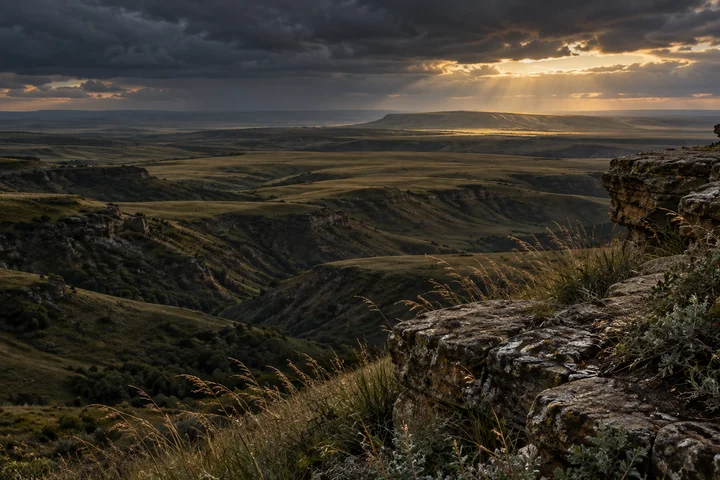
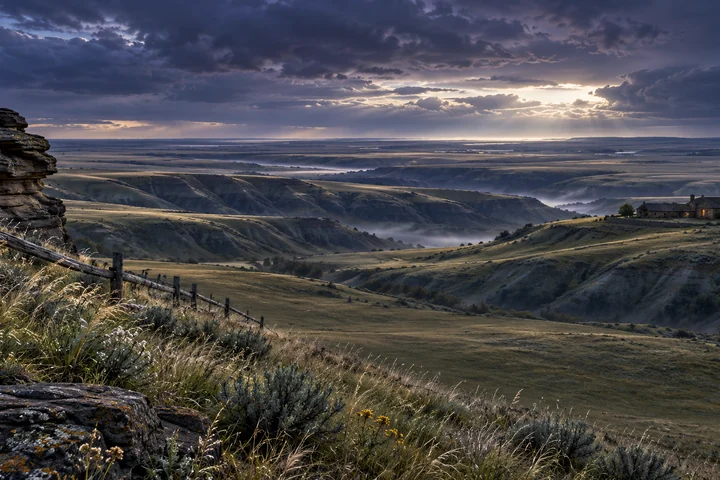
Where access and conditions permit, take time with the landscape after looking through the exhibits. Notice the broad relationships between rising ground, open country and the sky. The experience may feel different when it follows an account of the place. You can look slowly without needing to invent a historical scene or imagine that every visible feature has been explained.
Follow the site’s designated routes and current instructions. Stay within what is open and appropriate for your group. A viewpoint can be the end of an enjoyable visit rather than the beginning of another ambitious outing. If conditions favour remaining indoors, the interpretation still gives the day substance; the outdoor experience can be left for a suitable return.
Alberta journeys · Southern heritage
Give Fort Macleod a measured place in the plan.
After the principal visit, a confirmed town stop can offer a change of scale. Choose a suitable meal through current arrangements and let the conversation settle before deciding whether to add another museum. The street, table and ordinary activity around you bring a different relationship with the region from the broad view encountered earlier.
Keep the sequence flexible. If the first visit has filled the day with things to think about, a meal and return may be enough. If everyone has energy and a second destination is confirmed open, it can become another chapter. The guide supplies a cultural thread, while your actual base, companions and current travel conditions determine what belongs in the day.
Alberta journeys · Southern heritage
Treat the Fort Museum as a seasonal option.
The Fort Museum of the North West Mounted Police and First Nations Interpretive Centre in Fort Macleod presents collections and interpretation within a museum setting. Check the current operating season and the actual programme before planning around it. A museum visit, a performance and a particular activity are separate arrangements; one does not establish the availability of the others.
When the visit suits, use its interpretation to ask how the history is being presented and which accounts are included. Keep your questions connected to the collection rather than treating a reconstructed setting as a complete picture of the past. A second institution can broaden the journey precisely because it may prompt a different set of questions from the first.
Alberta journeys · Southern heritage
Keep more than one account in the conversation.
A regional journey may bring different institutions, objects and interpretations into contact. Allow the differences to remain visible. Ask whose experience is represented, which sources support the account and what further reading is available. A museum display can be the beginning of investigation rather than the final word on a place or community.
This approach can change the way heritage enters a country-home brief. Character need not mean selecting only the most comfortable part of the past. You may become interested in documented building histories, local archives and contemporary cultural institutions alongside the visual appeal of an old room. The living heritage guide follows that wider relationship between memory, place and life now.
Alberta journeys · Southern heritage
Give Lethbridge museum culture a separate day.
The Galt Museum & Archives explores Lethbridge and southwestern Alberta through collections, archives and public programmes. Its exhibitions offer another way into the region through people, objects and community histories. Check the current programme directly, especially if a particular exhibition is the reason for travelling.
Let this be a distinct city-based cultural day rather than an automatic extension of the Fort Macleod sequence. Choose one main museum occasion, a proper meal interval and a modest continuation if it suits. A separate day gives the material more attention and makes it easier to understand the different roles that public institutions could play in your own regional life.
Alberta journeys · Southern heritage
Notice the garden as a form of local interpretation.
The Galt’s own account of its grounds includes gardens created with community partners and a collection of native prairie plants. This gives the visit another scale: the close detail of plant form beside the broader cultural material indoors. Use the museum’s interpretation and current grounds information to guide what you look at.
A public planting can sharpen attention without becoming a ready-made specification for a private property. Notice the relationships that interest you, such as a fine texture against stone or a seed head held against the sky. Our gardens guide explores those visual pleasures. Actual plant choices and land management belong to the needs and conditions of the real site.
Alberta journeys · Southern heritage
Let a small object hold a large part of the story.
A regional collection may include something ordinary enough to pass quickly: a tool, household object or photograph. Stay with the account attached to it. The object can bring a broad history into the scale of a hand, a room or a working day. It asks for a different kind of attention from a panoramic view and can remain memorable long after the visit.
Record the source with the detail that interested you. If you want to learn more later, the institution’s title, label information or recommended reading will be more useful than a photograph without context. Respect photography and reproduction rules. Your own brief note about why the object mattered can sit alongside those facts, keeping the personal response and the documented account clear.
Alberta journeys · Southern heritage
Make the meal part of the conversation.
Choose a meal arrangement that allows everyone to pause properly. Confirm it through the actual operator rather than relying on a museum amenity or seasonal service being available. The interval gives people a chance to compare what held their attention and decide whether the rest of the day should remain as planned.
There is no need to resolve every subject over the table. A good conversation may end with a book to find, a place to revisit or a question to bring to another institution. Keep the day open enough for that curiosity. Food and comfortable company help a heritage journey become a shared experience rather than a sequence of information consumed on the move.
Alberta journeys · Southern heritage
Distinguish a broad view from a complete picture of life.
Open country and a remarkable sky may be what first draw you towards southern Alberta. Spend time looking at the close scale as well: trees near a house, a sheltered garden corner, the relation between a terrace and its rooms. Those details help you imagine an ordinary afternoon within the larger scene rather than only a moment at the best viewpoint.
The southern prairie guide and Porcupine Hills guide offer distinct landscape explorations. Choose one for a later trip rather than combining distant settings merely because they belong within the same broad part of the province. The place you may eventually call home deserves attention at its own scale.
Alberta journeys · Southern heritage
Picture where you would sit when the outing is over.
The return can be one of the most revealing parts of a country journey. Imagine putting a book on the table, taking a comfortable chair and looking towards the land while the evening changes. A room with a good close view and useful light can hold the day’s impressions without needing another activity to follow them.
Describe that room through use. Is it a library, a smaller sitting room or a seat at the kitchen edge? Would a guest be comfortable there, and could someone read while another person talks nearby? The interiors guide develops these relationships. A compelling landscape becomes more valuable to daily life when the house offers several good ways to spend time with it.
Alberta journeys · Southern heritage
Enjoy material character without inventing a building history.
Old stone, softened timber and a repaired surface can be compelling, but appearance alone does not establish age, origin or significance. If you become interested in a real building, ask for its documented history and the practical assessment it requires. A new home can also use materials thoughtfully without claiming an inherited past.
The courtyard scene in this guide is an imagined private setting. It suggests the pleasure of material detail and an open view; it is not a reconstruction of a fort, cultural site or historic house. Read thoughtful reuse and timber and stone for the distinction between visual character, documented heritage and the needs of a home used today.
Alberta journeys · Southern heritage
Build the journey around the actual season.
A winter museum day and a main-season heritage visit may have different centres. Choose through current notices, then let the plan reflect what can be enjoyed well. An outdoor route or performance that suited a previous visit should be checked again. Seasonal change can give you a reason to return without requiring every part of the itinerary to remain available.
Use the country year to think about the wider life around the trip. Which cultural outings would you enjoy in a quieter season? What would you like to do at home afterwards? Keep the inspiration flexible while the practical arrangements stay specific. That combination helps a journey feel inviting without making promises on behalf of its destinations.
Alberta journeys · Southern heritage
Plan for the people making the visit.
Ask operators about the parts of the experience that matter to your group, including indoor access, viewpoints, interpretation and suitable rest intervals. A description of a building or trail does not establish that every person can comfortably use it. Choose a scale of visit that allows people to participate without being hurried through something difficult or tiring.
Keep a shorter version of the day ready. One substantial institution and a meal can be a complete cultural outing. If conditions or comfort call for a change, leave the optional stop for another trip. The thoughtful part of planning is matching the experience to the actual people, rather than making the group serve a fixed route.
Alberta journeys · Southern heritage
Choose a Fort Macleod day or a Lethbridge day.
For the Fort Macleod side of the journey, make a confirmed Head-Smashed-In visit the centre, allow a meal interval and add the Fort Museum only when its season, programme and the group’s interest fit. Leave time for the return. The sequence is adaptable, with no guaranteed driving schedule or promise that both destinations share opening days.
For a Lethbridge day, begin with the Galt’s current cultural offering, allow time to consider the grounds where access suits, then choose a meal and a modest city continuation. Keep the two days distinct in your notes. They offer different ways to encounter public history and community life, giving a later country-home conversation more than one point of reference.
Alberta journeys · Southern heritage
Turn the journey into a more informed home brief.
Record which public places you would want to return to and why. Add the domestic preferences the trip clarified: a library, a sheltered outdoor seat, a close tree outside the window or a table where visiting friends could linger. Be specific about the occasions those places would support. The picture of a home becomes more useful when it contains actual interests and habits.
Then connect the picture with the facts of a real property, using appropriate assessment and the separate .ca ownership library. The choosing your country guide helps organize that comparison. A heritage journey gives the setting personal and cultural meaning; it does not establish a property’s history, suitability or access by itself.
Alberta journeys · Southern heritage
Keep the questions that bring you back.
A memorable southern heritage journey may leave you with a different understanding of a familiar view, a book you want to read or a public place you want to visit again. Those connections deepen through time. They can become part of the life around a country home, alongside the land, rooms and people that first made the setting appealing.
Explore foothill art and heritage and parkland culture as separate regional journeys. Compare the kinds of cultural connection they offer while letting each place retain its own stories. The most useful result is a clearer sense of where you would like to keep learning, returning and making a home.